

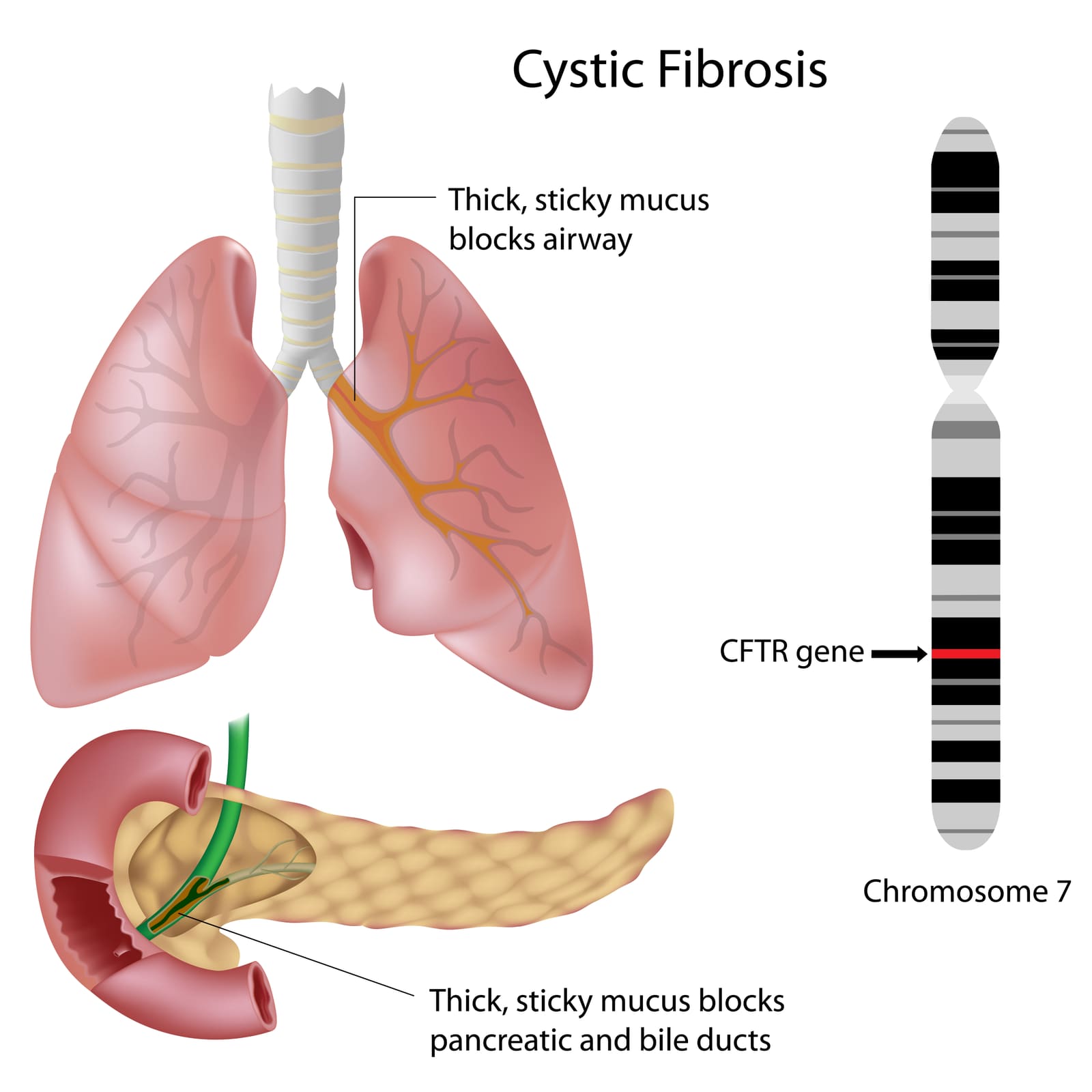
Cystic fibrosis is a genetic condition that causes damage to the lungs, pancreas, Liver and other organs. The disease is gradually progressive, but scientific progress means that people with cystic fibrosis live longer than in the past.
What Is Cystic Fibrosis?
Cystic fibrosis is a disease caused by mutations in a gene called cystic fibrosis transmembrane conductance regulator (CFTR). This gene encodes a protein called the CFTR protein. In healthy people, the CFTR protein helps cells maintain the right balance of salt and water on surfaces throughout the body. It is particularly needed to keep the lungs working properly, as lung tissue needs constant moisture.
For people with cystic fibrosis, there is an error in the genetic code that tells cells how to assemble the CFTR protein. As a result, chloride (a component of salt) is not transported effectively. This causes chloride to be trapped inside cells, keeping water from properly hydrating the surface of the cell. Without water, the surface of the cells becomes sticky due to a build-up of mucus.
Cystic fibrosis affects cells throughout the body, but its most prominent effect is on the lungs. The sticky, mucus-filled surface of the lungs clogs your airways, making it difficult to breathe. It also traps bacteria and other microorganisms. This leaves you vulnerable to infections, respiratory failure, inflammation, and other conditions. Cystic fibrosis also affects the pancreas causing pancreatic Insufficiency, where it prevents important enzymes from being released. This can affect digestion and your ability to absorb important nutrients. Deranged transport of chloride and/or other CFTR-affected ions, such as sodium and bicarbonate, leads to thick, viscous secretions in the lungs, pancreas, liver, intestine, and reproductive tract, and to increased salt content in sweat gland secretions
The typical CF patient develops multisystem disease involving several or all of these organs
Respiratory Involvement. Respiratory manifestations of CF include a persistent, productive cough, and patients eventually develop chronic bronchitis, have repeated lung infections and develop a condition called bronchiectasis in which there is extensive damage to wall of bronchi (smaller tubes that carry air throughout the lungs). Infection of the airways with bacteria occur early in life with multiple different bacterial organisms the more common ones being H. Influenzae in children and Pseudomonas in adults.
Sinus Disease: The majority of patients with CF develop chronic sinus disease presenting with nasal congestion, headaches and sleep disturbances.
Pancreatic disease: Progressive Pancreatic Insufficiency of the Exocrine pancreas (Parts of pancreas that produces digestive enzymes) usually start early in life and is eventually present in about 85 % of adults. In these patients’ certain enzymes responsible for fat and protein digestion are not released into the digestive tract. Pancreatic insufficiency result in steatorrhea, characterized by frequent, bulky, foul-smelling stools that may be oily, and failure to thrive or poor weight gain due to malabsorption of fat and protein. Pancreatitis develops in approximately 10 percent of patients with CF.
Pancreatic Insufficiency can also develop in the endocrine portions (hormone producing- i.e. Insulin) of the pancreas resulting in diabetes in about 25 young patients and 50% of adults.
Meconium ileus and Intestinal obstruction: Meconium ileus is characterized by obstruction of the bowel by meconium in a newborn infant. It is the presenting problem in 10 to 20 percent of newborns. Episodes of small bowel obstruction may also occur in children and adults.
Infertility: More than 95 percent of men with CF are infertile because of defects in sperm transport. Females with CF are found to be less fertile than normal healthy women. The reduced fertility is induced primarily by malnutrition and the production of abnormally tenacious cervical mucus. Nonetheless, females with CF may become pregnant,
Musculoskeletal disorders: Patients with CF have reduced bone mineral content and increased rates of fractures and kyphoscoliosis.
Symptoms of Cystic Fibrosis
Infants in the United States and many other countries are routinely screened for cystic fibrosis. As a result, many babies are diagnosed with the condition within the first month of life. For infants who were not screened at birth, symptoms may develop later. The severity of symptoms can vary greatly. For people with milder symptoms, the disease may not be detected until adulthood. The usual presenting symptoms and signs include persistent pulmonary infection, pancreatic insufficiency, and elevated sweat chloride levels.
The most common symptoms of cystic fibrosis include:
· Skin that tastes salty
· Persistent coughing; the cough may sound very phlegmy
· Shortness of breath
· Stuffy nose
· Inflamed nasal passages
· Wheezing
· Frequent lung infections such as bronchitis or pneumonia
· Inability to exercise or engage in physical exertion
· Poor growth
· Poor weight gain (despite normal appetite)
· Greasy, bulky stools
· Constipation or other difficulty with bowel movements
· Infertility (for men)
Diagnosis of Cystic Fibrosis
The diagnosis of CF requires clinical symptoms consistent with CF in at least one organ system AND evidence of CFTR dysfunction (elevated sweat chloride, presence of two disease-causing variants in CFTR, or abnormal nasal potential difference.
Sweat chloride testing is the most important diagnostic test and should be performed to clarify a diagnosis of CF in infants with positive CF newborn screening results, in any patient with symptoms suggestive of CF, and in siblings of a patient with confirmed CF
DNA analysis should be performed for patients with intermediate or positive sweat chloride results, and occasionally for those with normal sweat chloride if there is a strong clinical suspicion of CF
Genetics of Cystic Fibrosis
Cystic fibrosis is an autosomal recessive condition, meaning that the defective gene is inherited but does not always manifest in disease. Everyone has two copies of each gene, one from your mother and one from your father. If you have a healthy copy of a gene, it can mask the effects of the defective copy. This means you are considered a carrier of the disease. When two carriers have children, there is a 25% chance that the child will not have a bad copy of the gene, a 50% chance that they will be a carrier (have a single bad copy), and a 25% chance that they will have cystic fibrosis (carry two bad copies of the gene). Someone with cystic fibrosis has two mutated copies of the gene, meaning that they will definitely pass a copy down to a potential child.
CFTR-related metabolic syndrome (CRMS), also known as CF-screen positive, inconclusive diagnosis (CFSPID) is a term that describes asymptomatic infants and children with an equivocal diagnosis following newborn screening for CF. It is a provisional diagnosis and requires follow-up monitoring and testing.
Men with cystic fibrosis often struggle with fertility. If you are thinking about having biological children, it can be helpful to meet with a genetic counselor to discuss the implications of your condition on potential children.
Living with Cystic Fibrosis: Therapies and Treatments
In the past, cystic fibrosis was considered a fatal condition. Few children made it past elementary school. Now, people with cystic fibrosis live rich, full lives into their 30s, 40s, and beyond. There are many ongoing research opportunities to investigate new treatments for the disease.
New medications target the gene that causes cystic fibrosis by improving the activity of CFTR protein. Different medications are approved for people of different ages, so your medication regimen may change as you progress through childhood. Your physicians may also recommend anti-inflammatory medications to reduce swelling in the airways, mucus-thinning drugs like hypertonic saline to help you cough up mucus, inhalers, oral pancreatic enzymes to improve nutrient absorption, stool softeners, and antibiotics to treat infections.
Non-medication treatments are also helpful for improving everyday functioning when you have cystic fibrosis. Chest physical therapy can help you loosen thick mucus and cough it up. This might include breathing techniques, coughing techniques, or special machines to loosen mucus. Pulmonary rehabilitation may focus on exercise, nutrition, education about your condition, and breathing exercises. Staying hydrated, creating a nutrition plan with a dietician, and avoiding smoke can help your lungs function better. Connecting with other people with cystic fibrosis also helps you to feel more supported.
Resources
The Cystic Fibrosis Foundation is a great resource for more information about cystic fibrosis, cutting-edge research findings, and other resources.
Sources
General information, not medical advice
This article can't account for your health history or current treatment. Talk to a qualified clinician before you change anything about your care.
Read our medical disclaimer →
On this page
What Is Cystic Fibrosis?
Symptoms of Cystic Fibrosis
Diagnosis of Cystic Fibrosis
Genetics of Cystic Fibrosis
Living with Cystic Fibrosis: Therapies and Treatments
Resources
Sources
Put what you read to work
Track your medicines, check a symptom and talk with people managing the same condition, all in Healthread.
Get the app
Keep reading

Beauty and Anti-Aging
Gastric Balloon for Weight Loss
The gastric balloon weight loss procedure is a new FDA-approved minimally invasive bariatric procedure for treating obesity. It is a temporary procedure that involves placing a saline-filled silicone balloon in the…
June 19, 2025 · 3 min read

Beauty and Anti-Aging
Vitamin D Deficiency
Also known as the sunshine vitamin, vitamin D is an essential nutrient that is naturally absorbed by the skin through exposure to sunlight. It can also be obtained from dietary sources and supplements.
December 30, 2024 · 3 min read

Cancer-Updates
Gynecologic Cancer
Gynecologic cancer is a term used to describe a group of cancers that affect the female reproductive system. There are five types of gynecologic cancers named after the body part where they start.
November 5, 2024 · 3 min read


© 2026 Healthread
English · Español
Healthread does not provide medical advice, diagnosis or treatment. Always speak to a qualified clinician about your care.