

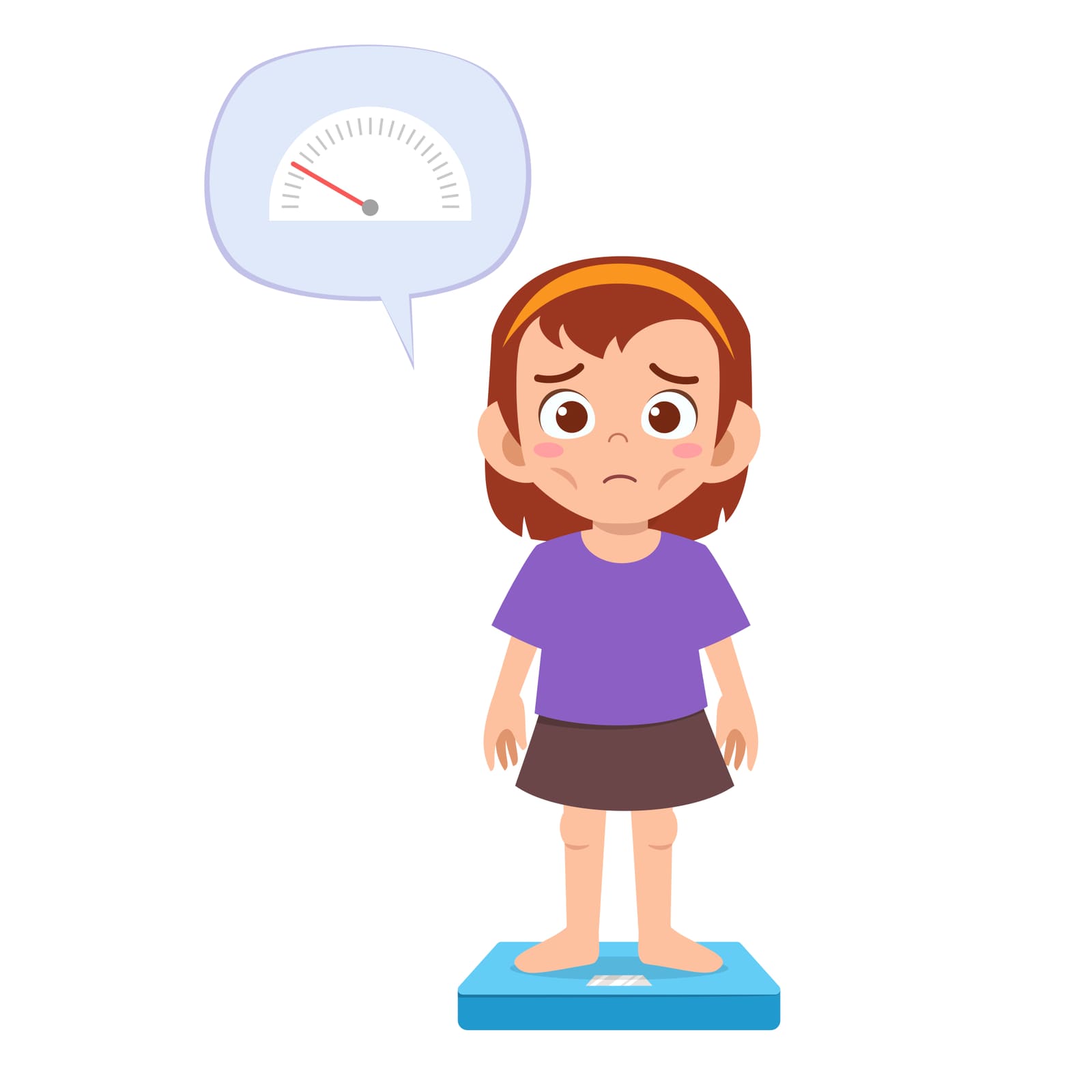
Failure to Thrive (FTT) is an irregular weight gain pattern documented by insufficient weight gain and the lack of adequate usable nutrition over time. The weight gain velocity decrease leads to the child falling steadily off the growth charts for the expected weight curve.
Types of Failure to Thrive
There are two types of FTT. These are organic and non-organic.
- 1.Organic: Organic FTT might be caused by medical issues like vomiting or diarrhea. If you have a child with organic FTT, it might be they're not able to take in the nutrients from formula or food.
- 2.Non-Organic: In some cases, there aren't any medical causes for Failure to Thrive, in which case that is referred to as non-organic FTT. Babies with non-organic FTT typically start gaining weight when there are changes made in how they're cared for, fed, and nurtured.
More than 80% of kids with growth failure don't have any evident organic (growth-inhibiting) disorder. The growth failure occurs due to environmental neglect (i.e. stimulus deprivation, lack of food, or both).
Some fall into a mixed FTT classification where there's an overlap in organic and nonorganic causes; kids with an organic disorder also experience dysfunctional parental interactions or disturbing environments. Likewise, those with serious undernutrition due to nonorganic FTT could develop organic medical issues.
Symptoms of Failure to Thrive in Infants
Typically, an impacted infant's weight falls on standard growth charts below the 3rd percentile. A growth rate change, instead of certain numbers, is also an indicator. For instance, if your child has seen ideal growth but then their growth stops, they might have Failure to Thrive.
Your child might have an unsteady growth rate. Some kids who have FTT show symptoms like:
- Delays in achieving certain developmental milestones like crawling, rolling over and talking
- Lack of weight gain
- Fatigue
- Lack of emotions like laughing, smiling or making eye contact
- Learning disabilities
- Delayed puberty in teenagers
- Delayed motor development
- Irritability
Causes Failure to Thrive
Different factors could cause FTT, including:
1. Caregiver Not Providing Enough Calories
In some cases, a parent or caregiver mixes or measures formula incorrectly; therefore the infant isn't getting sufficient calories. Issues with breastfeeding or beginning solids could also cause FTT.
2. The Child Doesn't Eat Enough
Some kids have difficulties consuming enough food. This could be because of:
- Being an extremely picky eater
- A developmental delay
- A condition like autism where children don't like eating foods with certain tastes or textures
- A health condition affecting swallowing (i.e. cleft palate or cerebral palsy)
3. Digestive System Problems
Digestive system issues could keep a child from gaining weight. Certain conditions could make it more difficult for your child to absorb enough calories and nutrients to gain weight. These conditions might include:
- Chronic diarrhea
- Gastroesophageal reflux (GERD)
- Celiac disease
- Chronic liver disease
- Cystic fibrosis
4. Food Intolerance
This is where the body is sensitive to certain foods. For instance, milk protein intolerance would mean your body can't absorb foods like cheese or yogurt and this could cause Failure to Thrive.
5. Ongoing Medical Conditions
Children with conditions that involve the lungs, heart, or endocrine system may require more calories than other children. It can be difficult for some kids to eat enough.
6. Infections
The body could use up many calories while it's fighting off an infection. And children who aren't feeling well may eat less than normal.
7. Metabolic Disorders
These are medical conditions that make it difficult for your body to use food properly like:
- Breaking it down
- Processing it
- Taking energy from it
Metabolic disorders could also cause a child to vomit or eat poorly.
In some cases, there's a mix of things that cause FTT. For example, if an infant has severe GERD and doesn't eat, it can cause stressful feeding times. They then become frustrated and upset and the parent may not be able to get the infant to eat enough.
Treatment of Failure to Thrive in Infants
The treatment your child receives will depend on their age, general health, and symptoms. It will also depend on the severity of the condition as well as the cause. Your child might have to see more than one healthcare professional, such as:
- Doctor
- Nutritionist/Registered Dietician
- Social worker
- Geneticist
- Physical therapist
- Pediatric Occupational Therapist
The healthcare professionals will work together and with the family to find the cause of Failure to Thrive and help your child get the nutrition they need.
You might also be able to find different foundations and societies, like Claire's Place Foundation for help.
Latest Insights on Failure to Thrive in Infants
According to new insight data, the definition of faltering growth or Failure to Thrive should take into account both the more complicated overall nutrition status and the evident anthropometric deterioration, which could have the full possibility of restoring and guaranteeing good health and/or wide-ranging negative health effects.
Some of the latest insights of a case presentation show FTT is an overlooked KMT2B-related dystonia manifestation. During an irregular neurologic examination, a search for certain underlying genetic causes should be evaluated. This case series highlights an unusual possibly treatable cause of FTT, reinforces how essential precise molecular diagnosis is for patients with FTT, and as well as an irregular neurologic examination. It also shows the importance of family member screening.
Searching for Tips on Managing Failure to Thrive in Infants?
If you would like to connect with other individuals going through the same health issues as you (those with infants with FTT) and learn different tips on how to cope with it, manage it and share personal stories, subscribe to Healthread. This provides you with insight and support beyond your family members, doctors, and friends. You can actually connect with real people going through the same real problems of FTT as you are.
Sources
- 1nationwidechildrens.org/conditions/failure-to-thrive-in-infants
- 2hopkinsmedicine.org/health/conditions-and-diseases/failure-to-thrive
- 3healthline.com/health/failure-to-thrive
- 4aafp.org/afp/2016/0815/p295.html
- 5merckmanuals.com/professional/pediatrics/miscellaneous-disorders-in-infants-and-children/failure-to-thrive-ftt
- 6kidshealth.org/en/parents/failure-thrive.html
- 7stanfordchildrens.org/en/topic/default?id=failure-to-thrive-90-P02297
- 8ncbi.nlm.nih.gov/pmc/articles/PMC4971446/
- 9aafp.org/afp/2003/0901/p879.html
- 10driscollchildrens.org/patient-education/food-nutrition/failure-to-thrive
- 11nationwidechildrens.org/conditions/failure-to-thrive
- 12mountsinai.org/health-library/diseases-conditions/failure-to-thrive
General information, not medical advice
This article can't account for your health history or current treatment. Talk to a qualified clinician before you change anything about your care.
Read our medical disclaimer →
On this page
Types of Failure to Thrive
Symptoms of Failure to Thrive in Infants
Causes Failure to Thrive
1. Caregiver Not Providing Enough Calories
2. The Child Doesn't Eat Enough
3. Digestive System Problems
4. Food Intolerance
5. Ongoing Medical Conditions
6. Infections
7. Metabolic Disorders
Treatment of Failure to Thrive in Infants
Latest Insights on Failure to Thrive in Infants
Searching for Tips on Managing Failure to Thrive in Infants?
Sources
Put what you read to work
Track your medicines, check a symptom and talk with people managing the same condition, all in Healthread.
Get the app
Keep reading

Beauty and Anti-Aging
Gastric Balloon for Weight Loss
The gastric balloon weight loss procedure is a new FDA-approved minimally invasive bariatric procedure for treating obesity. It is a temporary procedure that involves placing a saline-filled silicone balloon in the…
June 19, 2025 · 3 min read
Beauty and Anti-Aging
Vitamin D Deficiency
Also known as the sunshine vitamin, vitamin D is an essential nutrient that is naturally absorbed by the skin through exposure to sunlight. It can also be obtained from dietary sources and supplements.
December 30, 2024 · 3 min read

Cancer-Updates
Gynecologic Cancer
Gynecologic cancer is a term used to describe a group of cancers that affect the female reproductive system. There are five types of gynecologic cancers named after the body part where they start.
November 5, 2024 · 3 min read


© 2026 Healthread
English · Español
Healthread does not provide medical advice, diagnosis or treatment. Always speak to a qualified clinician about your care.