

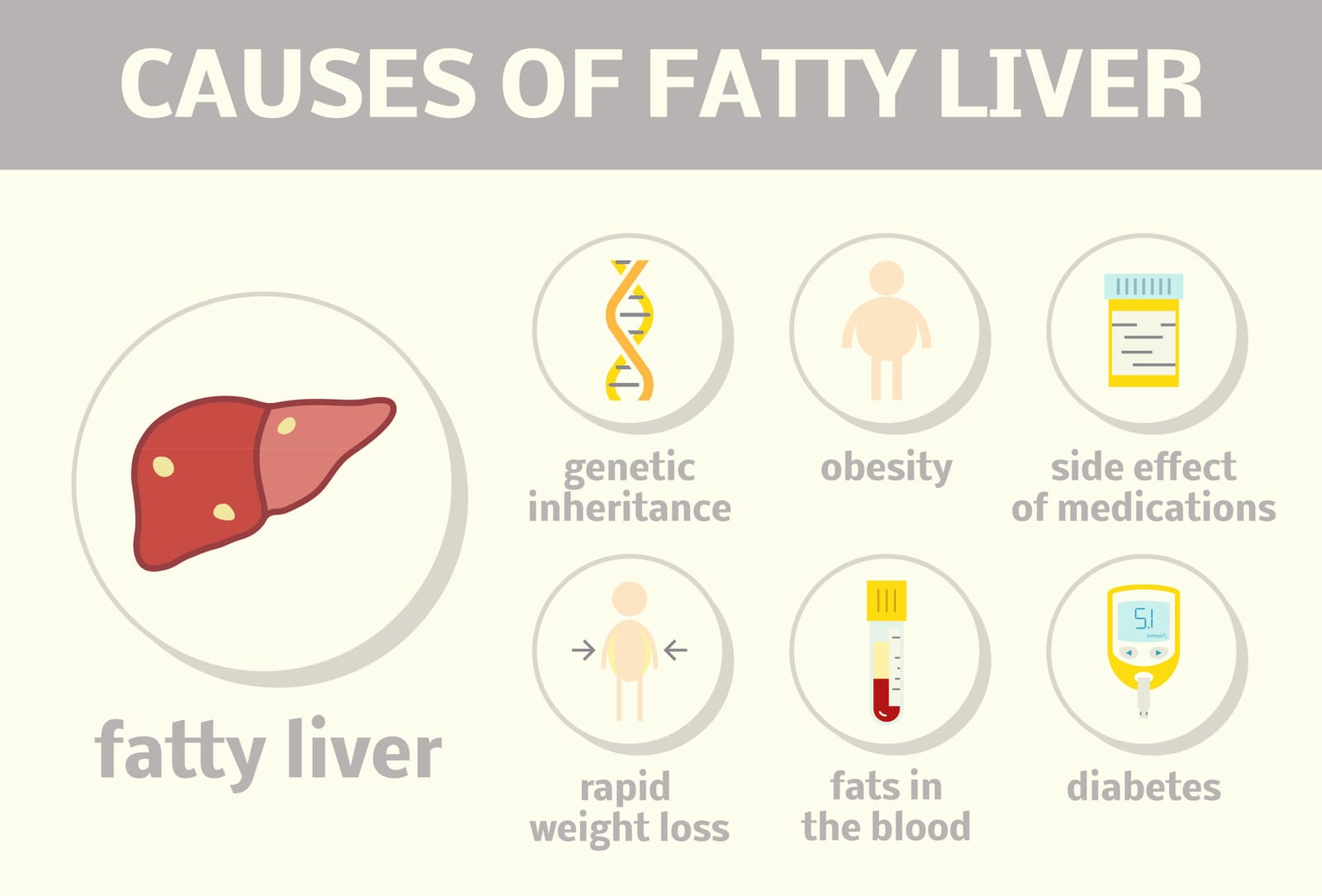
Many people associate liver disease with alcoholism, but not only is it possible for people who don't drink alcohol to have a fatty liver, the Liver Foundation estimates that as many as 100 million people in the U.S. have Nonalcoholic Fatty Liver Disease (NAFLD). NAFLD doesn't just affect adults, either. The Liver Foundation reports that NAFLD is the most common type of liver disease affecting children, and its prevalence has increased over two times over the past two decades. Emerging research shows that there may be several genetic markers associated with children with NAFLD, and children may also have none of the risk factors for fatty liver disease but have an early form of the disease and require intervention. Up to 25% of people in the U.S. are affected by NAFLD, which is the world's most common form of chronic liver disease.
What is Nonalcoholic Fatty Liver Disease?
Nonalcoholic fatty liver disease (NAFLD) is a spectrum of disease characterized by presence of fat in the liver (Steatosis) in the absence of excessive alcohol consumption.NAFLD is subdivided into nonalcoholic fatty liver (NAFL) and nonalcoholic steatohepatitis (NASH). In NAFL, hepatic steatosis is present without evidence of significant inflammation, whereas in NASH, hepatic steatosis is associated with hepatic inflammation that may be histologically indistinguishable from alcoholic steatohepatitis
If blood tests show high levels of liver enzymes, additional tests including an ultrasound, or Vibration Controlled Transient Elastography may be conducted to determine whether you have too much fat in your liver. In some cases, a biopsy of the liver may be required. Too much fat in the liver can result in inflammation, which eventually causes scarring, also called cirrhosis. Severe cirrhosis can cause liver failure.
What is NASH (nonalcoholic steatohepatitis)?
NASH is a serious form of NAFLD. If your liver has five to ten percent fat content, you can be diagnosed with nonalcoholic steatohepatitis (NASH). NASH can be aggressive and grow worse quickly, leading to cirrhosis. Cirrhosis of the liver (scarring) can progress to liver failure and liver cancer, both of which are potentially fatal. According to the Mayo Clinic, between 5% and 10% of people with NASH will have cirrhosis.
What are symptoms of nonalcoholic fatty liver disease?
Often, people with NAFLD experience no symptoms and are unaware they have the disease. When symptoms develop, they include fatigue and pain in the upper right side of the abdomen, where the liver is located.
Additional symptoms include:
- Enlarged liver or spleen
- Swollen belly (ascites)
- Jaundice (yellow eyes and skin)
Additional symptoms can include internal bleeding, general fluid retention, including swollen ankles, loss of liver function, and a confused mental state.
Clinicians need additional testing to discover whether liver disease is at a mild or moderate state (NAFLD) or has progressed to NASH.
What are risk factors for NAFLD (nonalcoholic fatty liver disease)?
NAFLD is sometimes called a "disease of civilization" because its causes and risk factors are associated with sedentary lifestyles and high calorie diets. Risk factors for NAFLD include metabolic syndrome (the combination of high blood pressure, high blood sugar, large waist circumference, and high blood cholesterol).
Other risk factors include:
- High blood cholesterol
- High levels of triglycerides
- Obesity
- Polycystic ovary syndrome (PCOS)
- Sleep apnea
- Type 2 diabetes
- Hypothyroidism (low thyroid)
- Hypopituitarism (underactive pituitary gland)
Advancing age is a risk factor for NAFLD, but fatty liver disease can affect anyone at any age, including children. Another condition, acute fatty liver of pregnancy (AFLP), is a rare and serious that an occur in the third trimester of pregnancy or shortly after giving birth. AFLP's cause is unknown, but it is a higher risk for first pregnancies, and may have a genetic cause.
How is NAFLD treated?
There are no specific medications for NAFLD, although research is under way to develop medications. Treatment includes seeking regular medical attention and monitoring. Your clinician can help to advise you on how to improve your liver health. If you are among the 2-5% of people with NASH with liver disease that progresses to cirrhosis, your condition can be maintained, but it can't be cured, and it may progress to fatal liver failure.
In General, the following measures are recommended:
1. Weight loss for those who are obese
2. For those who are Diabetics- optimizing blood sugar control
3. For those with Hyperlipidemia or high cholesterol- lipid lowering agents
4. Vaccinations for Hepatitis A and B virus
5. Avoidance of alcohol consumption
The Mayo Clinic advises self-help measures including losing weight safely, exercising regularly, and eating a healthy diet. If you have been diagnosed with NAFLD, and you have diabetes, it's important to keep your diabetes under control. You should avoid alcohol if you have NAFLD.
NAFLD can be prevented by maintaining a healthy weight, eating a healthy diet, and limiting alcohol intake. According to the Liver Foundation, eating a fatty diet and failing to exercise could be as dangerous to your liver as alcoholism.
For some patients with NASH and advanced fibrosis who do not meet their weight loss goals after six months of lifestyle intervention Bariatric Surgery for weight loss is sometimes considered.
If you have a severe form of NASH but do not also have diabetes or heart disease, your doctor might suggest that you take vitamin E. A few studies suggest that vitamin E can reduce some of the liver damage that occurs as part of NASH. On the other hand, there are also studies that suggest that high doses of vitamin E increase the risk of death. So do not take vitamin E unless your doctor recommends it.
Sources
- 1mayoclinic.org/diseases-conditions/nonalcoholic-fatty-liver-disease/symptoms-causes/syc-20354567
- 2liverfoundation.org/for-patients/about-the-liver/diseases-of-the-liver/non-alcoholic-fatty-liver-disease/
- 3the-nash-education-program.com/what-is-nash/
- 4ncbi.nlm.nih.gov/pmc/articles/PMC2538964/#:~:text=Acute%20fatty%20liver%20of%20pregnancy%20(AFLP)%20is%20a%20rare%2C,in%20fetal%20fatty%20acid%20metabolism
- 5chop.edu/conditions-diseases/acute-fatty-liver-pregnancy#:~:text=The%20exact%20cause%20of%20AFLP,of%20long%20chain%20fatty%20acids
- 6nature.com/articles/s41575-019-0169-z#:~:text=However%2C%20children%20affected%20by%20NAFLD,are%20not%20specific%20to%20NAFLD
General information, not medical advice
This article can't account for your health history or current treatment. Talk to a qualified clinician before you change anything about your care.
Read our medical disclaimer →
On this page
What is Nonalcoholic Fatty Liver Disease?
What is NASH (nonalcoholic steatohepatitis)?
What are symptoms of nonalcoholic fatty liver disease?
What are risk factors for NAFLD (nonalcoholic fatty liver disease)?
How is NAFLD treated?
Sources
Put what you read to work
Track your medicines, check a symptom and talk with people managing the same condition, all in Healthread.
Get the app
Keep reading

Beauty and Anti-Aging
Gastric Balloon for Weight Loss
The gastric balloon weight loss procedure is a new FDA-approved minimally invasive bariatric procedure for treating obesity. It is a temporary procedure that involves placing a saline-filled silicone balloon in the…
June 19, 2025 · 3 min read
Beauty and Anti-Aging
Vitamin D Deficiency
Also known as the sunshine vitamin, vitamin D is an essential nutrient that is naturally absorbed by the skin through exposure to sunlight. It can also be obtained from dietary sources and supplements.
December 30, 2024 · 3 min read

Cancer-Updates
Gynecologic Cancer
Gynecologic cancer is a term used to describe a group of cancers that affect the female reproductive system. There are five types of gynecologic cancers named after the body part where they start.
November 5, 2024 · 3 min read


© 2026 Healthread
English · Español
Healthread does not provide medical advice, diagnosis or treatment. Always speak to a qualified clinician about your care.