

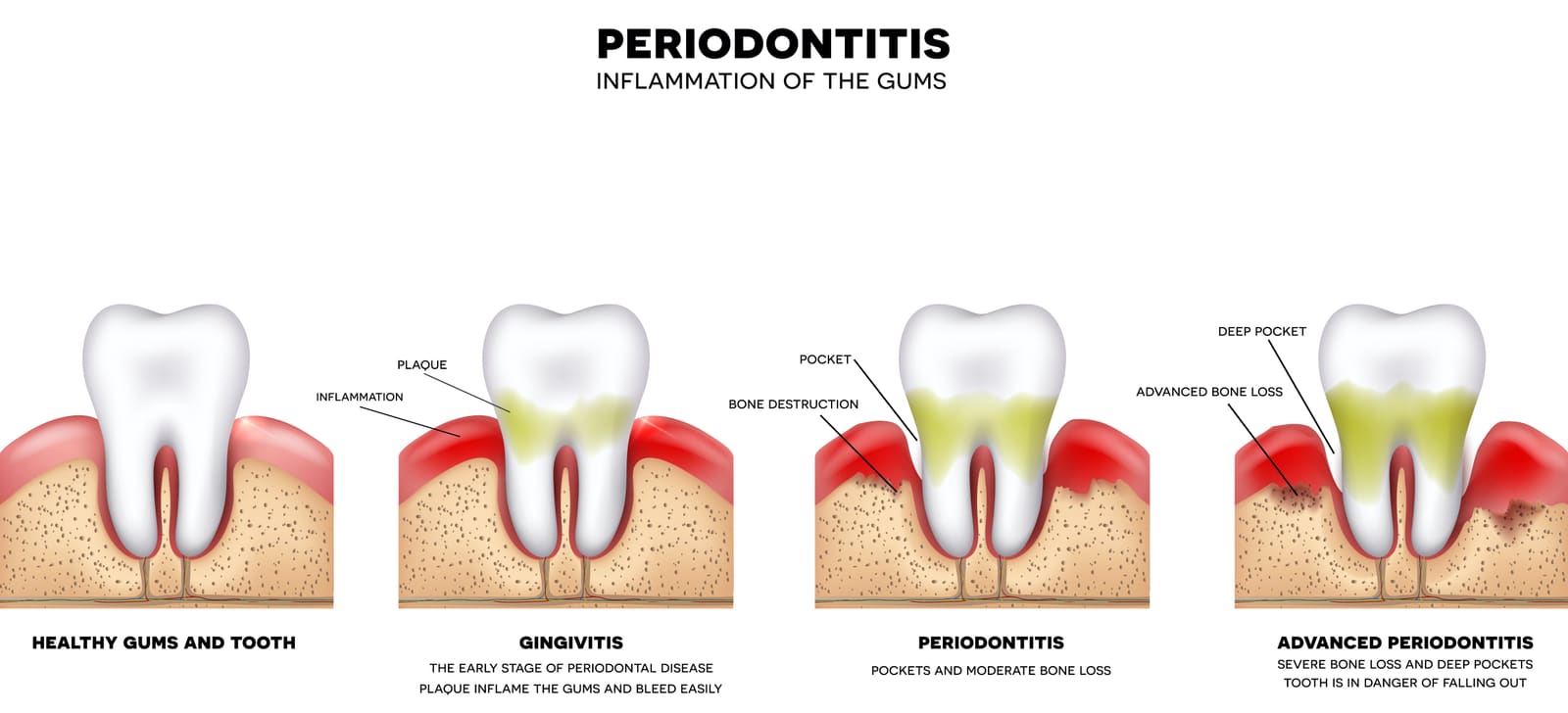
Gum diseases are not uncommon. Recent findings from the Centers for Disease Control and Prevention (CDC) show half of the individuals in the U.S. who are 30 years old or older have periodontitis, or gum disease. This is around 64.7 million Americans.
Types of Gum Disease
There are two main forms of gum disease. These are:
1) Gingivitis
This is the milder form of periodontal disease where your gums become swollen, red, and bleed easily. You don't usually experience any discomfort at this stage. Gingivitis is often due to poor oral hygiene. With good oral home care and professional treatment, it is reversible.
There are certain factors that can contribute to gingivitis, including:
- Smoking
- Diabetes
- Genetic predisposition
- Aging
- Stress
- Hormonal fluctuations
- Systemic conditions
- Pregnancy
- HIV infection
- Substance abuse
- Certain medication use
2) Periodontitis
When you don’t treat gingivitis, it can turn into periodontitis. Plaque can spread, with time, and grow below your gum line. Bacteria-produced toxins in plaque can aggravate your gums. These toxins cause a chronic inflammatory response where your body essentially turns on itself and the bones and tissues supporting your teeth break down and become damaged. Your gums then separate from your teeth, form pockets, and become infected.
With the progression of the disease, these pockets become deep and more bone and gum tissue are damaged. Eventually, your teeth could become loose and a dentist will need to remove them.
There are various forms of periodontitis, including:
- Chronic periodontitis: This is caused by inflammation within your teeth's supporting tissues, progressive attachment, and loss of bone. It's the form of periodontitis that occurs the most often and is characterized by the recession of the gingiva and/or pocket formation.
- Aggressive periodontitis: Common features of this type of periodontitis are bone destruction, rapid attachment loss, and familial aggregation.
- Systemic disease-manifested periodontitis: Systemic conditions cause this form of periodontitis such as diabetes, respiratory disease, and heart disease.
- Necrotizing periodontal disease: An infection marked by necrosis of the alveolar bone, periodontal ligament, and gingival tissues. People with systemic conditions like malnutrition, HIV infection, and immunosuppression often experience these lesions.
Causes of Gum Disease
Poor oral hygiene allows plaque bacteria and calculus to stay on your teeth, infecting your gums, and leading to gum disease. However, there are other factors that raise your risk of gingivitis, including:
- 1.Chewing tobacco or smoking: Keeps your gum tissue from healing properly.
- 2.Hormonal changes: Hormonal changes in pregnancy, puberty or menopause usually increase the risk of gingivitis. The hormone increase causes your gums' blood vessels to be more vulnerable to chemical attack and bacteria.
- 3.Rotated, crooked or overlapping teeth: This can generate more areas for calculus and plaque to accumulate. And these areas are more difficult to keep clean.
- 4.Cancer treatment and cancer: These cause you to be more vulnerable to infection, increasing your risk of gum disease.
- 5.Stress: Stress impairs the immune response of your body to bacterial invasion.
- 6.Alcohol: Impacts oral defense mechanisms negatively.
- 7.Poor nutrition: If you have a diet high in carbohydrates and sugar and low in water intake, it increases your formation of plaque. Healing is also impaired when you have a nutrient deficiency, such as being deficient in Vitamin C.
- 8.Mouth breathing: This can be hard on your gums when your lips aren't protecting them. It can cause inflammation and chronic irritation.
- 9.Diabetes: It can impair circulation and the healing ability of your gums.
- 10.Medicines: For instance, antiseizure medicines increase your gum disease risk.
- 11.Poor saliva production. Saliva helps to remove food particles from your teeth to reduce your chance of developing tooth decay.
- 12.Infrequent or no dental care. Regular dental care is an essential tool in preventing and managing gum disease.
Symptoms of Gum Disease
Gum disease symptoms might include:
- Bleeding or tender gums
- Bad breath that doesn't go away
- Loose teeth
- Swollen or red gums
- Longer appearing teeth or receding gums
- Sensitive teeth
- Painful chewing
Preventing Gum Disease
To help control or prevent periodontal disease, it's essential to brush and floss your teeth every day which will help remove bacteria that cause gum disease. And, see your dentist a minimum of once a year for a checkup or if you're noticing any warning signs or you're at risk for any of the factors mentioned above, see the dentist more frequently.
Treatment for Gum Disease
It’s possible to control and treat gingivitis with regular professional cleanings and good oral hygiene. You can also treat more serious forms of periodontal disease successfully, however, you’ll need more extensive treatment like medicine, deep cleaning of your tooth root surfaces below your gums through a process known as root planing and scaling. In some cases, you might need corrective gum surgery.
Looking for Tips on Managing Gum Disease?
Subscribe to Healthread so you can connect with other people just like you who are finding ways to manage their gum disease or other health conditions. Or, if you've found a way to keep your gum disease at bay, share your story on Healthread!
Sources
- 1perio.org/newsroom/periodontal-disease-fact-sheet#:~:text=The%20Prevalence%20of%20Periodontal%20Disease,equals%20approximately%2064.7%20million%20Americans
- 2perio.org/newsroom/periodontal-disease-fact-sheet#:~:text=The%20Prevalence%20of%20Periodontal%20Disease,equals%20approximately%2064.7%20million%20Americans
- 3perio.org/consumer/types-gum-disease.html
- 4nidcr.nih.gov/health-info/gum-disease/more-info
- 5medicinenet.com/gum_disease/article.htm
- 6cdc.gov/oralhealth/conditions/periodontal-disease.html
General information, not medical advice
This article can't account for your health history or current treatment. Talk to a qualified clinician before you change anything about your care.
Read our medical disclaimer →
On this page
Types of Gum Disease
1) Gingivitis
2) Periodontitis
Causes of Gum Disease
Symptoms of Gum Disease
Preventing Gum Disease
Treatment for Gum Disease
Looking for Tips on Managing Gum Disease?
Sources
Put what you read to work
Track your medicines, check a symptom and talk with people managing the same condition, all in Healthread.
Get the app
Keep reading

Beauty and Anti-Aging
Gastric Balloon for Weight Loss
The gastric balloon weight loss procedure is a new FDA-approved minimally invasive bariatric procedure for treating obesity. It is a temporary procedure that involves placing a saline-filled silicone balloon in the…
June 19, 2025 · 3 min read

Beauty and Anti-Aging
Vitamin D Deficiency
Also known as the sunshine vitamin, vitamin D is an essential nutrient that is naturally absorbed by the skin through exposure to sunlight. It can also be obtained from dietary sources and supplements.
December 30, 2024 · 3 min read

Cancer-Updates
Gynecologic Cancer
Gynecologic cancer is a term used to describe a group of cancers that affect the female reproductive system. There are five types of gynecologic cancers named after the body part where they start.
November 5, 2024 · 3 min read


© 2026 Healthread
English · Español
Healthread does not provide medical advice, diagnosis or treatment. Always speak to a qualified clinician about your care.