

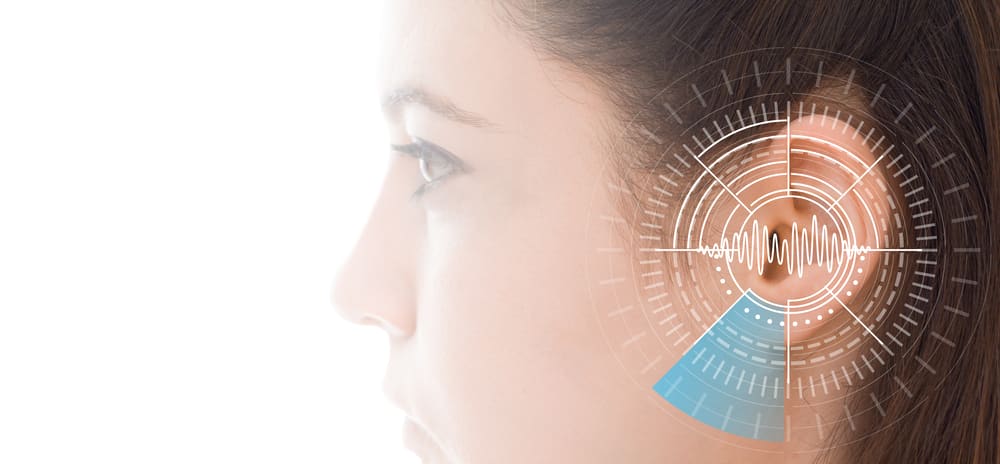
If you've ever wondered how common hearing loss is, you might be surprised to know that an estimated 1 in 8 Americans over the age of 12 have hearing loss affecting both ears. According to the National Institute on Deafness and Other Communication Disorder (NIDCD), 2 percent of adults aged 45 to 54 have disabling hearing loss, and among adults aged 55 to 64 that figure jumps to more than 8 percent. Overall, as many as 1 in 5 adults and two-thirds of older adults experience at least some degree of hearing difficulty.
If you suspect a loved one has trouble hearing, or if you're concerned about your own ability to hear, keep reading to learn five key things about this common health issue.
5 Things to Know About Hearing Loss
1. Three Main Kinds of Hearing Loss Exist
Your ability to hear is a result of a complex interaction between multiple structures, chemicals, and pathways in your brain and ears. Any one of these areas can be affected and lead to partial or complete loss of hearing.
- Conductive hearing loss, which occurs when sound waves cannot get through the outer and middle ear
- Sensorineural hearing loss, which occurs due to damage to the inner ear structures or nerves that transmit auditory information to the brain from the inner ear
- Mixed hearing loss, which occurs due to a combination of conductive and sensorineural hearing loss
2. Symptoms of Hearing Loss Vary
Signs and symptoms of hearing loss may be temporary or permanent, and can include:
- Muffling of noises, including speech
- Difficulty understanding words or certain parts of words (including consonants), especially while in a crowd or when there are other background noises
- Needing to frequently ask others to speak more slowly, clearly, or loudly
- Turning up the volume on televisions or other audio and audiovisual devices
- Withdrawal and lack of interest from conversations or even the desire to avoid certain social situations
In infants or any person who is unable to tell you when they can't hear well, you may look for signs of hearing loss including:
- Lack of startle response to loud noises
- Not turning toward a sound after age six months
- Delayed speech and langauge (e.g., not saying single words like "mama" or "dada" by age one year)
- Turning toward a person only if the person is visible, and not if the person just calls the infant's name or makes noise
3. There are Multiple Risk Factors for Hearing Loss
Hearing loss is a surprisingly common birth defect. As many as 3 out of 1,000 children in the U.S. are born with a detectable level of hearing loss in one or both ears. Even though 90 percent of children born with hearing loss have typically-hearing parents, genes are believed to be a play a role in some cases of deafness.
In addition to genes and family history, other risk factors are known:
- Conductive hearing loss may be due to ear infections, benign tumors, holes in the eardrum, and fluid in the middle ear
- Sensorineural hearing loss (SNHL) may be due to illness, drug toxicity, genetic hearing loss, advancing age, listening to loud noise or explosions, trauma to the head, inner ear malformation at birth
Older people and men are also more likely to experience hearing loss.
4. Treatment Can Help
As with any condition, proper diagnosis and a careful rule out of other conditions is an important step of treating hearing loss. Treatment is important, especially for older adults who tend to be most affected by hearing loss. According to The National Council on the Aging (NCOA), untreated hearing loss may increase the risk of depression among elderly people and could serve as a hidden factor in social isolation.
While dependent on your specific needs and situation, your hearing loss treatment may include:
- Surgery, including cochlear implants (which improve hearing by directly stimulating the hearing nerve) or insertion of tubes to help drain excess fluid from the inner ear
- Removal of wax blockage
- Hearing aids
- Hearing amplifiers
- Audio-visual aids (e.g., closed captioning)
A variety of medical providers may be involved in your or your loved one's hearing loss plan of care, including a physician, ear nose and throat (ENT) specialist (otolaryngologist), audiologist, and speech-language pathologist (SLP).
There is on-going research, including a recent study from USC and Harvard University, investigating ways to restore hearing by repairing cells inside the ear. Some people with partial or complete deafness may also choose to learn sign language or develop the ability to read lips as a way to help them negotiate their daily life with impaired hearing.
5. There Are Ways to Protect Your Hearing and Avoid Hearing Loss
While not all types of hearing loss are preventable, there are things you can do to protect your hearing in your day-to-day life. Here are a few simple tips to keep in mind:
- Avoid recurrent, excessive, and/or prolonged exposure to noises over 85 decibels (dB); as a reference, busy traffic ranges from 70 to 85dB, normal conversation is around 60dB, and listening to music through headphones at full volume reaches up to 110dB
- Have your hearing examined by your doctor or ask for a referral to a hearing specialist (newborn infantsshould be screened for hearing loss as young as one month old)
- Wear appropriate ear protection during activities associated with loud noises
- Take frequent breaks from activities associated with loud noises
- Try using noise-canceling headphones while listening to music, since this helps amplify sound without forcing you to turn up the volume too loud
Is Hearing Loss Affecting Your Daily Life?
It can be a struggle watching yourself or a loved one lose the ability to hear. Fortunately, support is available through your medical providers and the following resources. As always, we also invite you to meet other people from our Healthread community whose lives are also affected by hearing loss. Reach out today!
- American Speech Language Hearing Association (find an audiologist near you)
Sources
- 1nidcd.nih.gov/health/statistics/quick-statistics-hearing
- 2healthychildren.org/English/ages-stages/baby/Pages/Purpose-of-Newborn-Hearing-Screening.aspx
- 3mayoclinic.org/diseases-conditions/hearing-loss/symptoms-causes/syc-20373072
- 4asha.org/public/hearing/Types-of-Hearing-Loss/
- 5marchofdimes.org/complications/hearing-loss-and-your-baby.aspx
General information, not medical advice
This article can't account for your health history or current treatment. Talk to a qualified clinician before you change anything about your care.
Read our medical disclaimer →
On this page
5 Things to Know About Hearing Loss
1. Three Main Kinds of Hearing Loss Exist
2. Symptoms of Hearing Loss Vary
3. There are Multiple Risk Factors for Hearing Loss
4. Treatment Can Help
5. There Are Ways to Protect Your Hearing and Avoid Hearing Loss
Is Hearing Loss Affecting Your Daily Life?
Sources
Put what you read to work
Track your medicines, check a symptom and talk with people managing the same condition, all in Healthread.
Get the app
Keep reading

Beauty and Anti-Aging
Gastric Balloon for Weight Loss
The gastric balloon weight loss procedure is a new FDA-approved minimally invasive bariatric procedure for treating obesity. It is a temporary procedure that involves placing a saline-filled silicone balloon in the…
June 19, 2025 · 3 min read

Beauty and Anti-Aging
Vitamin D Deficiency
Also known as the sunshine vitamin, vitamin D is an essential nutrient that is naturally absorbed by the skin through exposure to sunlight. It can also be obtained from dietary sources and supplements.
December 30, 2024 · 3 min read

Cancer-Updates
Gynecologic Cancer
Gynecologic cancer is a term used to describe a group of cancers that affect the female reproductive system. There are five types of gynecologic cancers named after the body part where they start.
November 5, 2024 · 3 min read


© 2026 Healthread
English · Español
Healthread does not provide medical advice, diagnosis or treatment. Always speak to a qualified clinician about your care.