

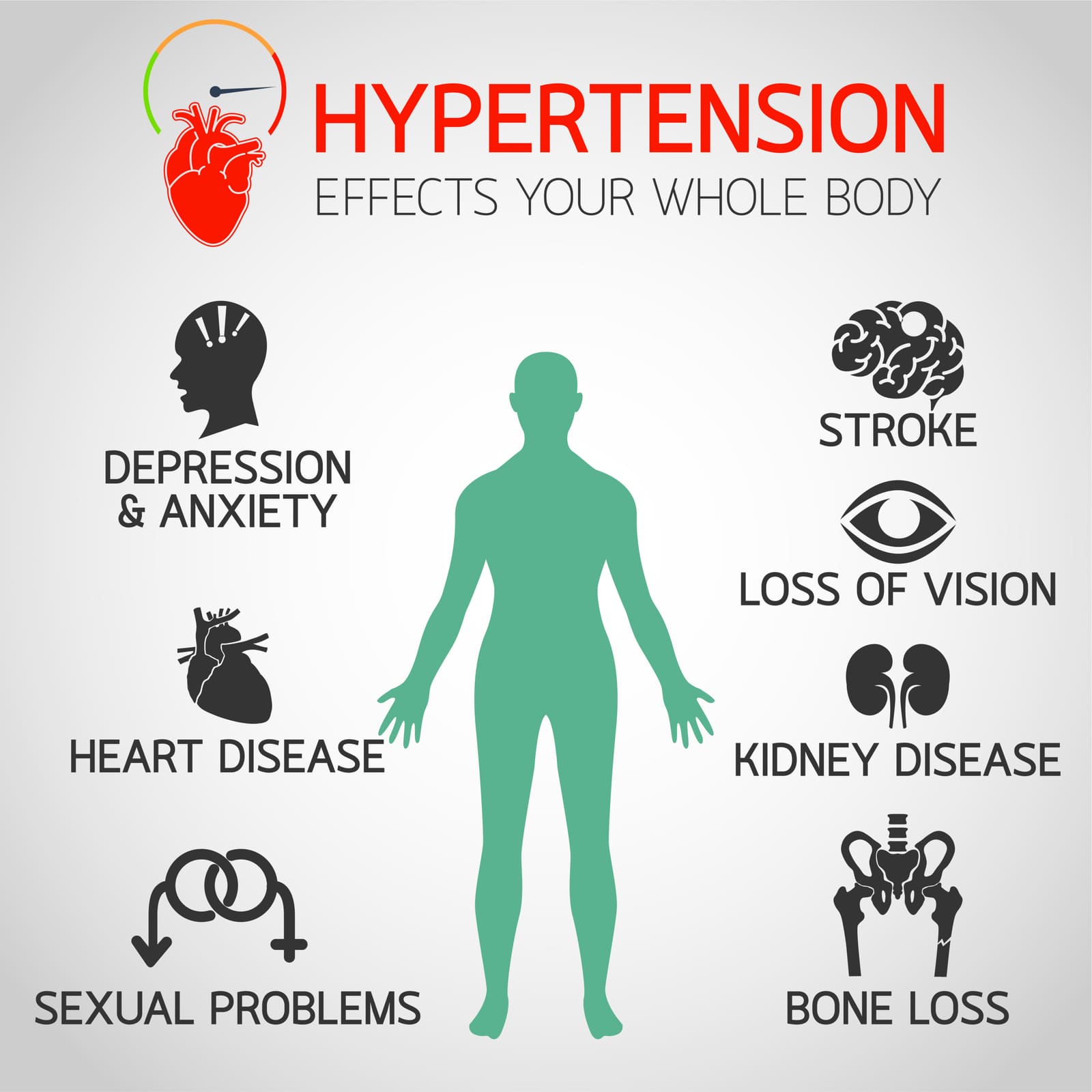
Almost half of all Americans suffer from high blood pressure or hypertension. Of those, 45 percent with high blood pressure do not have it controlled via treatment. Uncontrolled hypertension may lead to stroke, heart attack, and other cardiovascular issues.
Hypertension Definition
Every heartbeat creates pressure pushing blood through the blood vessels. That blood pressure consists of systolic pressure, which is the force the heart expends on the artery walls every time it beats. Diastolic pressure is the exertion of the heart on these walls between beats.
Blood pressure is measured by measured in millimeters of mercury (mmHg). The systolic pressure is the first number and the diastolic pressure is the second. The former is the number most indicative of risk. When blood pressure is too high, the heart and blood vessels must work harder but do not work as well.
Normal blood pressure is below 120/80 mm Hg. Above that level, blood pressure is considered elevated. Stage 1 hypertension occurs when the systolic pressure ranges between 130 to 139 mm Hg or the diastolic pressure ranges between 80 to 89 mm Hg. The more serious stage 2 hypertension occurs when there is a systolic pressure of 140 mm Hg or more or a diastolic pressure of 90 mm Hg or above. Hypertensive crisis happens when systolic pressure reaches 180 mm Hg or more or diastolic pressure is 120 mm Hg or greater. Emergency medical attention is needed.
High blood pressure is a chronic condition requiring constant vigilance. Unlike other serious health problems, a person with hypertension may not feel any symptoms. Some people with very high blood pressure may develop headaches or nosebleeds, but most will have no symptoms at all until some cardiovascular event strikes.
Lifestyle Changes
Most people with hypertension should make basic lifestyle changes to help keep their blood pressure at acceptable levels. These changes are beneficial for good health overall. They include:
- Consuming a healthy diet with little sodium
- Regular exercise
- Maintaining a healthy weight
- Limiting caffeine and alcohol intake
- Not smoking
- Avoid stress
Check your blood pressure daily with a home blood pressure monitor. Write down the numbers and keep a journal. It is also vital to visit your doctor regularly.
Blood Pressure Medications
Current hypertension treatment revolves around finding the right medication for the individual patient. Most patients are prescribed diuretics to help the kidneys eliminate water and sodium. Diuretics are often referred to as water pills. Expect to urinate more once on these drugs. Common thiazide diuretics used to reduce hypertension include hydrochlorothiazide, marketed under the brand name Microzide, and chlorthalidone.
Diuretics alone are not sufficient to control hypertension in many patients. Other medications are often added to the regimen. These include drugs in the following classes:
- Angiotensin-converting enzyme (ACE) inhibitors –These drugs can help relax blood vessels by preventing a hormone that narrows these vessels from forming. They are frequently recommended for those with kidney disease. ACE inhibitors include captopril, sold under the brand name Capoten; benazepril (Lotensin); enalapril (Vasotec), and lisinopril (Zestril).
- Angiotensin II receptor blockers (ARBs) –ARBs work by blocking the action of the chemicals narrowing the blood vessels, not the chemical formation per se. They are also recommended for those with kidney disease. This class of drugs includes losartan (Cozaar); candesartan (Atacand), and valsartan (Diovan).
- Calcium channel blockers –These drugs relax blood vessel muscles. They may also slow the heart rate. The elderly and those of African descent may find calcium channel blockers are more effective than solely using ACE inhibitors. Examples of calcium channel blockers include amlodipine (Norvasc); Isradipine (DynaCirc), and bepridil (Vasocor).
- Central agonists –This class of drugs prevents the brain from signaling to speed the heart rate and narrowing blood vessels. These include clonidine (Catapres); methyldopa (Aldomet), and guanfacine (Tenex).
- Vasodilators –By relaxing the muscles in the walls of the blood vessels, vasodilators make blood flow more easily. Examples include minoxidil – which is also marketed topically for hair growth –and hydralazine (Apresoline).
Some of the drugs are combined so that patients may take different types of drugs in one pill or tablet. Although medication adjustment is common, do not change your medication or dosage without consulting your doctor.
Future Treatments
A new approach to managing high blood pressure is currently in the trial stage. Known as renal denervation, the method is under study in the SPYRAL HTN Global Clinical Trial. The process involves inserting a catheter into the groin and continuing through the arteries going to the kidneys. Via a device connected to the catheter, radio wave energy is delivered to nerves affecting blood pressure. These nerves go in and out of the kidneys. Already approved in Europe, renal denervation has had good results with few side effects. After treatment, patients have been able to lower and in some cases stop using medication.
Sources
General information, not medical advice
This article can't account for your health history or current treatment. Talk to a qualified clinician before you change anything about your care.
Read our medical disclaimer →
On this page
Hypertension Definition
Lifestyle Changes
Blood Pressure Medications
Future Treatments
Sources
Put what you read to work
Track your medicines, check a symptom and talk with people managing the same condition, all in Healthread.
Get the app
Keep reading
Beauty and Anti-Aging
Gastric Balloon for Weight Loss
The gastric balloon weight loss procedure is a new FDA-approved minimally invasive bariatric procedure for treating obesity. It is a temporary procedure that involves placing a saline-filled silicone balloon in the…
June 19, 2025 · 3 min read
Beauty and Anti-Aging
Vitamin D Deficiency
Also known as the sunshine vitamin, vitamin D is an essential nutrient that is naturally absorbed by the skin through exposure to sunlight. It can also be obtained from dietary sources and supplements.
December 30, 2024 · 3 min read

Cancer-Updates
Gynecologic Cancer
Gynecologic cancer is a term used to describe a group of cancers that affect the female reproductive system. There are five types of gynecologic cancers named after the body part where they start.
November 5, 2024 · 3 min read


© 2026 Healthread
English · Español
Healthread does not provide medical advice, diagnosis or treatment. Always speak to a qualified clinician about your care.