

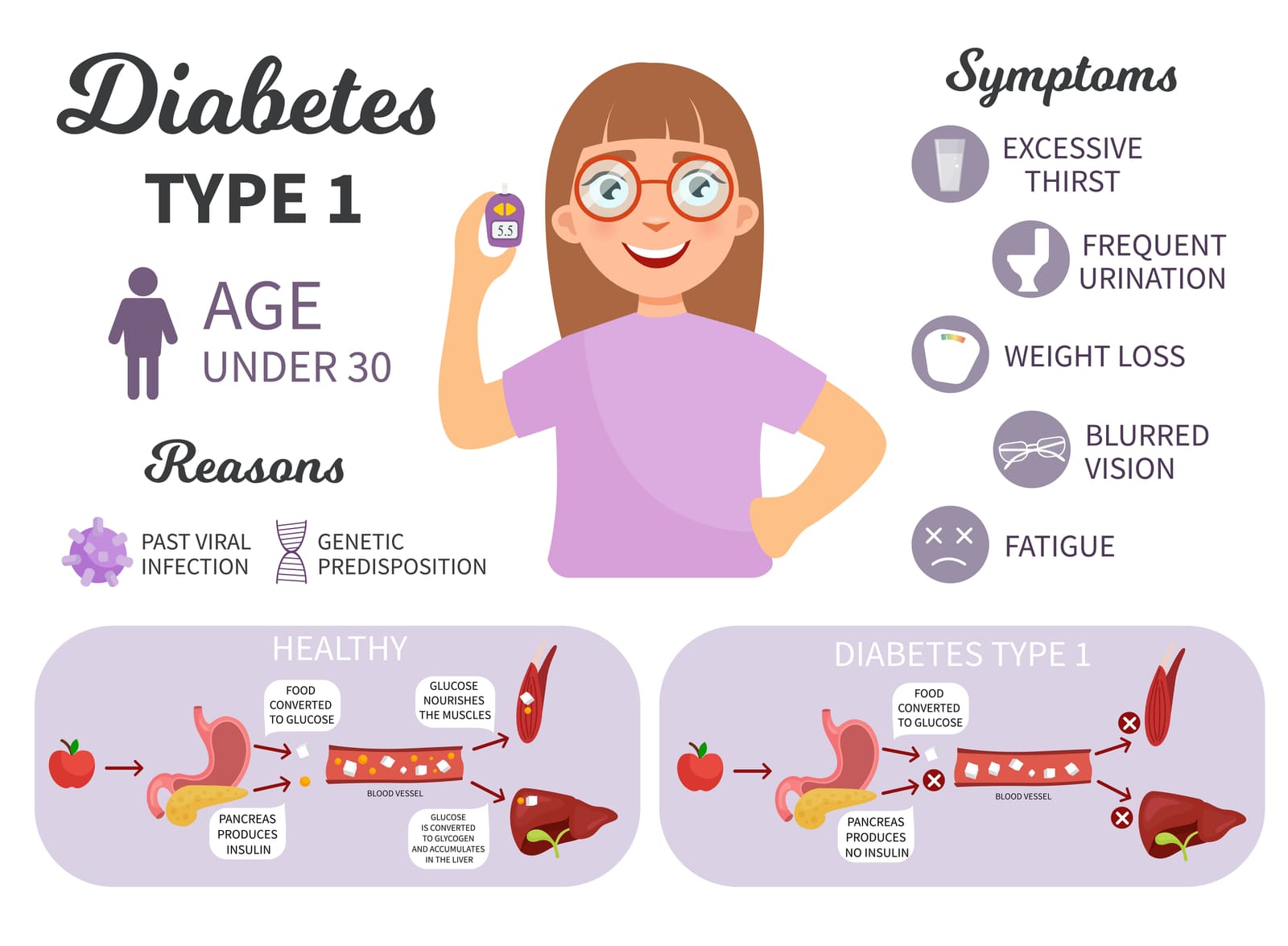
Diabetes mellitus is a disease that causes you to have difficulty responding to the hormone insulin and having a lack of Insulin. There are two major types of diabetes: juvenile onset (type 1) and adult onset (type 2).
Understanding Juvenile Diabetes Mellitus
When you eat carbohydrates, your body must break them into smaller molecules to be digested. Carbohydrates are made up of strings of glucose molecules, which the body uses for energy. During digestion, glucose leaves the digestive tract and enters the bloodstream. Once there, it can travel throughout the body to be used as energy.
The hormone insulin is responsible for moving glucose molecules from the bloodstream into cells. Islet cells in the pancreas produce insulin and send it throughout the body. For people with type 1 diabetes, the body’s own immune system mistakenly attacks these islet cells. This autoimmune response causes a loss of insulin production. As a result, the body cannot move glucose from the bloodstream into tissues. This causes blood sugar levels to become disrupted.
Like its name implies, juvenile diabetes mellitus typically begins in childhood or adolescence. There are two major peaks in the age of onset: one for children aged 4 to 7 and another when children go through puberty between ages 10 and 14. Typical juvenile diabetes mellitus symptoms occur in patients with elevated blood sugar (Hyperglycemia) and include:
· Significant thirst
· Urinating more frequently
· Wetting the bed, particularly among children for whom this has not been a problem in the past
· Weight loss
· Blurred vision and Development of cataracts
· Fatigue
· Weakness
· Irritability
· Extreme hunger despite eating an adequate diet
· perineal candidiasis, which is a relatively common presenting symptom in young children and in girls
Approximately 30% Patients may present with severe Hyperglycemia and ketoacidosis known as Diabeticketoacidosis. Symptoms are similar but usually more severe than those of patients without acidosis. In addition to increasing thirst and increased urination with weight loss, patients with ketoacidosis may present with a fruity-smelling breath and neurologic findings including drowsiness and lethargy. This can be misinterpreted as an acute vomiting illness but these patients require urgent hospitalization, with rehydration and insulin replacement therapy
Diagnosis of Type 1 Diabetes
Type 1 diabetes is often misdiagnosed in its earliest stage. The initial presenting symptoms can be mistaken for a flu or general malaise. Furthermore, people with juvenile diabetes mellitus often go through an initial phase in which enough islet cells still exist for some insulin to be produced. This can lead to an asymptomatic phase that can easily be missed. Your doctor may order the following tests to diagnose type 1 diabetes:
· Fasting blood glucose, which checks blood sugar after you haven’t eaten for several hours (typically overnight)
· Hemoglobin A1C, which measures your average blood sugar level over the past two or three months
· Oral glucose tolerance test, in which you drink a sugary drink and have your blood sugar tested over the next two hours. This tells the doctor how well your body handles glucose.
· Ketone test, which helps to differentiate type 1 from type 2 diabetes
· C-peptide test, as low levels of C-peptide can be a sign of type 1 diabetes.
· Antibody tests, which check for antibodies that target insulin, islet cells, or other aspects of pancreatic functioning. Abnormal antibody tests are a sign that the immune system is not working properly.
Diagnostic criteria for diabetes — Diabetes mellitus is diagnosed based upon one of the following four signs of abnormal glucose metabolism as per guidelines of the American Diabetes Association (ADA)
· Fasting plasma glucose ≥126 mg/dL (7 mmol/L) on more than one occasion. Fasting is defined as no caloric intake for at least eight hours.
· Random venous plasma glucose ≥200 mg/dL (11.1 mmol/L) in a patient with classic symptoms of hyperglycemia.
· Plasma glucose ≥200 mg/dL (11.1 mmol/L) measured two hours after a glucose load of 1.75 g/kg (maximum dose of 75 g) in an oral glucose tolerance test (OGTT). Most children and adolescents are symptomatic and have plasma glucose concentrations well above ≥200 mg/dL (11.1 mmol/L); thus, OGTT is seldom necessary to diagnose T1DM.
· Glycated hemoglobin (A1C) ≥6.5 percent (using an assay that is certified by the National Glycohemoglobin Standardization Program). This criterion is more useful to diagnosis of type 2 diabetes mellitus (T2DM) in adults and should be confirmed by hyperglycemia.
eA1C measures the percent of hemoglobin A bound to glucose and indicates the average blood sugar levels for 10 to 12 weeks . A1C ≥6.5 percent is now an accepted criterion for diagnosis of diabetes in adults.
Living with Juvenile Diabetes Mellitus
After diagnosis, people often struggle to adjust to living with juvenile diabetes mellitus. Managing the condition requires frequently checking your blood sugar to ensure your levels stay in the healthy range. It may take a lot of trial and error to understand how eating, drinking, exercise, and other everyday activities affect your blood glucose levels.
People with type 1 diabetes must take insulin because their bodies do not produce enough. There are many types of insulin available, including rapid-acting, intermediate-acting, longer-acting, and combined formulations. Your doctor can help advise you on which insulin is best for you. Some people inject insulin at regular intervals, while others use an insulin pump that can deliver smaller amounts of insulin during the day.
Taking insulin is just one piece of the puzzle when it comes to treating diabetes. Adjusting your lifestyle is also critical. After your diagnosis, set up an appointment with a dietician to learn more about a type 1 diabetes-friendly eating plan. Your dietician can help you craft an appropriate diet to keep blood sugar levels stable. This often means tracking carbohydrates, eating plenty of lean protein, and switching to whole grains over simple carbs.
Staying physically active is also important, as this can help to stabilize blood sugar levels and lower your risk for diabetes complications. Doctors recommend that you aim for at least 60 minutes of physical exercise each day. This can be broken into smaller sessions or happen all at once. Remember that exercising tends to lower blood sugar levels, so you will need to test your glucose levels before and after exercise. Packing snacks and planning your insulin dosages accordingly can help to prevent a hypoglycemic (low blood sugar) episode.
Resources
One of the best things you can do after being diagnosed with juvenile diabetes mellitus is to educate yourself about your condition. Speak with other people with type 1 diabetes to get a sense of what their lives are like. You can also check out the following resources for more information:
Sources
General information, not medical advice
This article can't account for your health history or current treatment. Talk to a qualified clinician before you change anything about your care.
Read our medical disclaimer →
On this page
Understanding Juvenile Diabetes Mellitus
Diagnosis of Type 1 Diabetes
Living with Juvenile Diabetes Mellitus
Resources
Sources
Put what you read to work
Track your medicines, check a symptom and talk with people managing the same condition, all in Healthread.
Get the app
Keep reading

Beauty and Anti-Aging
Gastric Balloon for Weight Loss
The gastric balloon weight loss procedure is a new FDA-approved minimally invasive bariatric procedure for treating obesity. It is a temporary procedure that involves placing a saline-filled silicone balloon in the…
June 19, 2025 · 3 min read

Beauty and Anti-Aging
Vitamin D Deficiency
Also known as the sunshine vitamin, vitamin D is an essential nutrient that is naturally absorbed by the skin through exposure to sunlight. It can also be obtained from dietary sources and supplements.
December 30, 2024 · 3 min read

Cancer-Updates
Gynecologic Cancer
Gynecologic cancer is a term used to describe a group of cancers that affect the female reproductive system. There are five types of gynecologic cancers named after the body part where they start.
November 5, 2024 · 3 min read


© 2026 Healthread
English · Español
Healthread does not provide medical advice, diagnosis or treatment. Always speak to a qualified clinician about your care.