

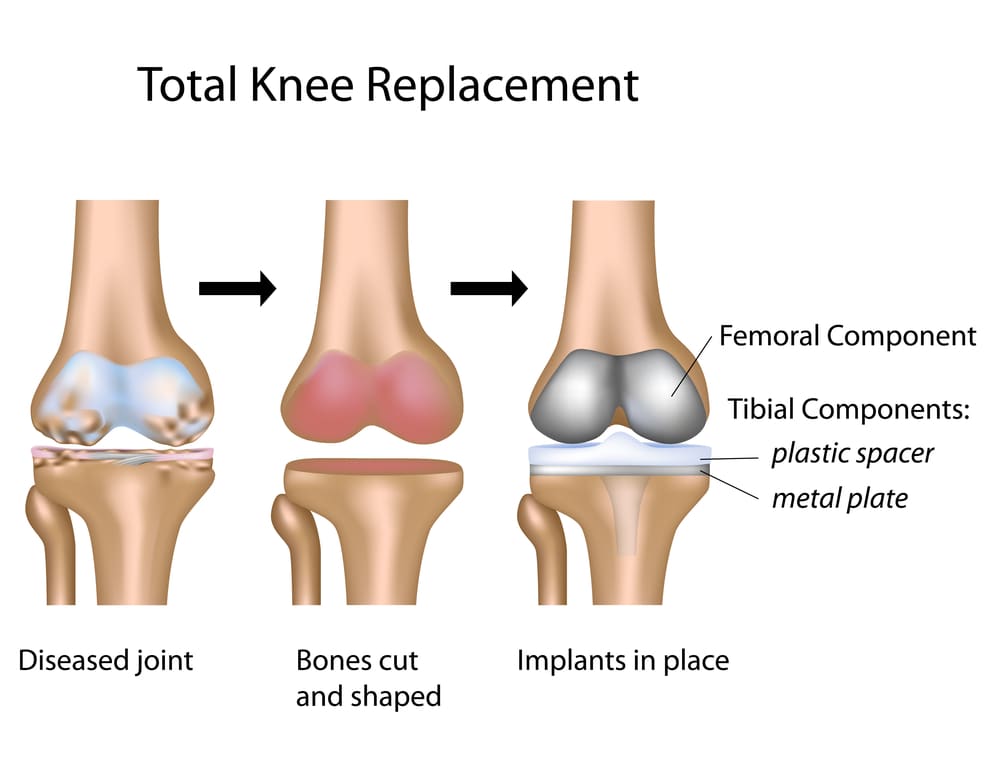
Knee replacement surgery, also known as knee arthroplasty, can give patients back the mobility they lost due to knee problems and relieve their pain.
Artificial knees will eventually wear out, but most knee replacements are good for at least 15 years.
Why Knee Replacement Surgery
Most people undergoing knee replacement surgery suffer from severe arthritis pain. This pain limits mobility, making daily activities such as walking or climbing stairs difficult. Unstable knees simply “give way,” causing the person to fall. Other candidates for knee replacement surgery are those whose knees were seriously damaged in an accident. Broken bones, torn ligaments, or worn cartilage all contribute to knee deterioration.
Knee Replacement Risks
Most patients recover from knee replacement surgery without issues, but any type of surgery poses risks. These include:
- Bleeding
- Blood clot development
- Infection
- Nerve damage
Some people are at increased risk of heart attack or stroke after surgery. Call the doctor immediately if experiencing redness, swelling or tenderness in the knee, if you spike a fever exceeding 100 degrees, or shaking or chills develop. Any drainage from the surgical site is also cause to contact your healthcare provider.
The bad news is that if an infection occurs, surgery is generally needed to clear up the infection. After healing, another knee replacement is performed.
Preparation
Before the surgery, the doctor may require you to stop taking certain medications or supplements, especially those that may thin the blood. Such medications and supplements can lead to excessive bleeding during surgery.
Arrange to speak with a physical therapist beforehand so you understand the rehabilitation process and what it entails.
Patients are usually asked to refrain from eating or drinking at least eight hours prior to the procedure.
Knee Replacement Procedure
While knee replacement patients require anesthesia, the doctor will discuss whether general anesthesia or spinal anesthesia is the best option for a particular individual. The latter leaves the patient awake, but unable to feel anything from the waist down.
Patients receive IV antibiotics prior to, during, and after the procedure for infection prevention.
After making an incision in the area of the knee, the surgeon removes the knee joint’s damaged surfaces. The knee joint is then resurfaced with a prosthesis consisting of metal and plastic.
Although knee prosthetics vary, the most frequently used type is the cemented prosthesis, which the surgeon attaches to the bone via surgical cement. Some surgeons may use an uncemented prosthesis, which attaches to the bone. The uncemented prosthesis has a porous surface. The bone eventually grows onto it, attaching to the prosthesis. The surgeon may use both types of prostheses when performing a knee replacement.
Afterward, the incision is closed with stitches or surgical staples. The surgeon may install a drain for fluid removal.
The Prosthesis
A prosthesis typically consists of the tibial component, which resurfaces the shin bone, or top of the tibia. The next component is that of the thigh bone or femoral component. This resurfaces the thighbone’s end. The third is the patellar component, which resurfaces the part of the kneecap in contact with the thighbone.
Knee Replacement Recovery
Knee replacement usually requires a one or two day stay in the hospital. During that time, patients receive appropriate pain management. It is important to move the feet and ankles to aid in reducing the risk of blood clots while increasing blood flow to the legs. Patients wear compression stockings or support hose for added protection.
Some patients may go home after their hospital stay, while others are discharged directly into a rehabilitation facility.
Expect to use a walker or crutches for a few weeks post-surgery. Plan and freeze meals beforehand and have someone to help you with daily activities. Patients living alone should arrange to have a caretaker come in for a couple of weeks until recovery has proceeded enough to tackle everyday tasks on their own.
It is wise to make certain modifications to your home before the surgery. Try to arrange to live on one floor of your house if there are multiple floors. Install handrails in the bathroom and remove any loose rugs that could cause slipping. You may also want to invest in a shower chair and get a reaching stick to grasp out-of-reach items.
Although recovery varies by the patients, most people can resume normal activities within three to six weeks’ after surgery. That means resuming activities such as walking or swimming, but not more strenuous activities such as running, tennis, skiing, or anything involving jumping up and down or hard impacts.
Rehabilitation
The physical therapist designs a treatment program based on the unique needs of the patient. In addition to an exercise plan, the patient may use a continuous passive motion (CPM) machine when rehabilitation is initiated. The CPM allows the patient to rest in bed while the machine moves the knee through its entire range of motion.
Sources
- 1hopkinsmedicine.org/health/treatment-tests-and-therapies/knee-replacement-surgery-procedure
- 2orthoinfo.aaos.org/en/treatment/total-knee-replacement
- 3hss.edu/condition-list_knee-replacement.asp
- 4uwhealth.org/health/topic/surgicaldetail/knee-replacement-surgery/aa14776.html
- 5brighamandwomens.org/orthopaedic-surgery/knee-replacement-surgery
General information, not medical advice
This article can't account for your health history or current treatment. Talk to a qualified clinician before you change anything about your care.
Read our medical disclaimer →
On this page
Why Knee Replacement Surgery
Knee Replacement Risks
Preparation
Knee Replacement Procedure
The Prosthesis
Knee Replacement Recovery
Rehabilitation
Sources
Put what you read to work
Track your medicines, check a symptom and talk with people managing the same condition, all in Healthread.
Get the app
Keep reading

Beauty and Anti-Aging
Gastric Balloon for Weight Loss
The gastric balloon weight loss procedure is a new FDA-approved minimally invasive bariatric procedure for treating obesity. It is a temporary procedure that involves placing a saline-filled silicone balloon in the…
June 19, 2025 · 3 min read

Beauty and Anti-Aging
Vitamin D Deficiency
Also known as the sunshine vitamin, vitamin D is an essential nutrient that is naturally absorbed by the skin through exposure to sunlight. It can also be obtained from dietary sources and supplements.
December 30, 2024 · 3 min read

Cancer-Updates
Gynecologic Cancer
Gynecologic cancer is a term used to describe a group of cancers that affect the female reproductive system. There are five types of gynecologic cancers named after the body part where they start.
November 5, 2024 · 3 min read


© 2026 Healthread
English · Español
Healthread does not provide medical advice, diagnosis or treatment. Always speak to a qualified clinician about your care.