

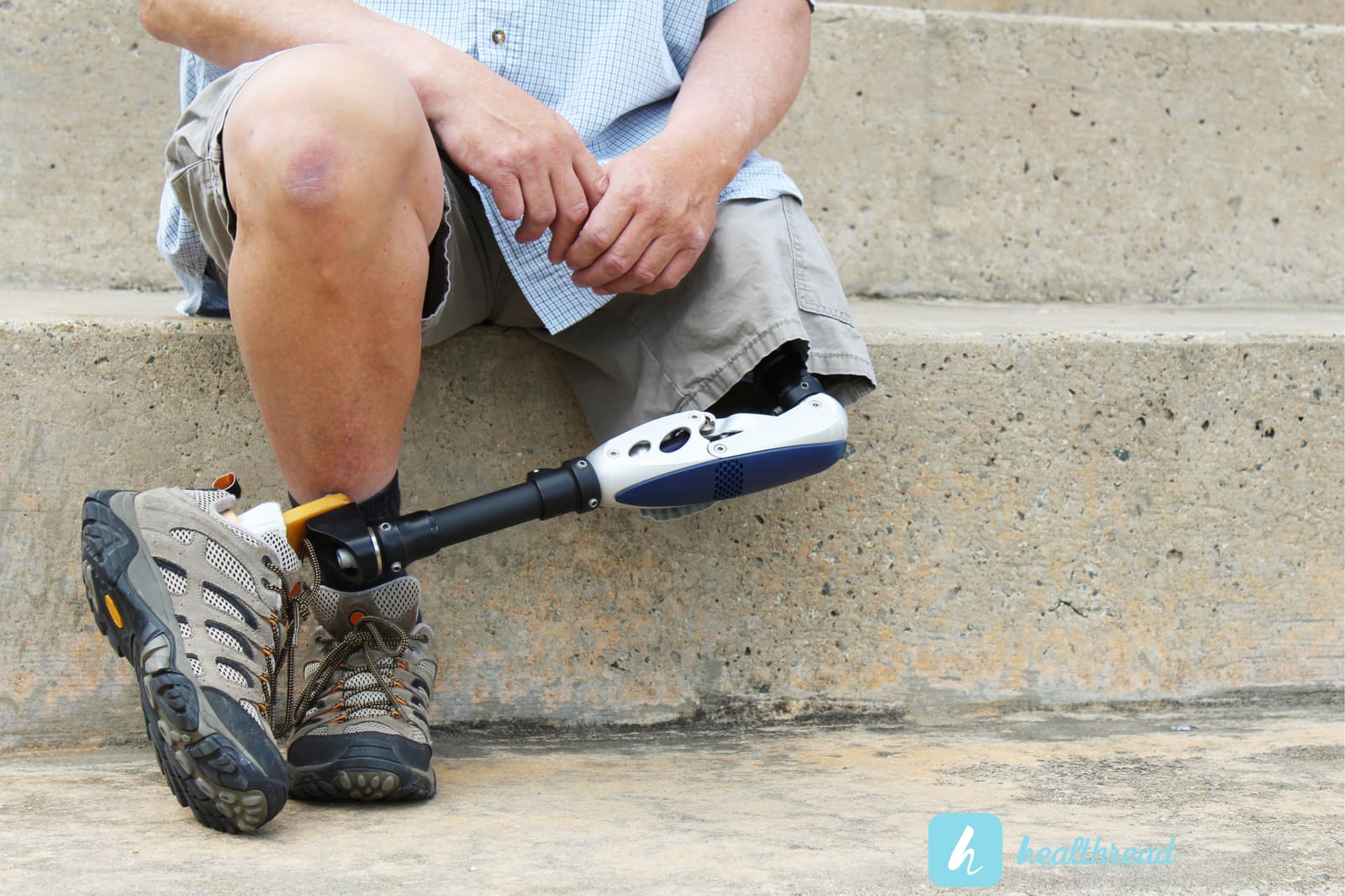
There are probably more people in America living with limb loss and amputation than you realize. Many of these folks are able to enjoy active lifestyles and engage in many of the same tasks, hobbies, and roles that they enjoyed prior to their limb loss. For others, limb loss requires some big changes to their lifestyle, level of independence, and daily activities.
No matter how limb loss affects you or a loved one, it's helpful to know about the prevalence, causes, and complications of this broad health condition—and how to maximize outcomes after losing a limb. So, keep reading for seven important things to know.
7 Facts About Limb Loss and Amputation
- 1.According to the Amputee Coalition, over 2 million people in the United States are living with limb loss. A 2008 study published in the Archives of Physical Medicine and Rehabilitation estimated that by 2050, this number could nearly double to 3.6 million.
- 2.Worldwide, about 10 million people have had at least one amputation, with about 30% of these occurring in the arm. Someone undergoes a leg amputation somewhere in the world about every 30 seconds.
- 3.Every year, about 185,000 amputations are performed in the United States—around 500 per day. Between 1996 and 2008, the rates of lower limb amputations declined by as much as 65 percent, according to a study done by the Centers for Disease Control and Prevention. But according to a more recent study, the rates of lower limb amputations shot up by 50 percent between 2009 and 2015.
- 4.The leading cause of amputation and limb loss in the United States are complications due to vascular diseases, which includes diabetes. These account for over half of all U.S. limb loss cases. 45 percent of cases of amputation and limb loss occur due to trauma, and under 2 percent are due to complications related to cancer. In some countries, trauma is the leading cause of amputation. Some people are born with missing limbs, or congenital limb defects, which occur because of altered development in the womb.
- 5.Black Americans are four times as likely to experience limb loss than white Americans. Diabetes is considered a major risk factor for non-traumatic limb loss, especially in the presence of other risk factors like smoking, poorly controlled blood sugar, poor vision, sensory loss, older age, and increased weight. Unfortunately, almost half of people who have an amputation because of vascular disease will pass away within five years after losing their limb—that's higher than the five-year mortality rate for prostate cancer, colon cancer, and breast cancer. This is why proper support, medical care, and lifestyle modifications are so important for people living with or at risk for limb loss.
- 6.Phantom limb pain is a common issue experienced by as many as 80 percent of people who undergo amputations. It occurs when a person feels pain, burning, tingling, itching or other sensations coming from the part of the limb that isn't there anymore. This is real pain, and doctors and researchers are still learning why it happens. A leading theory is that nerves in the brain and spinal cord undergo a period of major change and reorganization after the initial limb loss and transmit abnormal pain signals because of it. Phantom limb pain can vary a lot in frequency, duration, type, and intensity, but it usually decreases over time. Women, people with arm amputations, and people with pain in the limb before it was amputated may be more likely to experience it.
- 7.Many people living with amputations choose to use a prosthetic limb, which is like an artificial replacement limb. Choosing whether to use one and which type to use depends on a lot of factors, such as a person's goals, age, and health status. Other devices a person may use after limb loss include wheelchairs, crutches, and canes. Medical providers including physiatrists, surgeons, prosthestists, and physical therapists can all help a person determine the best equipment for their needs.
Did you know? Research suggests that people who have amputations report better outcomes if they have the opportunity to connect with other people who've undergone amputations, too. That's why the team at Healthread.com is proud to provide a platform for people living with amputations from all over the world to connect, network, and share. Find your tribe and tell your story today—we want to hear it!
Source
- 1amputee-coalition.org/limb-loss-resource-center/resources-filtered/resources-by-topic/limb-loss-statistics/limb-loss-statistics/
- 2podiatrytoday.com/comprehensive-amputation-support-can-it-have-impact-outcomes
- 3amputee-coalition.org/resources/prosthetic-faqs-for-the-new-amputee/
- 4ncbi.nlm.nih.gov/pubmed/26474508
- 5web.stanford.edu/class/engr110/2011/LeBlanc-03a.pdf
- 6archives-pmr.org/article/S0003-9993(08)01700-0/pdf
- 7childrenshospital.org/conditions-and-treatments/conditions/c/congenital-limb-defects
- 8medicalnewstoday.com/articles/324875#risk-factors-and-how-to-avoid-amputation
- 9ncbi.nlm.nih.gov/pmc/articles/PMC2772008/
- 10ncbi.nlm.nih.gov/pmc/articles/PMC3198614/
- 11ncbi.nlm.nih.gov/pubmed/19017860
- 12care.diabetesjournals.org/content/41/4/891
- 13cdc.gov/media/releases/2012/p0124_lower_limb.html
- 14ncbi.nlm.nih.gov/pubmed/18295618
- 15ajmc.com/newsroom/diabetic-amputations-may-be-rising-in-the-united-states
- 16sralab.org/facts-about-limb-loss
General information, not medical advice
This article can't account for your health history or current treatment. Talk to a qualified clinician before you change anything about your care.
Read our medical disclaimer →
Put what you read to work
Track your medicines, check a symptom and talk with people managing the same condition, all in Healthread.
Get the app
Keep reading
Beauty and Anti-Aging
Gastric Balloon for Weight Loss
The gastric balloon weight loss procedure is a new FDA-approved minimally invasive bariatric procedure for treating obesity. It is a temporary procedure that involves placing a saline-filled silicone balloon in the…
June 19, 2025 · 3 min read
Beauty and Anti-Aging
Vitamin D Deficiency
Also known as the sunshine vitamin, vitamin D is an essential nutrient that is naturally absorbed by the skin through exposure to sunlight. It can also be obtained from dietary sources and supplements.
December 30, 2024 · 3 min read

Cancer-Updates
Gynecologic Cancer
Gynecologic cancer is a term used to describe a group of cancers that affect the female reproductive system. There are five types of gynecologic cancers named after the body part where they start.
November 5, 2024 · 3 min read


© 2026 Healthread
English · Español
Healthread does not provide medical advice, diagnosis or treatment. Always speak to a qualified clinician about your care.