

Muscular dystrophy refers to an inherited group of conditions that cause progressive muscle weakness. There is not a single cause of muscular dystrophy, and symptoms vary in severity. Getting an accurate diagnosis can help you receive the treatment you need.
What Is Muscular Dystrophy?
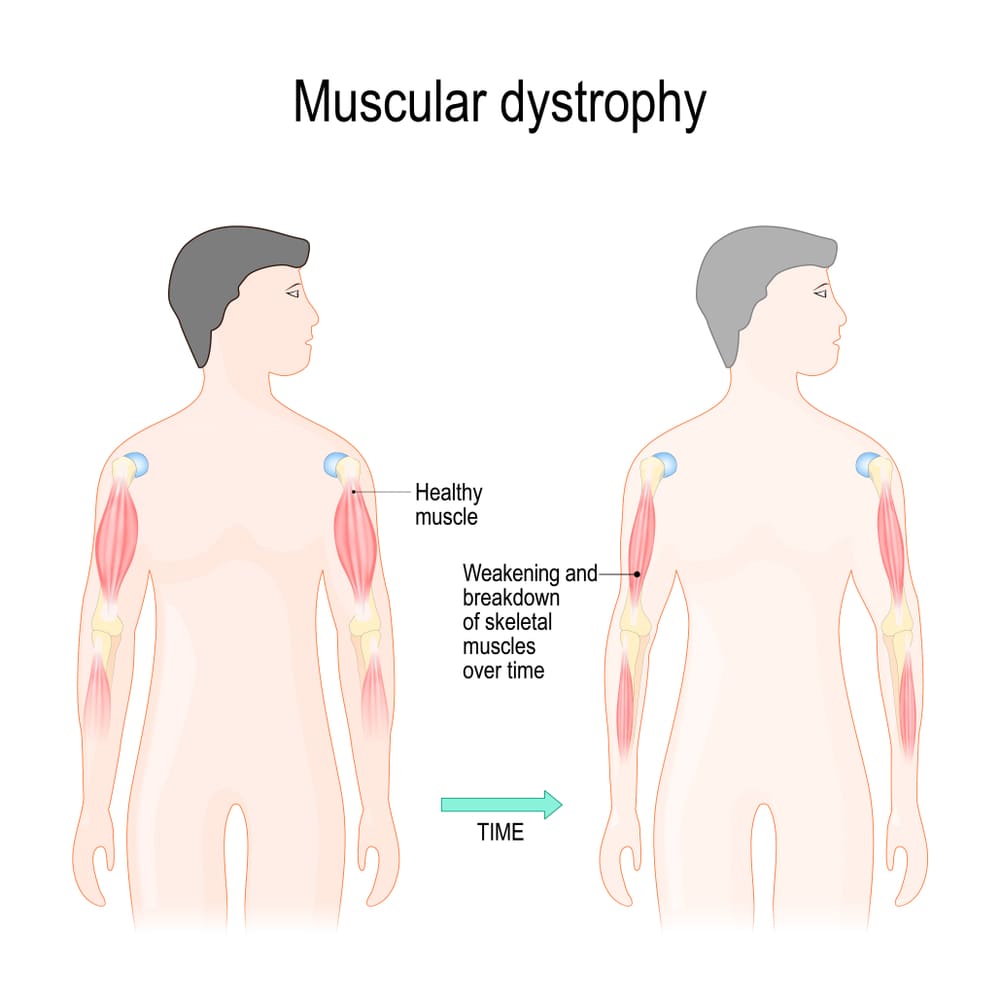
Muscular dystrophy is a syndrome, meaning it is a collection of symptoms that can be caused by multiple diseases. People with muscular dystrophy have progressive muscle weakness and loss of muscle mass. Over time, muscles waste away and may leave you with physical disabilities.
Causes of Muscular Dystrophy
Your muscles are made up of small muscle fibers bundled together. These muscle fibers are held in place by a series of proteins. Each protein is associated with a different gene that contains the instructions that allow a cell to manufacture the protein. When there are mutations, or errors, in those genes, the proteins are not manufactured correctly. These abnormal proteins prevent the muscle fibers from working properly. The result is a loss of strength. Over time, the muscle fibers die, causing atrophy of the tissue.
The most common cause of muscular dystrophy is a genetic condition called Duchenne type muscular dystrophy. This is caused by a mutation in the protein dystrophin, which lives on the X chromosome. Girls have two copies of the X chromosome, while boys have just one. That means that boys are more likely than girls to develop Duchenne muscular dystrophy, because they do not have an extra healthy copy of the gene if one is defective.
Symptoms of Muscular Dystrophy
The symptoms of muscular dystrophy depend on what underlying condition you have. That is why it is important to get an accurate diagnosis. Symptoms of the most common forms of muscular dystrophy include:
Duchenne Muscular Dystrophy ( DMD)
Symptoms of Duchenne muscular dystrophy typically begin in childhood.
· Frequent falls
· Waddling gait
· Difficulty running or jumping
· Trouble getting up from a seated or lying position
· Tendency to walk on the toes
· Enlarged calf muscles
· Learning disabilities
· Speech and Language delay
· Autism Spectrum disorder
· Delayed growth
· Muscle pain
· Muscle stiffness
Becker Muscular Dystrophy
Symptoms of Becker muscular dystrophy overlap with those in Duchenne muscular dystrophy. However, they tend to be milder and progress more slowly. Symptoms of Becker muscular dystrophy typically begin later in the teenage years, though they may not begin until the mid-20s for some people.
Myotonic Muscular Dystrophy
· Inability to relax muscles after they contract, particularly in the face or neck
· Long, thin face
· Drooping eyelids
· Swan-like neck
Facioscapulohumeral Muscular Dystrophy (FSHD)
· Muscle weakness that begins in the hip, face, and shoulders
· Shoulder blades that stick out like wings when the arms are raised
· Onset is typically in the teenage years but can be earlier or later
Congenital Muscular Dystrophy
· Affects boys and girls equally frequently
· Symptoms begin at birth or before age 2
· Gradually progressive muscle weakness
Limb-Girdle Muscular Dystrophy
· Hip and shoulder muscles are the first to be affected
· Difficulty lifting the front part of the foot
· Frequent tripping
Diagnosis of Muscular Dystrophy
If you begin to develop symptoms of muscular dystrophy, it is important to get an accurate diagnosis. After performing a physical examination, your doctor may recommend additional testing. This could include enzyme tests to detect muscle damage, genetic testing for specific mutations known to cause muscular dystrophy, taking a muscle sample to perform a biopsy, or electromyography to determine the pattern of electrical activity in muscles.
Together, these tests can typically diagnose muscular dystrophy and its particular cause. Although there is no cure for muscular dystrophy, knowing what type of mutation is causing it can help you understand the likely course and progression of the disease.
How Muscular Dystrophy Progresses Over Time
By definition, muscular dystrophy is gradually progressive. However, the course of symptoms varies widely by individual. Some people have very mild symptoms, while others have severe symptoms that progress rapidly.
As muscles become progressively weaker, you may notice difficulty performing everyday activities. For example, many people have difficulty walking and may require a cane or wheelchair. You may also have difficulty using your arms. With more severe illness, it is common to develop breathing problems, spinal curvature (scoliosis), heart problems, and difficulty swallowing.
More specifically Individuals with Duchenne Muscular Dystrophy- develop dilated cardiomyopathy and conduction abnormalities of the heart. Fractures of the arms and legs are more frequents in DMD. Patients with DMD develop varying degrees of cognitive impairment
Treatment for Muscular Dystrophy
There is no cure for muscular dystrophy. The goal is to reduce symptom severity and improve your independence in performing everyday activities. Following are common treatment options:
· Medications. Corticosteroids can help build muscle strength and prevent progression of muscle loss, although long-term use of these medications comes with side effects. There are other new drugs that can treat certain forms of Duchenne muscular dystrophy. The drug Eteplirsen is available in the United States and the drug ataluren is available in Europe. They might help by increasing the muscle protein missing some patients with DMD
· Physical therapy. Physical therapy helps to prevent additional muscle weakening.
· Braces to improve functional abilities like walking.
· Stretching exercises to improve range of motion.
· Breathing assistance, such as an apnea machine, can be useful if you have difficulty breathing.
Sources
General information, not medical advice
This article can't account for your health history or current treatment. Talk to a qualified clinician before you change anything about your care.
Read our medical disclaimer →
On this page
What Is Muscular Dystrophy?
Causes of Muscular Dystrophy
Symptoms of Muscular Dystrophy
Duchenne Muscular Dystrophy ( DMD)
Becker Muscular Dystrophy
Myotonic Muscular Dystrophy
Facioscapulohumeral Muscular Dystrophy (FSHD)
Congenital Muscular Dystrophy
Limb-Girdle Muscular Dystrophy
Diagnosis of Muscular Dystrophy
How Muscular Dystrophy Progresses Over Time
Treatment for Muscular Dystrophy
Sources
Put what you read to work
Track your medicines, check a symptom and talk with people managing the same condition, all in Healthread.
Get the app
Keep reading

Beauty and Anti-Aging
Gastric Balloon for Weight Loss
The gastric balloon weight loss procedure is a new FDA-approved minimally invasive bariatric procedure for treating obesity. It is a temporary procedure that involves placing a saline-filled silicone balloon in the…
June 19, 2025 · 3 min read

Beauty and Anti-Aging
Vitamin D Deficiency
Also known as the sunshine vitamin, vitamin D is an essential nutrient that is naturally absorbed by the skin through exposure to sunlight. It can also be obtained from dietary sources and supplements.
December 30, 2024 · 3 min read

Cancer-Updates
Gynecologic Cancer
Gynecologic cancer is a term used to describe a group of cancers that affect the female reproductive system. There are five types of gynecologic cancers named after the body part where they start.
November 5, 2024 · 3 min read


© 2026 Healthread
English · Español
Healthread does not provide medical advice, diagnosis or treatment. Always speak to a qualified clinician about your care.