

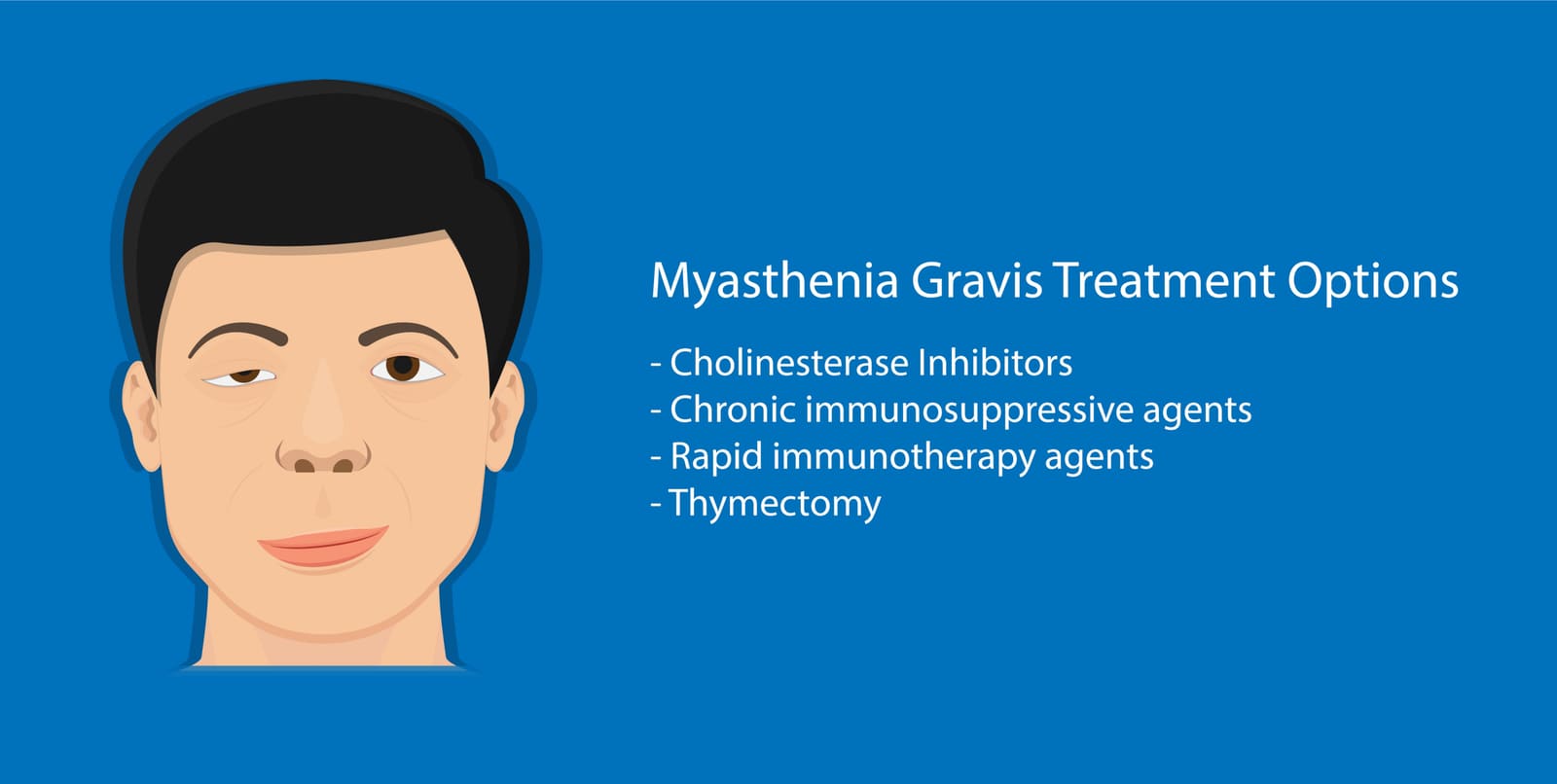
The chronic autoimmune disorder known as myasthenia gravis affects the patient’s ability to control their muscles. It affects various voluntary muscles in the body, including those involved in controlling the arms and legs, eyes, mouth, and throat. Antibodies stop muscles and nerves from communicating, resulting in muscle weakness.
This condition is not inherited. While there is no cure for myasthenia gravis, careful management can help people live more productively for a longer time. When well-controlled, those with myasthenia gravis can live close to normal lives.
Myasthenia Gravis Symptoms
Myasthenia gravis symptoms may start subtly, then worsen over time. Perhaps you find your jaw gets tired from the act of normal eating. Stop for a bit and rest and it gets better, but the symptoms start up again at the next meal. Eye issues are generally one of the initial signs of the disease, but it may take two years for other muscle groups to display weakness.
Symptoms of myasthenia gravis may include:
- Arm and leg weakness
- Chronic fatigue
- Drooping eyelids
- Double vision
- Swallowing issues
- Difficulty pronouncing words
- Mask-like appearance due to facial muscle weakness
- Problems holding the head up.
If experiencing any of these symptoms, arrange to see your doctor as soon as possible. Some of these symptoms may wax and wane, but they do not disappear.
Difficulty swallowing or breathing can cause a myasthenia gravis crisis, requiring an immediate trip to the emergency room. A breathing crisis can necessitate the use of a ventilator to save the patient’s life. Approximately 20 percent of myasthenia gravis patients will experience a crisis during the course of their illness.
Risk Factors
While anyone can develop myasthenia gravis, it occurs most often in men over age 50 and women in their 20s and 30s.
Those with tumors on the thymus gland may find themselves battling myasthenia gravis. People with other autoimmune conditions, such as lupus, are at increased risk of developing myasthenia gravis.
Myasthenia Gravis Diagnosis
The doctor performs a thorough physical examination and takes a medical history. The patient’s reflexes, balance, coordination, sight, muscle tone, and muscle strength are checked.
The doctor may prescribe an anticholinesterase drug to see if it improves the patient’s muscle weakness. If it does so for a short while, that is a confirmation of a myasthenia gravis diagnosis. Another test involves injecting the patient with edrophonium chloride. If muscle strength improves after administration, that is another possible myasthenia gravis confirmation.
The doctor will order blood tests to check for the myasthenia gravis antibodies. The patient is given an electromyogram (EMG) to determine whether there is abnormal muscle activity. A repetitive nerve stimulation test shows how the muscles react to small electrical pulses via electrodes.
Myasthenia Gravis Treatment
Myasthenia gravis treatment depends on a number of factors, including:
- Age
- Health history
- Degree of illness
Anticholinesterase medications are key players in myasthenia gravis treatment. The drugs can assist in strengthening muscles needed for breathing. When taken approximately a half hour before meals, the medicine can reduce the risk of the patient aspirating food into the lungs. This is a frequent problem with myasthenia gravis patients.
The doctor may prescribe corticosteroids to lower antibody release. These antibodies may block nerve receptors, so communication improves and muscle weakness lessens. These drugs are often given in conjunction with immunosuppressants to lower immune system response.
Doctors will provide patients with a recommended diet and exercise program to help them maintain a healthy weight and fitness. Patients should try to reduce stress in their lives as much as possible. Practicing meditation, yoga, or similar stress-busters is advised.
If a thymus gland tumor is present, a thymectomy, or entire gland removal, may prove necessary. In normal adults, this gland is relatively small. In those with myasthenia gravis, the gland enlarges markedly. However, it can take a very long time, even years, before the patient notices benefits from thymus gland removal.
Myasthenia Gravis Management
Some simple lifestyle changes can make a big difference in myasthenia gravis management. For example, eating several smaller meals a day is often preferable to eating three larger ones, since there is less need to chew. Avoid foods that present chewing problems and focus on softer edibles.
Spend your limited energy wisely. Make plans to run errands or perform other activities at the time of day in which you generally feel strongest. Get plenty of rest. Use devices that save time and energy.
If double vision affects you, ask your doctor about wearing an eye patch.
Women may feel worse during menstrual periods or if pregnant.
Considerations
Because the lung muscles are often affected by myasthenia gravis, it is crucial that patients do the best they can to avoid the flu or common cold. These days, they are at a special risk for Covid-19 if they are exposed to the coronavirus. Patients should stay away from crowds or any person suspected of having a respiratory illness.
Sources
- 1mayoclinic.org/diseases-conditions/myasthenia-gravis/symptoms-causes/syc-20352036
- 2ninds.nih.gov/disorders/patient-caregiver-education/fact-sheets/myasthenia-gravis-fact-sheet
- 3myasthenia.org/
- 4myasthenia.org/Community-Resources/Support-Groups-MG-Friends
- 5medlineplus.gov/myastheniagravis.html
- 6hopkinsmedicine.org/health/conditions-and-diseases/myasthenia-gravis
General information, not medical advice
This article can't account for your health history or current treatment. Talk to a qualified clinician before you change anything about your care.
Read our medical disclaimer →
On this page
Myasthenia Gravis Symptoms
Risk Factors
Myasthenia Gravis Diagnosis
Myasthenia Gravis Treatment
Myasthenia Gravis Management
Considerations
Sources
Put what you read to work
Track your medicines, check a symptom and talk with people managing the same condition, all in Healthread.
Get the app
Keep reading

Beauty and Anti-Aging
Gastric Balloon for Weight Loss
The gastric balloon weight loss procedure is a new FDA-approved minimally invasive bariatric procedure for treating obesity. It is a temporary procedure that involves placing a saline-filled silicone balloon in the…
June 19, 2025 · 3 min read

Beauty and Anti-Aging
Vitamin D Deficiency
Also known as the sunshine vitamin, vitamin D is an essential nutrient that is naturally absorbed by the skin through exposure to sunlight. It can also be obtained from dietary sources and supplements.
December 30, 2024 · 3 min read

Cancer-Updates
Gynecologic Cancer
Gynecologic cancer is a term used to describe a group of cancers that affect the female reproductive system. There are five types of gynecologic cancers named after the body part where they start.
November 5, 2024 · 3 min read


© 2026 Healthread
English · Español
Healthread does not provide medical advice, diagnosis or treatment. Always speak to a qualified clinician about your care.