

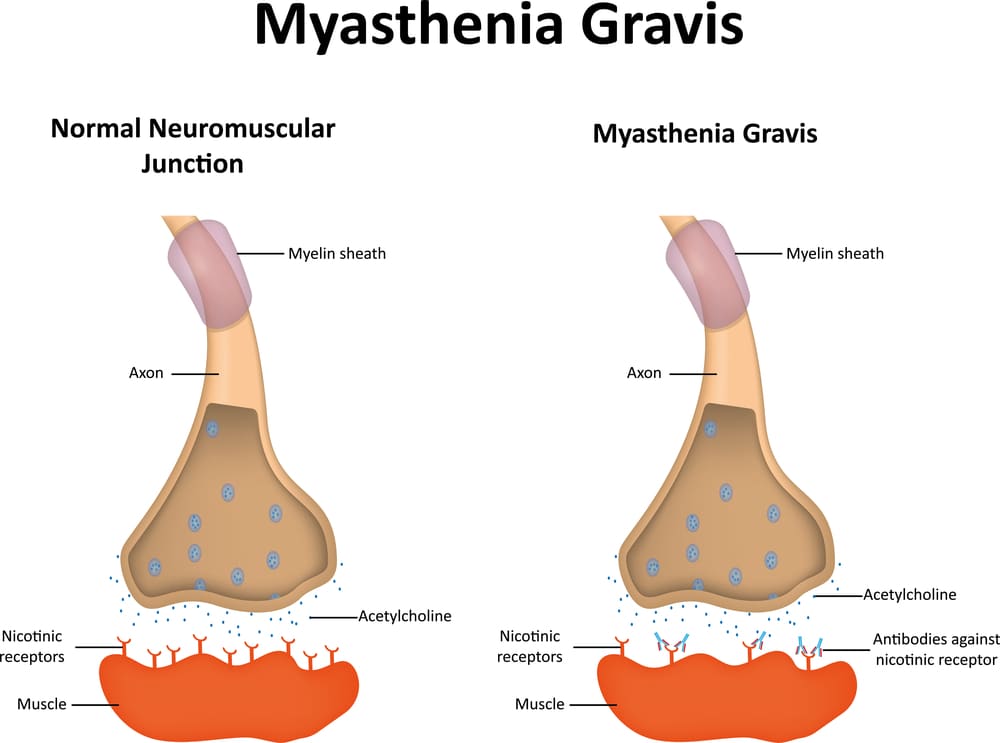
Myasthenia gravis is a condition that causes weakness and fatigue in the voluntary muscles, which are the muscles that you can control. In fact, the name myasthenia gravis comes from Greek and Latin words that mean “grave muscle weakness.” The condition can cause a number of symptoms that can interfere with daily life, such as drooping eyelids, double vision, and excessive fatigue following exercise. Potentially life-threatening complications can develop. Fortunately, treatment can improve muscle weakness.
Myasthenia gravis is an autoimmune disease, which means it affects the immune system. Normally, the immune system makes antibodies that attack foreign invaders, such as viruses and bacteria. In people with autoimmune disease, the antibodies mistakenly attack normal body cells and tissue. In those with myasthenia gravis, the antibodies block or change some of the nerve signals to the muscles, which make the muscles weaker.
Anyone can develop myasthenia gravis, but the condition is most common in women under the age of 40 and men older than 60. The condition is rare, affecting an estimated 14 to 20 people out of 100,000, according to the Myasthenia Gravis Foundation of America. There are approximately 36,000 to 60,000 cases of myasthenia gravis in the United States, but there may be many more as the condition is difficult to diagnose.
Symptoms of Myasthenia Gravis
Muscle weakness and rapid muscle fatigue are the main symptoms of myasthenia gravis. The condition affects some muscle groups more than it does other muscle groups.
Muscle groups most commonly affected by myasthenia gravis include:
Eye muscles – weak eye muscles are the first signs and symptoms for more than half of all people with myasthenia gravis; weak eye muscles cause drooping of one or both eyelids and double vision
Face and throat muscles – weakness in these muscles can impair speaking, cause difficulty swallowing, affect chewing, and change facial expressions
Neck and limb muscles – weakness in the muscles of the neck, arms, and legs can make it difficult to hold up your head, use your arms, or walk
Myasthenic crisis
A myasthenic crisis is a medical emergency that occurs when myasthenia gravis weakens the muscles that control breathing to the point where the person requires the help of a ventilator to breathe. Infection, stress, surgery, or an adverse reaction to medication may trigger a myasthenic crisis. Certain medications can also trigger the event.
Approximately 15 to 20 percent of those with myasthenia gravis experience one or more myasthenic crises during the course of their lifetime, according to the National Institutes of Health. There is not obvious cause for up to half of those experiencing a myasthenic crisis.
Severe symptoms require immediate medical attention. Anyone with myasthenia gravis should consult with a doctor if they experience difficulty breathing, seeing, swallowing, chewing, walking, using their arms or legs, or holding up their head.
Diagnosis and Treatment of Myasthenia Gravis
A number of other conditions and diseases can cause muscle weakness, so myasthenia gravis can be difficult to diagnose. Doctors often run a battery of blood, nerve, muscle, and imaging tests to diagnose myasthenia gravis.
There is no cure for myasthenia gravis, unfortunately, but treatment can make muscle weakness better. Some types of medication can improve communication between nerves and muscles to make muscles stronger. Other drugs reduce the amount of abnormal antibodies produced by the body. Doctors typically prescribe these drugs with care, as the medications to treat myasthenia gravis can have major side effects.
Physicians sometimes recommend physical therapy to help patients maintain muscle strength. To avoid over-exertion, though, patients must limit their physical therapy.
Sometimes doctors recommend treatments that filter abnormal antibodies from the blood, or introduce healthy antibodies from donated blood. In some cases, physicians recommend surgery to remove the thymus gland, which is the organ that produces the antibodies that cause myasthenia gravis; many people with myasthenia gravis have an enlarge thymus gland.
If you think you have myasthenia gravis, or if your myasthenia gravis is getting worse, consult with a doctor. Testing and treatment may help symptoms and even help you avoid a myasthenic crisis.
Sources
General information, not medical advice
This article can't account for your health history or current treatment. Talk to a qualified clinician before you change anything about your care.
Read our medical disclaimer →
On this page
Symptoms of Myasthenia Gravis
Myasthenic crisis
Diagnosis and Treatment of Myasthenia Gravis
Sources
Put what you read to work
Track your medicines, check a symptom and talk with people managing the same condition, all in Healthread.
Get the app
Keep reading

Beauty and Anti-Aging
Gastric Balloon for Weight Loss
The gastric balloon weight loss procedure is a new FDA-approved minimally invasive bariatric procedure for treating obesity. It is a temporary procedure that involves placing a saline-filled silicone balloon in the…
June 19, 2025 · 3 min read

Beauty and Anti-Aging
Vitamin D Deficiency
Also known as the sunshine vitamin, vitamin D is an essential nutrient that is naturally absorbed by the skin through exposure to sunlight. It can also be obtained from dietary sources and supplements.
December 30, 2024 · 3 min read

Cancer-Updates
Gynecologic Cancer
Gynecologic cancer is a term used to describe a group of cancers that affect the female reproductive system. There are five types of gynecologic cancers named after the body part where they start.
November 5, 2024 · 3 min read


© 2026 Healthread
English · Español
Healthread does not provide medical advice, diagnosis or treatment. Always speak to a qualified clinician about your care.