

Body
Every 2.3 minutes—that's how often someone in the U.S. is diagnosed with lung cancer.
Most of these cases are classified as non-small cell lung cancer, or NSCLC. Knowing the type of lung cancer, a person has is important, because it helps doctors determine the best course of treatment. And with nearly a quarter of a million people newly affected by lung cancer every year in America, it's a good idea for you and your loved ones to know a little more about it.
5 Facts About Non-Small Cell Lung Cancer (NSCLC)
1. Smoking is the leading cause of lung cancer.
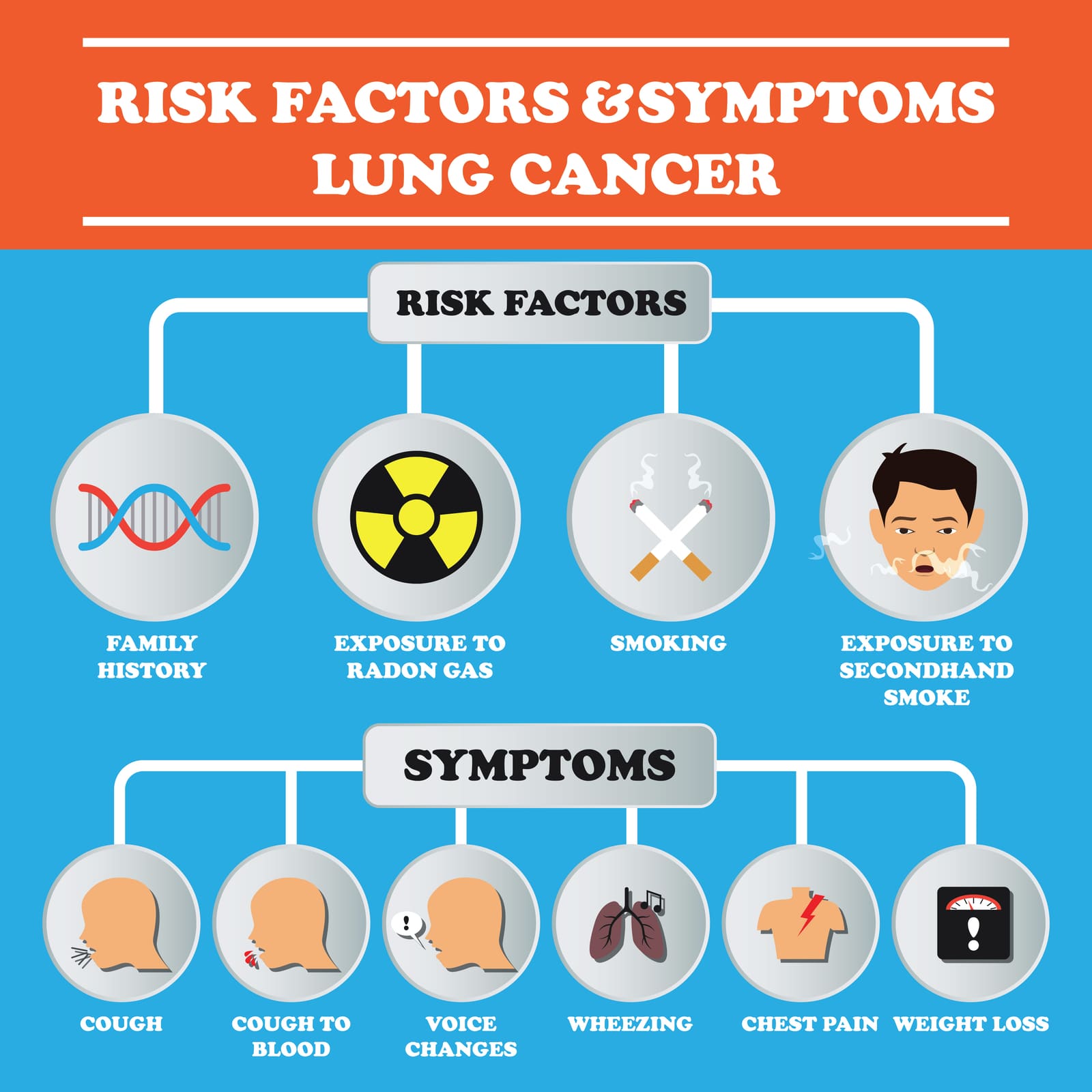
No surprise here: smoking THE leading risk factor for cancer and is responsible for about 80 to 90 percent of lung cancer deaths. In fact, the Centers for Disease Control and Prevention (CDC) warns that cigarette smokers are up to 30 times more likely to get lung cancer than nonsmokers!
The longer a person smokes and the heavier their habit is, the more likely they are to get cancer. People who smoke or use tobacco products are also at an increased risk of cancers in the mouth and throat, esophagus, stomach, colon, rectum, liver, pancreas, larynx, trachea, bronchus, kidney, bladder, cervix, and blood and bone marrow.
2. Former smokers and nonsmokers can get lung cancer too.
Incredibly, 60% to 65% of all new lung cancer diagnoses occur in people who have either never smoked or already quit. Sometimes there may be no clear reason why these people develop lung cancer, or there may be additional risk factors such as exposure to secondhand smoke, radon, radiation to the chest, asbestos, diesel exhaust, arsenic in drinking water, or air pollution.
3. Non-small cell lung cancer (NSCLC) is the most common type of lung cancer that exists.
About 80% to 85% of lung cancers are NSCLC. NSCLC can be categorized into three main subtypes, which share similar prognoses and treatments. They include:
- Adenocarcinoma: this cancer starts in cells that normally produce mucus and other substances in the lungs
- Squamous cell carcinoma: this cancer starts in flat-shaped cells whic line the inside of the airways in a person's lungs
- Large cell carcinoma: this cancer can start in any part of the lung and tends to spread more quickly
Unfortunately, many people won't notice any signs or symptoms of NSCLC until after the cancer has already progressed or spread to other areas of the body. Symptoms are also sometimes confused for other conditions. That said, here are a few common lung cancer symptoms to be aware of, according to the American Cancer Society:
- Persistent cough
- Coughing blood or red/pink phlegm
- Chest pain that feels worse with laughing, coughing, or deep breathing
- Hoarse voice or wheezing
- Decreased appetite
- Unexplained weight loss
- Shortness of breath
- Feeling tired or weak
- Recurring or long-lasting respiratory infections
4. There's a second type of lung cancer that's less common.
According to the American Cancer Society, a second main type of lung cancer is called small cell lung cancer (SCLC), or oat cell cancer. SCLC tends to grow more quickly than non-small cell lung cancer, and the majority of people who have it will already have cancer that has spread to other parts of the body (metastasized) by the time they're diagnosed. SCLC can be treated with chemotherapy and radiation, but it tends to come back even after treatment.
Other types of lung cancers and tumors exist, too, but these are much more rare. These include adenoid cystic carcinomas, lymphomas, and sarcomas. In addition, some people develop tumors or cancers of the lung even though the cancer started elsewhere in the body, such as in the breast, skin, or kidney.
5. Many treatments for NSCLC exist, and more people are surviving this type of cancer than ever before.
Lung cancer can be serious and is considered the leading cause of cancer-related death for American men and women of all races and ethnicities. The overall five-year survival rate for lung cancer is around 20 percent, which is lower than most other cancers. But recent research shows survival rates are improving.
In August 2020, researchers from the National Cancer Institute (NCI) announced that the mortality rates from NSCLC have fallen sharply in the United States over the past few years. This is because fewer people are getting lung cancer (largely thanks to fewer people smoking) AND because lung cancer treatment is getting better. The same group of researchers also found that screening for lung cancer hasn't seemed to help lower mortality rates.
Right now, the most common treatments for lung cancer include chemotherapy, radiation therapy, surgery, and immunotherapy. Many recent advancements exist, including a type of immunotherapy known as immune checkpoint inhibitor, which blocks certain proteins in immune cells and helps a person's immune system fight cancer more effectively.
Not every treatment or combination of treatments has the same effectiveness for everyone. So, it's important for people to work closely with their doctors to determine their best plan of action.
Looking for Resources on Lung Cancer?
Were you or a loved one recently diagnosed with NSCLC? Be sure to subscribe to Healthread so you can connect with other lung cancer survivors and their loved ones. We also invite you to check out these additional resources for information on treatment updates, clinical trials, and more:
- National Cancer Institute (for the latest lung cancer study updates)
- ClinicalTrials.gov (to find out about studies on lung cancer near you)
Sources
- 1cancer.org/cancer/lung-cancer/causes-risks-prevention/what-causes.html
- 2lung.org/lung-health-diseases/lung-disease-lookup/lung-cancer/resource-library/lung-cancer-fact-sheet
- 3lcfamerica.org/research-grants/latest/research/lung-cancer-mortality-rates-drop-sharply/
- 4cancer.gov/types/lung/research
- 5cancer.gov/news-events/press-releases/2020/lung-cancer-treatments-mortality-drop
- 6lcfamerica.org/research-grants/latest/
- 7lungevity.org/for-supporters-advocates/lung-cancer-statistics
- 8lung.org/lung-health-diseases/lung-disease-lookup/lung-cancer/learn-about-lung-cancer/what-is-lung-cancer/how-serious-is-lung-cancer
- 9cancer.org/cancer/lung-cancer/about/what-is.html
- 10cdc.gov/cancer/lung/basic_info/risk_factors.htm
General information, not medical advice
This article can't account for your health history or current treatment. Talk to a qualified clinician before you change anything about your care.
Read our medical disclaimer →
On this page
Body
5 Facts About Non-Small Cell Lung Cancer (NSCLC)
1. Smoking is the leading cause of lung cancer.
2. Former smokers and nonsmokers can get lung cancer too.
3. Non-small cell lung cancer (NSCLC) is the most common type of lung cancer that exists.
4. There's a second type of lung cancer that's less common.
5. Many treatments for NSCLC exist, and more people are surviving this type of cancer than ever before.
Looking for Resources on Lung Cancer?
Sources
Put what you read to work
Track your medicines, check a symptom and talk with people managing the same condition, all in Healthread.
Get the app
Keep reading

Beauty and Anti-Aging
Gastric Balloon for Weight Loss
The gastric balloon weight loss procedure is a new FDA-approved minimally invasive bariatric procedure for treating obesity. It is a temporary procedure that involves placing a saline-filled silicone balloon in the…
June 19, 2025 · 3 min read
Beauty and Anti-Aging
Vitamin D Deficiency
Also known as the sunshine vitamin, vitamin D is an essential nutrient that is naturally absorbed by the skin through exposure to sunlight. It can also be obtained from dietary sources and supplements.
December 30, 2024 · 3 min read

Cancer-Updates
Gynecologic Cancer
Gynecologic cancer is a term used to describe a group of cancers that affect the female reproductive system. There are five types of gynecologic cancers named after the body part where they start.
November 5, 2024 · 3 min read


© 2026 Healthread
English · Español
Healthread does not provide medical advice, diagnosis or treatment. Always speak to a qualified clinician about your care.