

Polycystic ovarian syndrome (PCOS) is a lot more common than you may realize. According to the U.S. Department of Health and Human Services Office on Women's Health, PCOS affects about 1 in 10 women of childbearing age (15 to 44). It's a major yet treatable cause of infertility and can lead to noticeable changes in a woman's health and appearance.
Keep reading to learn more about what it's like to live with this condition and what treatment options are available.
Understanding PCOS: Causes, Risk Factors, and Signs and Symptoms
PCOS is an endocrine disorder caused by imbalances with certain hormones in a woman's body, including luteinizing hormone (LH, made by the pituitary gland), insulin (made by the pancreas), and testosterone (made by the ovaries and adrenal glands). When these hormones, become too high in the body, disruptions can occur in a woman's menstrual cycle and ovulation (the journey of an egg from the ovary through the fallopian tube and into the uterus). For example, periods may become irregular (e.g., unusually frequent, infrequent, or absent), or a woman's eggs do not develop nor get released properly.
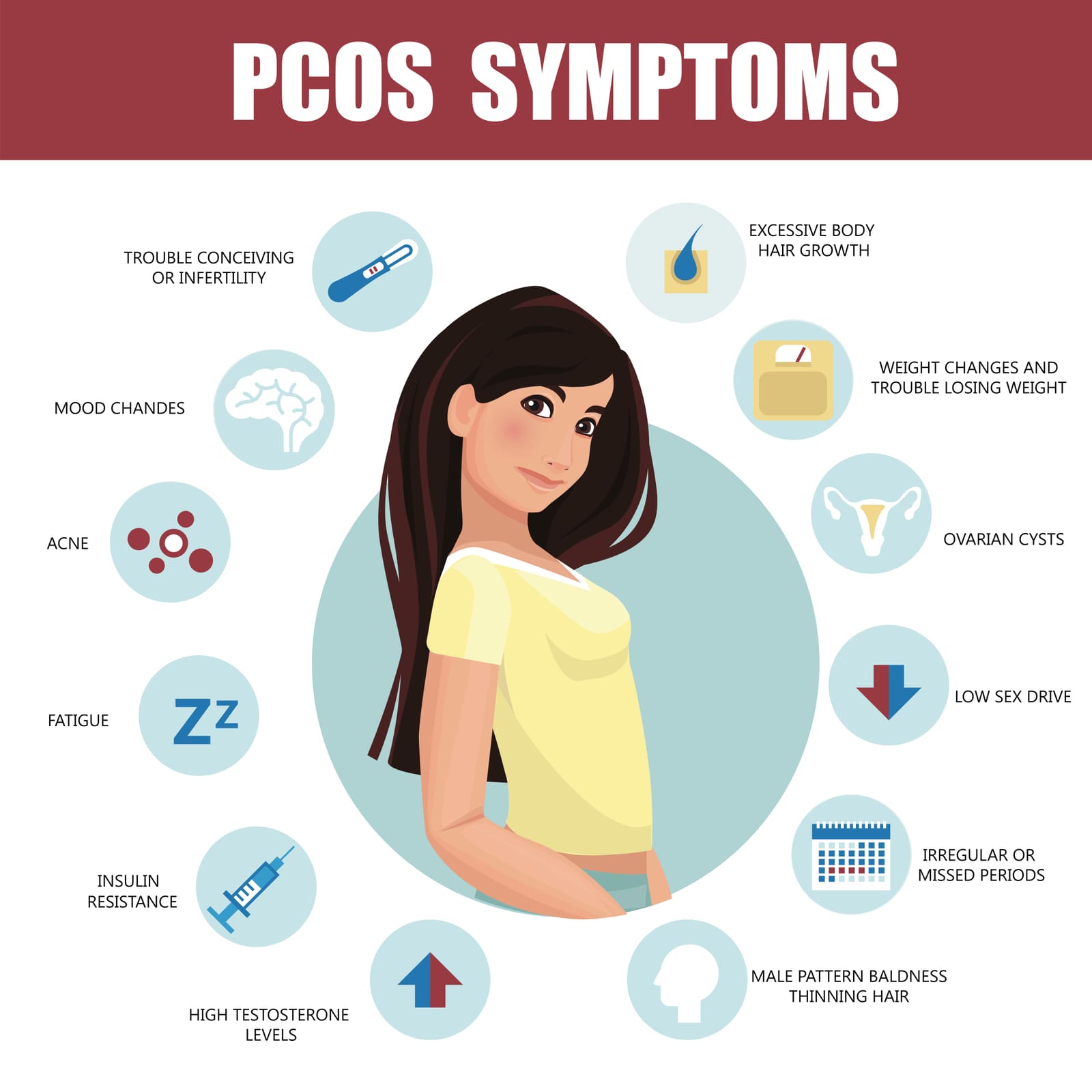
In addition to irregular menstrual cycles, other signs and symptoms of PCOS include:
- Hirsutism, the condition of having excess or unusual hair growth where men usually have hair, including the face and chin (hirsutism is related to elevated levels of androgen hormones like testosterone, and affects about 70% of women with PCOS)
- Acne, especially on the face, chest, and upper back area
- Multiple cysts in and on the ovaries
- Weight gain and difficulty losing weight
- Hair loss and male-pattern baldness
- Darkened coloring of the skin, especially in the groin, beneath the breasts, and along the neck area
- Skin tags (small growths of skin), especially in the armpits and neck area
- Insulin resistance
- Decreased sex drive
- Mood dysfunction (including depression)
- Fatigue
While any woman can get PCOS at any age after puberty, certain women may be more at risk, especially if they have known risk factors like obesity, diabetes, and a family history of PCOS. Other health conditions commonly associated with PCOS include high blood pressure, endometrial cancer, high cholesterol, and sleep apnea.
As women get closer to menopause, they may notice their cycles become more regular, but going through menopause won't "cure" PCOS and the underlying hormonal problems will remain.
Diagnosing and Treating PCOS
A combination of tests, rather than a single test, is required to diagnose PCOS. During the diagnostic process, doctors will ask about symptoms and family history, perform a physical exam and pelvic exam, and may run tests to rule out other conditions. Doctors may also utilize other techniques to help confirm a diagnosis, including:
- Sonogram (pelvic ultrasound): this uses sound waves to look for cysts in the ovaries and assess the lining of the uterus (called the endometrium)
- Blood tests: these can be ordered to measure hormone levels or check for other conditions like diabetes and thyroid disease
There's no known treatment for PCOS, but it can be managed with individualized treatment. Treatment may vary depending on a woman's overall health and health goals (such as whether she wants to have children). Doctors frequently prescribe medications to manage symptoms and restore hormonal balance, including hormonal birth control. Some doctors may also prescribe metformin and other drugs to control insulin and blood sugar levels.
Lifestyle modifications, such as exercise, diet, weight management, stress management, and the avoidance of alcohol and other substances are important for women living with PCOS. Research shows that women with PCOS may be more likely to develop other health conditions like heart disease, heart attack, and stroke, especially as they get older.
Pregnancy and PCOS
Even though PCOS is one of the most common causes of infertility, it is possible for a woman to get pregnant even if she has this diagnosis. Interventions such as weight loss, in vitro fertilization (IVF), and medications that promote ovulation (such as clomiphene) may help. There is even a type of surgery called ovarian drilling that may restore ovulation temporarily.
Dietary modifications may also help women struggling with infertility caused by PCOS to become pregnant. For instance, studies have found that following a Mediterranean diet can improve the chances of successful pregnancy while undergoing IVF.
PCOS does increase the risk of pregnancy complications, including miscarriage, preeclampsia, gestational diabetes, cesarean delivery, macrosomia (unusually large baby), and admission to a neonatal intensive care unit (NICU). So, any woman with PCOS should maintain close and regular contact with their doctors throughout her pregnancy to help reduce the risk of complications.
Are you a woman living life with PCOS, or recently received a diagnosis from your doctor? Millions of other women from around the world know what you're going through. Reach out and connect at Healthread, and consider checking out these helpful resources:
Sources
General information, not medical advice
This article can't account for your health history or current treatment. Talk to a qualified clinician before you change anything about your care.
Read our medical disclaimer →
On this page
Understanding PCOS: Causes, Risk Factors, and Signs and Symptoms
Diagnosing and Treating PCOS
Pregnancy and PCOS
Sources
Put what you read to work
Track your medicines, check a symptom and talk with people managing the same condition, all in Healthread.
Get the app
Keep reading
Beauty and Anti-Aging
Gastric Balloon for Weight Loss
The gastric balloon weight loss procedure is a new FDA-approved minimally invasive bariatric procedure for treating obesity. It is a temporary procedure that involves placing a saline-filled silicone balloon in the…
June 19, 2025 · 3 min read
Beauty and Anti-Aging
Vitamin D Deficiency
Also known as the sunshine vitamin, vitamin D is an essential nutrient that is naturally absorbed by the skin through exposure to sunlight. It can also be obtained from dietary sources and supplements.
December 30, 2024 · 3 min read
Cancer-Updates
Gynecologic Cancer
Gynecologic cancer is a term used to describe a group of cancers that affect the female reproductive system. There are five types of gynecologic cancers named after the body part where they start.
November 5, 2024 · 3 min read


© 2026 Healthread
English · Español
Healthread does not provide medical advice, diagnosis or treatment. Always speak to a qualified clinician about your care.