

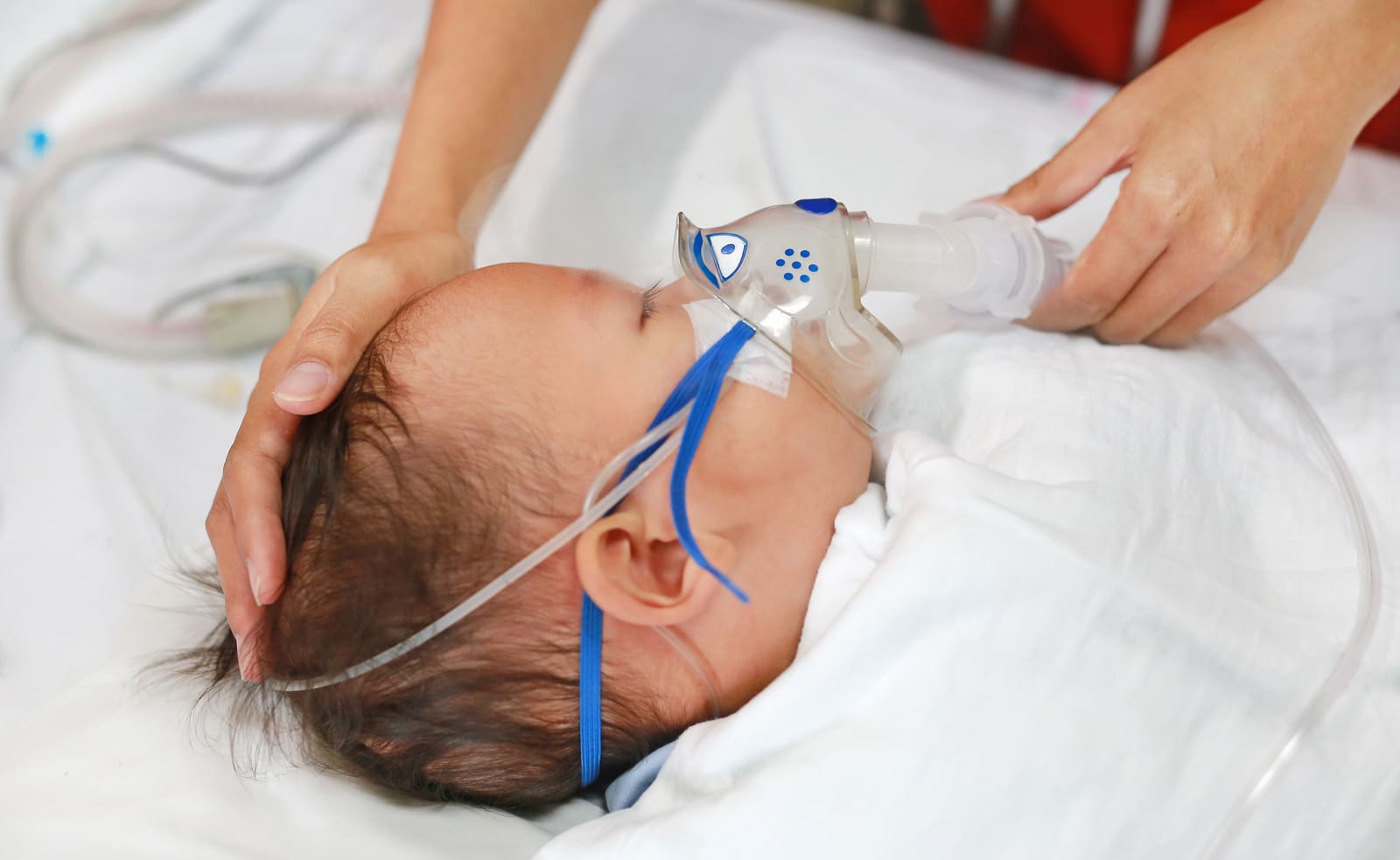
Respiratory syncytial virus (RSV) is making the news these days, with record numbers of cases across the United States. Infection with the RSV virus causes cold-like symptoms that are usually mild, but can be quite serious. Some people are at higher risk for developing severe symptoms that require hospitalization, but most people respond to home treatment.
RSV is an airborne virus that spreads through virus droplets that enter the body through the eyes, nose or mouth. A person can get RSV through direct contact, such as by kissing the face of a child who has RSV. The virus can also survive for several hours on hard surfaces, spreading when someone touches the contaminated surface then touches their own face. People with RSV are usually contagious for three to eight days, although babies and people with weakened immune systems can be contagious as long as they have symptoms.
Most people recover from RSV in one to two weeks, but the condition can be serious – particularly for infants and for older adults. Respiratory syncytial virus is the most common cause of pneumonia and inflammation of the small airways in the lung, known as bronchiolitis, in children younger than 1 year of age.
Almost all children will have had an RSV infection by the time they are 2 years old, according to the Centers for Disease Control and Prevention (CDC). RSV can also infect adults. It is possible to catch RSV more than once. Children who attend child care or have siblings in school are at a higher risk for exposure to RSV and for reinfection.
Some people are at higher risk for developing severe or life-threatening RSV infections:
- Infants, especially premature infants or babies ages 6 months or younger
- Children who have congenital heart disease, which is heart disease that is present from birth
- Children with chronic lung disease
- Children or adults with weakened immune systems from cancer, other diseases, or chemotherapy or other treatment
- Children who have muscular dystrophy or other neuromuscular disorders
- Adults with heart disease or lung disease
- Older adults, especially those who are 65 and older
In adults and older, healthy children, the symptoms of RSV are typically mild and are similar to the common cold. Most people with RSV respond well to home treatment, although as many as 80,000 children under the age of 5 and 120,000 adults over the age of 65 are hospitalized with RSV every year. RSV claims the lives of 100 to 300 children younger than 5 each year, and is responsible for 6,000 to 10,000 deaths annually among adults 65 years and older.
Symptoms of RSV
Symptoms of RSV typically appear within 4 to 6 days of infection. They usually appear in stages, rather than all at once.
RSV symptoms include:
- Runny nose
- Decreased appetite
- Coughing
- Wheezing
- Fever
- Sneezing
Very young infants with RSV may not show these symptoms. In fact, the only symptoms these young patients may have are irritability, decreased activity, and trouble breathing.
RSV may cause complications, such as:
- Pneumonia and bronchiolitis – occur when the virus spreads to the lower respiratory tract, which includes the lungs; RSV is the most common cause pneumonia or bronchiolitis in infants
- Middle ear infection – happens when the germs enter the space behind the eardrum; occurs most frequently in babies and young children.
- Asthma – RSV can aggravate asthma and wheezing
- Repeated infections – it is possible to become re-infected with RSV, even during the same RSV season; re-infections can be serious in older adults and in those with chronic heart or lung disease
Caring for RSV at Home
RSV usually goes away on its own within a week or two. There are no specific treatments for RSV – care focuses on easing symptoms.
Home care for RSV includes:
- Managing fever and pain with over-the-counter pain relievers and fever reducers, such as ibuprofen or acetaminophen – never give aspirin to children, as it is linked with a serious condition known as Reye’s syndrome
- Drinking enough fluids to prevent dehydration
- Add moisture to the air with a humidifier
- Administer over-the-counter saline nasal drops to ease congestion
Speak to a healthcare provider before giving children non-prescription cold medicines for RSV. Some over-the-counter medications contain ingredients that may be harmful to children.
Seek medical care immediately if your child or anyone at risk for serious RSV infection has trouble breathing, a high fever, or a blueish tint to their skin, especially around their lips or nail beds. Hospitalization may be necessary to treat breathing problems and reduce dehydration with intravenous (IV) fluids.
For more information on RSV, consult with a healthcare professional. Your doctor can diagnose RSV, check for complications, and suggest a course of treatment to relieve symptoms.
General information, not medical advice
This article can't account for your health history or current treatment. Talk to a qualified clinician before you change anything about your care.
Read our medical disclaimer →
Put what you read to work
Track your medicines, check a symptom and talk with people managing the same condition, all in Healthread.
Get the app
Keep reading

Beauty and Anti-Aging
Gastric Balloon for Weight Loss
The gastric balloon weight loss procedure is a new FDA-approved minimally invasive bariatric procedure for treating obesity. It is a temporary procedure that involves placing a saline-filled silicone balloon in the…
June 19, 2025 · 3 min read

Beauty and Anti-Aging
Vitamin D Deficiency
Also known as the sunshine vitamin, vitamin D is an essential nutrient that is naturally absorbed by the skin through exposure to sunlight. It can also be obtained from dietary sources and supplements.
December 30, 2024 · 3 min read

Cancer-Updates
Gynecologic Cancer
Gynecologic cancer is a term used to describe a group of cancers that affect the female reproductive system. There are five types of gynecologic cancers named after the body part where they start.
November 5, 2024 · 3 min read


© 2026 Healthread
English · Español
Healthread does not provide medical advice, diagnosis or treatment. Always speak to a qualified clinician about your care.