

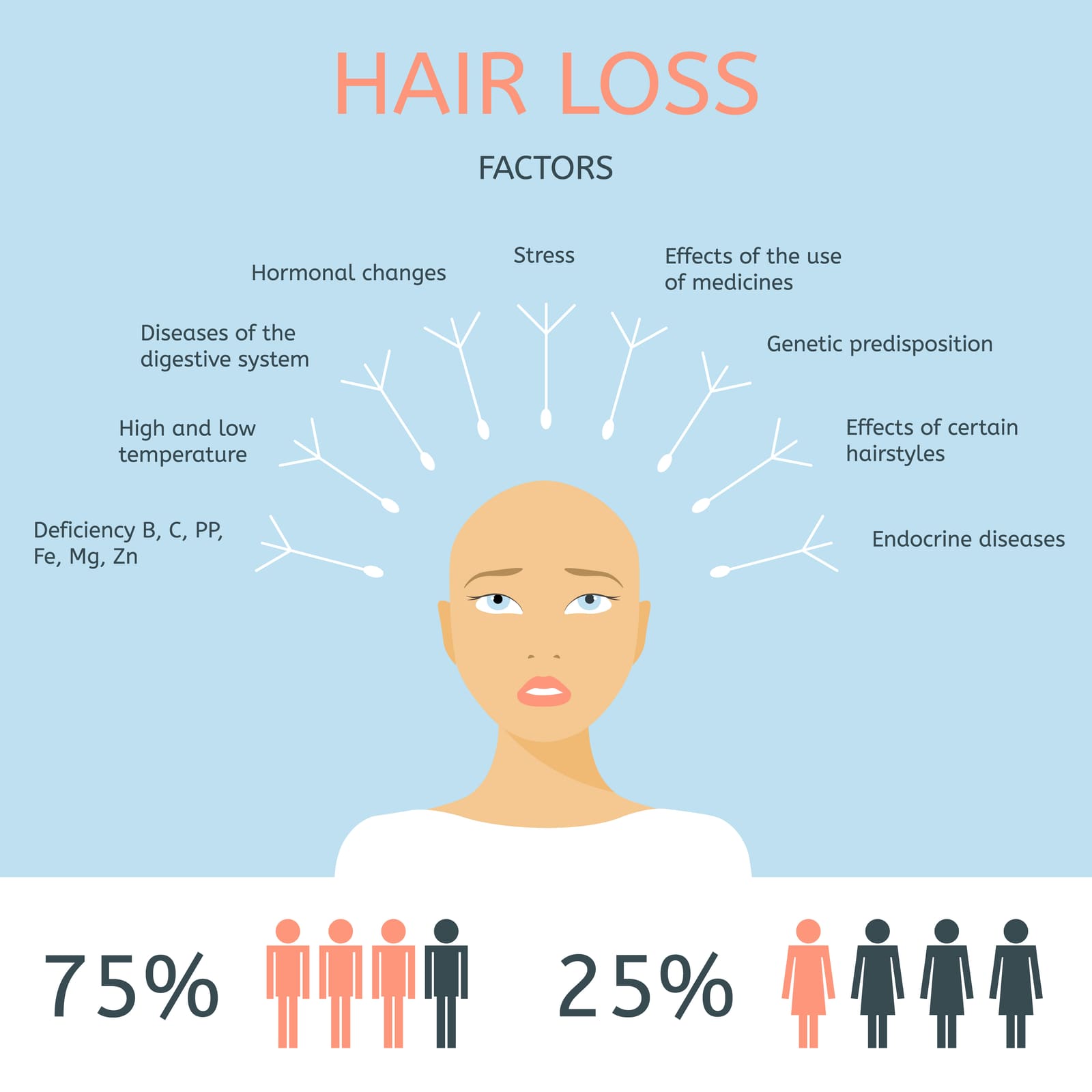
The typical person loses 50 to 100 strands of hair per day. But for some people, losing their hair becomes much more problematic than simply finding some extra strands in their brush. In fact, at least half of women and the majority of men experience significant hair loss as they age.
Being upset about losing your hair isn't something to feel bad about. Hair loss can be emotionally distressing and is shown by research to be associated with psychological problems that can affect work, personal relationships, and social life.
If you want to find ways to boost your hair growth and prevent hair loss, keep reading. There are a range of things you can do that may help.
5 Strategies to Boost Hair Growth (and Prevent Hair Loss)
1. Focus on Nutrition
Eating a diet rich in nutrients—especially protein, antioxidants, omega 3 fatty acids, zinc, iron, biotin, collagen, and vitamins E, C, and D—can support hair follicle health and promote hair growth.
Your best bet is to consume lots of whole and minimally processed foods, including lean animal protein, fruits, and vegetables. Some studies suggest taking certain supplements may further boost hair growth (such as omega 3 and 6), but keep in mind that a lot of the "hair gummies" out there on the market don't have good evidence to support them, so they could be a waste of money.
2. Rethink Your Beauty Routine
Many common hair care routines and products used by men and women are actually shown to promote hair loss and breakage and may even damage hair follicles. So, avoid the excessive use of hair dyes, blow dryers and heat treatments, and permanents ("perms").
According to the American Academy of Dermatology, you should also avoid wearing hairstyles that can pull on your hair and lead to mechanical damage to your hair follicles. Common "pulling" hairstyles include tight braids, dreadlocks, hair extensions and weaves, cornrows, and tight buns or ponytails.
3. Give Yourself a Daily Scalp Massage
One 2016 study published in the journal ePlasty suggests that massaging the scalp for just 4 minutes per day for 6 months may increase hair thickness. The researchers suggest that massage dilates blood vessels, which increases the amount of oxygen and nutrients hair follicles receive and therefore improves hair health and prevents breakage. Using laboratory data, the researchers also claim that scalp massage triggers genetic changes in certain cells that influence hair growth.
This study has a lot of limitations, including the fact that it only involved nine men. The study also didn't show that massage actually helped hair grow, but just that it helped increase hair thickness. But four minutes per day isn't a huge investment in time, and you could even massage your scalp with just your hands—making this an affordable and relatively simple hair growth strategy.
4. Try Low-Level Light Therapy
If you're willing to splurge a bit, consider looking into low-level light therapy (also known as cold laser therapy or red light therapy). This type of non-invasive and completely painless intervention uses low energy beams of light directed at the hair follicles, which is thought to trigger the hair follicles to grow.
One 2013 randomized controlled trial published in Lasers in Surgery and Medicine determined that low-level laser therapy significantly improved hair growth in men with male pattern baldness. Another review published a year later in the same journal also concluded that laser therapy is safe and effective for men and women.
Low-level light therapy is currently used in the rehabilitation world for recovery from conditions like brain injury and sports injury. We definitely need more research to help us figure out how effective this modality is for hair growth, but if you're willing to spend a little more (as treatment sessions or at-home laser technology can be expensive), this could be something worth experimenting with.
5. Ask Your Doctor About Medical Hair Restoration Treatment
Currently, only two drugs are approved by the U.S. Food and Drug Administration for the treatment of hair loss: minoxidil and finasteride. Hair transplant surgery is another medical procedure that may work even more effectively than hair growth drugs.
Like any medical treatment, these options do come with the risk of certain side effects. Plus, medications and surgery may not be equally effective for everyone. You should discuss your specific risks and potential benefits with your doctor to make sure you find the right treatment for you.
Have You Found a Hair Growth Strategy That Works?
Healthread is full of people looking for ways to improve their health and feel more confident in their bodies. If you have a hair growth success story, subscribe to Healthread and share your insights with our community.
Sources
- 1healthline.com/health/what-makes-hair-grow#scalp-massage
- 2aad.org/public/diseases/hair-loss/treatment/causes/hairstyles
- 3ncbi.nlm.nih.gov/pmc/articles/PMC4740347/
- 4pubmed.ncbi.nlm.nih.gov/24078483/
- 5ncbi.nlm.nih.gov/pmc/articles/PMC3944668/
- 6dermnetnz.org/topics/psychological-effects-of-hair-loss/
- 7researchoutreach.org/articles/health-medicine/light-therapy-improves-cognitive-function-after-traumatic-brain-injury/
- 8ncbi.nlm.nih.gov/pmc/articles/PMC4740347/
- 9healthline.com/health/laser-treatment-for-hair-loss
General information, not medical advice
This article can't account for your health history or current treatment. Talk to a qualified clinician before you change anything about your care.
Read our medical disclaimer →
On this page
5 Strategies to Boost Hair Growth (and Prevent Hair Loss)
1. Focus on Nutrition
2. Rethink Your Beauty Routine
3. Give Yourself a Daily Scalp Massage
4. Try Low-Level Light Therapy
5. Ask Your Doctor About Medical Hair Restoration Treatment
Have You Found a Hair Growth Strategy That Works?
Sources
Put what you read to work
Track your medicines, check a symptom and talk with people managing the same condition, all in Healthread.
Get the app
Keep reading

Beauty and Anti-Aging
Gastric Balloon for Weight Loss
The gastric balloon weight loss procedure is a new FDA-approved minimally invasive bariatric procedure for treating obesity. It is a temporary procedure that involves placing a saline-filled silicone balloon in the…
June 19, 2025 · 3 min read
Beauty and Anti-Aging
Vitamin D Deficiency
Also known as the sunshine vitamin, vitamin D is an essential nutrient that is naturally absorbed by the skin through exposure to sunlight. It can also be obtained from dietary sources and supplements.
December 30, 2024 · 3 min read
Cancer-Updates
Gynecologic Cancer
Gynecologic cancer is a term used to describe a group of cancers that affect the female reproductive system. There are five types of gynecologic cancers named after the body part where they start.
November 5, 2024 · 3 min read


© 2026 Healthread
English · Español
Healthread does not provide medical advice, diagnosis or treatment. Always speak to a qualified clinician about your care.