

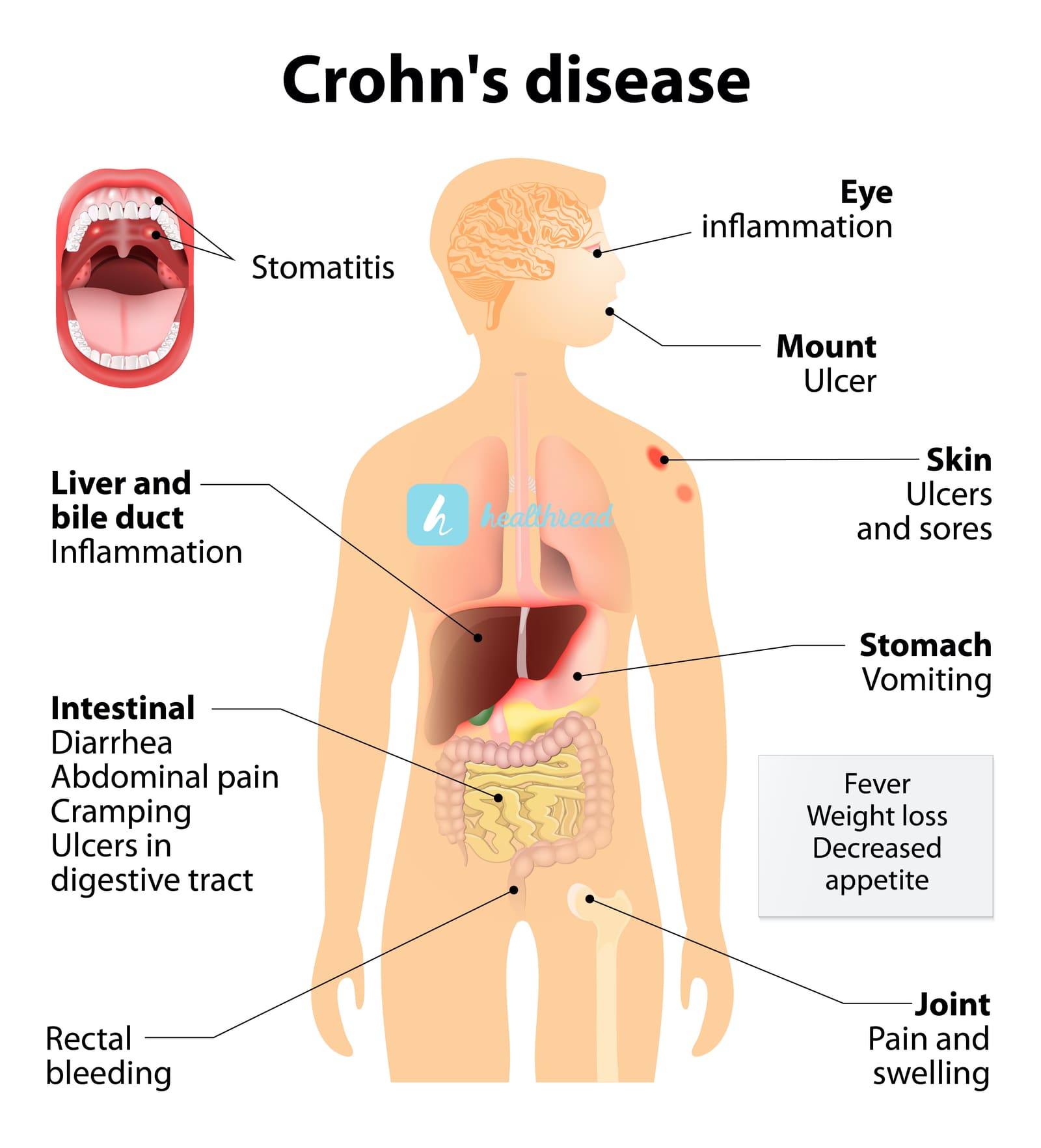
Inflammatory bowel disease (IBD) is used to describe medical conditions in which the gastrointestinal (GI) tract is chronically inflamed, resulting in damage to the tissue. The 2 major types of IBD are ulcerative colitis and Crohn’s disease. These result in similar symptoms; but the parts of the GI tract that are affected differ, so doctors consider them to be 2 different conditions. The underlying cause of IBD is not known, but environmental, genetic, and immune system factors are thought to play a role.
Common Symptoms of Ulcerative Colitis and Crohn’s Disease
Ulcerative colitis and Crohn’s disease usually start during the adolescent or young adult years. The symptoms can vary over time, and patients may have periods of relatively few or no symptoms (remission) and periods of increased or new symptoms (flares). Severe cases can be debilitating or potentially life threatening.
Symptoms are largely related to damage to the GI tract, including:
- Stomach pain and cramping
- Constipation
- Diarrhea
- Rectal bleeding
- Decreased appetite and weight loss
- A sudden feeling that a bowel movement is needed
- Feeling like a bowel movement was incomplete
In addition, people with these conditions may have extreme tiredness, night sweats, or changes to their menstrual cycle.
Differences
The main differences between ulcerative colitis and Crohn’s disease are related to how the affected section(s) of the GI tract appear.
Ulcerative Colitis
Part of GI tract that is inflamed: Large intestine or colon
Continuity of inflammation: Inflamed spots are continuous, with no healthy tissue
Depth of inflammation: Only the innermost layer of the large intestine is affected
Crohn’s Disease
Part of GI tract that is inflamed: Anywhere (mouth to the anus)
Continuity of inflammation: Inflamed spots are separated by healthy areas of tissue; appear patchy
Depth of inflammation: Multiple layers of the GI tissue may be affected
Ulcerative colitis and Crohn’s disease can cause some similar complications. These include increased risk of developing colon cancer, triggering flares of other inflammatory conditions (e.g., arthritis), increased risk of blood clots, and liver damage. The treatments used to manage IBD may also case side effects that are unpleasant.
In addition, ulcerative colitis can case a rapid swelling and widening of the colon (toxic megacolon), a tear in the colon (perforated colon), and severe dehydration (due to excessive diarrhea).
Given the more widespread and deeper inflammation found in patients with Crohn’s disease, complications are more likely to be serious than with ulcerative colitis. These include:
- Malnutrition due to the inability for the intestines to absorb nutrients properly
- Obstructed bowel due to swelling and narrowing of the intestinal walls
- Ulcers (sores) anywhere along the digestive tract, including some that pass all the way through the intestinal wall and connect 2 body parts that are not normally connected (fistulas). Ulcers can get infected and may form abscesses.
- Small, painful tears in the anal tissue (anal fissures) that may become infected.
Both ulcerative colitis and Crohn’s disease cause serious symptoms that need to be managed to minimize the impact to the patient’s life and reduce the chance or serious complications occurring.
Diagnosis
Diagnosing the type of IBD requires looking inside the digestive tract to determine which parts are inflamed. Imaging tests may include:
- X-rays: These are used to determine which parts of the intestine are blocked or narrow as a result of inflammation. The patient may be asked to swallow a tracking dye called barium to allow imaging of a substance moving through the GI tract.
- MRIs or CT scans: These tests produce detailed images of the GI tract and surround structures that can be used to rule out other conditions that cause similar symptoms as IBD.
- Endoscopy: A tiny camera attached to a long, thin tube is passed through the parts of interest of the GI tract, starting at the mouth or anus. A “pill” containing a camera may also be used to observe the entire length of the GI tract.
Blood tests may also be done to look for certain antibodies in the blood. The presence of perinuclear anti-neutrophil antibodies is associated with ulcerative colitis. The presence of anti-Saccharomyces Cerevisiae antibody is associated with Crohn’s disease. These tests provide confidence in the diagnosis, but they are not used by themselves to make a diagnosis.
In approximately 10% of people with IBD, doctors will not be able to determine which condition is present. This diagnosis is called indeterminate colitis, and signs of both ulcerative colitis and Crohn’s disease are present.
Prognosis
The prognosis for patients with mild symptoms of ulcerative colitis is very good. 90% of these patients will go into remission with treatment, meaning they no longer have symptoms. Remission is less common with Crohn’s disease, but treatments can help many patients manage their symptoms and live an active life.
Nearly half of all patients with ulcerative colitis and three quarters of patients with Crohn’s disease will need surgery during their lives to remove tissue and repair damage due to the inflammation. Surgery can help alleviate severe symptoms that are not successfully managed through lifestyle changes or medications; and it may be needed if a serious complication, such as a tear in the intestine, occurs.
Treatment
Because IBD is associated with inflammation, medications may be prescribed to reduce the activity of the immune system. These may be taken as daily or only during flares. Patients with severe IBD may be prescribed steroids or other immune suppressing drugs (e.g., Humira, Remicade, Purizan, Tysabri, Xeljanz, Stelara), but use is often limited to flares, given the risk of unpleasant side effects with these medications.
For all patients with IBD, healthy lifestyle changes can reduce the symptoms. Dietary changes, routine exercise, avoiding cigarettes, avoiding nonsteroidal anti-inflammatory drugs (e.g., ibruprofen), and reducing stress are usually recommended for all patients.
Sources
General information, not medical advice
This article can't account for your health history or current treatment. Talk to a qualified clinician before you change anything about your care.
Read our medical disclaimer →
On this page
Common Symptoms of Ulcerative Colitis and Crohn’s Disease
Differences
Ulcerative Colitis
Crohn’s Disease
Diagnosis
Prognosis
Treatment
Sources
Put what you read to work
Track your medicines, check a symptom and talk with people managing the same condition, all in Healthread.
Get the app
Keep reading

Beauty and Anti-Aging
Gastric Balloon for Weight Loss
The gastric balloon weight loss procedure is a new FDA-approved minimally invasive bariatric procedure for treating obesity. It is a temporary procedure that involves placing a saline-filled silicone balloon in the…
June 19, 2025 · 3 min read
Beauty and Anti-Aging
Vitamin D Deficiency
Also known as the sunshine vitamin, vitamin D is an essential nutrient that is naturally absorbed by the skin through exposure to sunlight. It can also be obtained from dietary sources and supplements.
December 30, 2024 · 3 min read

Cancer-Updates
Gynecologic Cancer
Gynecologic cancer is a term used to describe a group of cancers that affect the female reproductive system. There are five types of gynecologic cancers named after the body part where they start.
November 5, 2024 · 3 min read


© 2026 Healthread
English · Español
Healthread does not provide medical advice, diagnosis or treatment. Always speak to a qualified clinician about your care.