

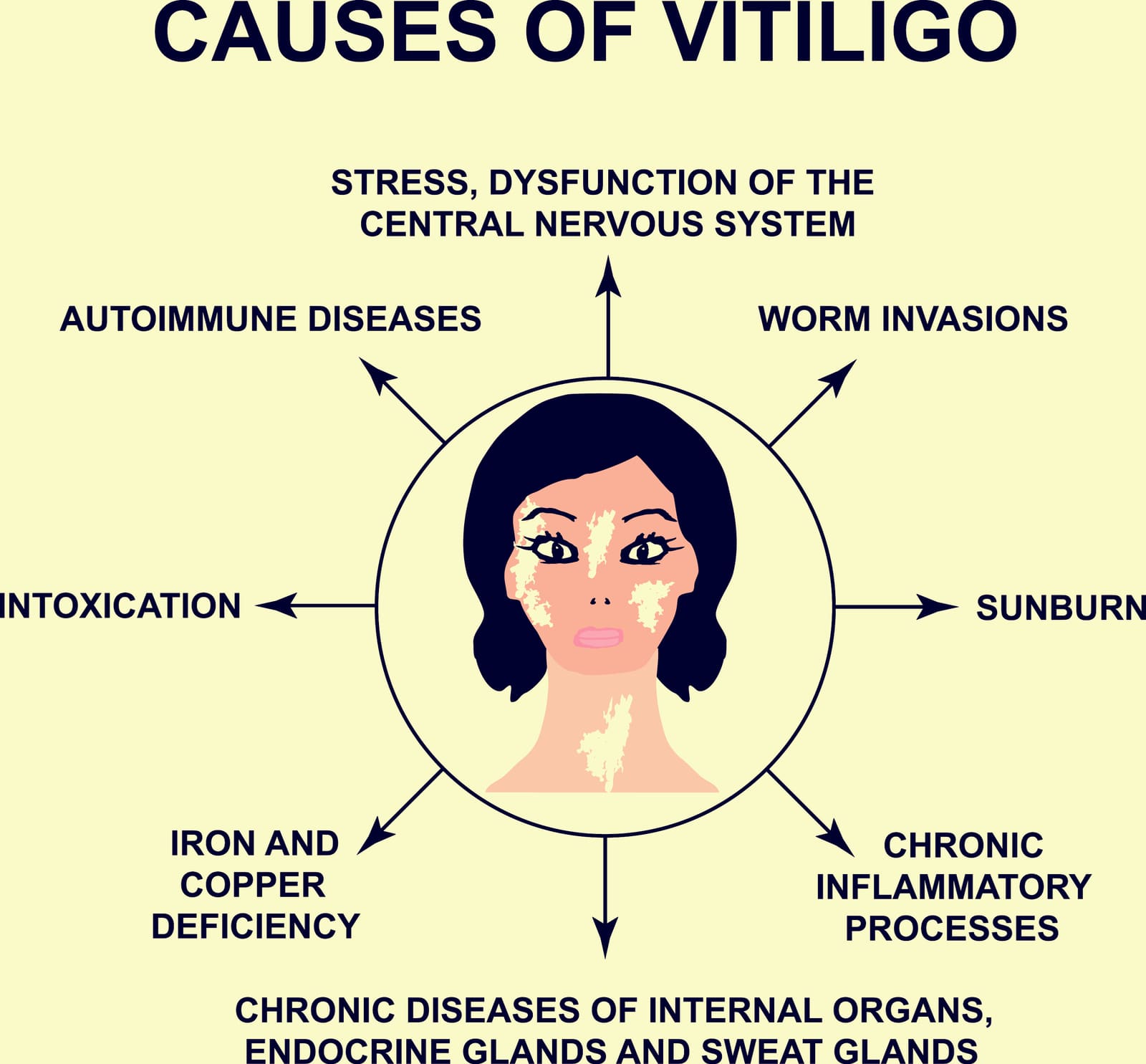
Vitiligo is a patchy loss of skin pigmentation that clinicians consider to be an immune system disorder. It is caused by the body's immune system attacking pigment cells in the skin. Over time, the cells are destroyed, resulting in loss of skin pigment in different areas. On its own, vitiligo is not disabling, but the changes in appearance that it causes can be psychologically painful and distressing.
Vitiligo affects between one-half of a percent and 1% of the population. It is more noticeable in darker-skinned people, but it also occurs in lighter-skinned people. Vitiligo, as an autoimmune disorder, isn't contagious. As long as no other immune disorders are present, vitiligo isn't life-threatening or dangerous.
Vitiligo is also a genetically associated disease. A few genes have been identified which can contribute to vitiligo, although they are not guaranteed to lead to the condition. In addition, environmental stress, including chemical exposure and UV radiation exposure, can contribute to vitiligo. The condition probably results from a combination of environmental and genetic factors, and the ultimate cause is still unknown. About one-fifth of people with vitiligo have another close relative who also has the condition.
Symptoms of vitiligo
Vitiligo often appears first on the hands, around the mouth, or around the genitals. It is characterized by a patchy loss of skin color (not skin). You can even lose color inside of your mouth in vitiligo.
Vitiligo can also affect the hair as well as the skin. Some signs include loss of color in the hair scalp, body, brows and lashes, and beard. Anyone of any age can develop the condition, but usually vitiligo starts before age 30.
Types of vitiligo
The most common type of vitiligo is generalized vitiligo. It involves loss of pigmentation on corresponding body parts (both arms or both legs), and in equal proportion on the trunk or sides of the face.
Segmental vitiligo occurs on only one side or part of the body. It often starts at a younger age than other types of vitiligo, and can progress for a time, then stop for long periods. Localized vitiligo occurs in only one part of the body and doesn't spread beyond that areas.
Acrofacial vitiligo occurs on the face, hands, and around body openings, including the eyes, nose, and mouth.
Universal vitiligo is a whole-body or nearly whole-body loss of skin pigmentation.
Vitiligo can stop without any type of treatment, and occasionally, pigmentation can return to affected areas. Over time, however, vitiligo does spread and can affect many areas.
Treatment options
Vitiligo can be treated, although treatments have no guaranteed results, and some may cause side effects. Many clinicians recommend using makeup or self-tanners as a safe alternative to make the de-pigmented areas of skin less noticeable. Light therapy can return skin color to a certain degree. UVB light therapy can help to stop or slow the progression of vitiligo. There is an FDA warning about the possible risk of skin cancer by using this therapy in conjunction with some medications.
If vitiligo is in the early stages, corticosteroid creams can potentially return skin color. Corticosteroid pills or injections may be prescribed for people with rapidly advancing vitiligo. Other options include calcineurin inhibitor ointments, although there is an FDA warning that these medications, especially in conjunction with UVB light therapy, can cause skin cancer. Psoralen is a plant-based substance that can be used with UVA light therapy to restore color to skin lacking pigment. Some people choose depigmentation of all of their skin to even skin tone. This procedure is permanent. Finally, surgery can be used to graft skin, or repigmentation of skin by transplanting individual cells from pigmented skin into de-pigmented skin. Surgical approaches can have risks and side effects. Additional medications are being studied, which may help to promote the growth of new skin pigmentation cells, or a gel that could help to restore skin pigmentation cell health.
Sources
General information, not medical advice
This article can't account for your health history or current treatment. Talk to a qualified clinician before you change anything about your care.
Read our medical disclaimer →
Put what you read to work
Track your medicines, check a symptom and talk with people managing the same condition, all in Healthread.
Get the app
Keep reading

Beauty and Anti-Aging
Gastric Balloon for Weight Loss
The gastric balloon weight loss procedure is a new FDA-approved minimally invasive bariatric procedure for treating obesity. It is a temporary procedure that involves placing a saline-filled silicone balloon in the…
June 19, 2025 · 3 min read
Beauty and Anti-Aging
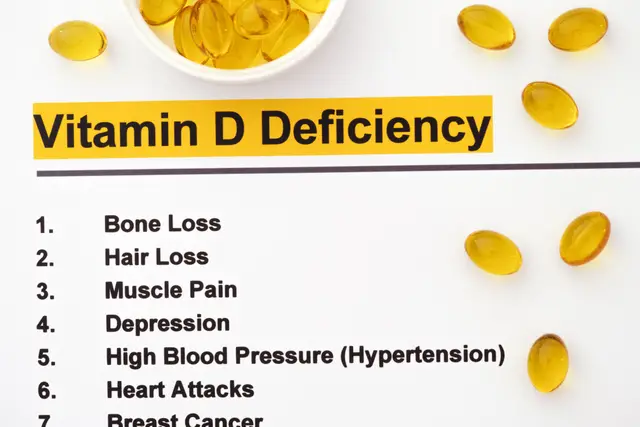
Vitamin D Deficiency
Also known as the sunshine vitamin, vitamin D is an essential nutrient that is naturally absorbed by the skin through exposure to sunlight. It can also be obtained from dietary sources and supplements.
December 30, 2024 · 3 min read

Cancer-Updates
Gynecologic Cancer
Gynecologic cancer is a term used to describe a group of cancers that affect the female reproductive system. There are five types of gynecologic cancers named after the body part where they start.
November 5, 2024 · 3 min read


© 2026 Healthread
English · Español
Healthread does not provide medical advice, diagnosis or treatment. Always speak to a qualified clinician about your care.