

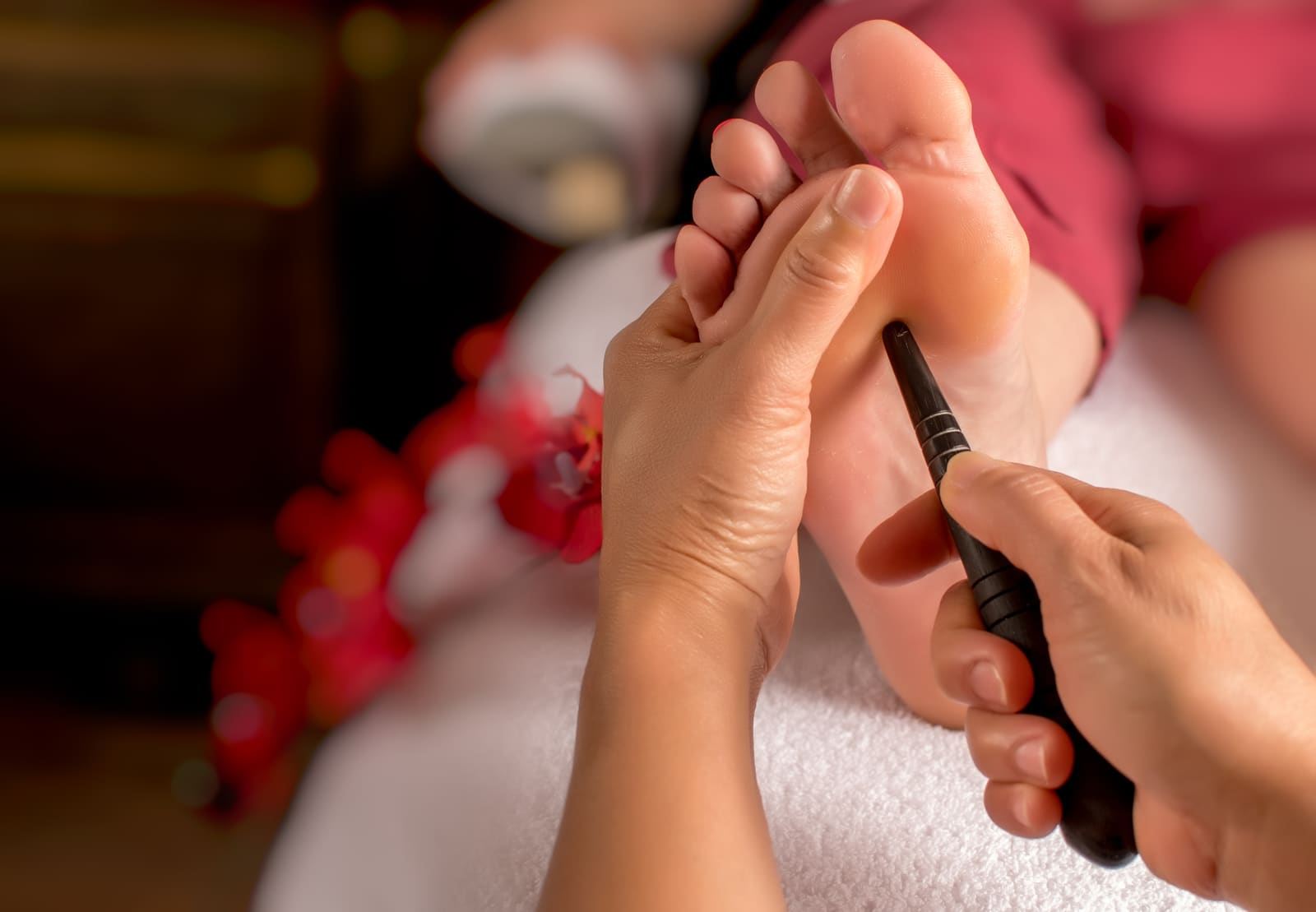
Acupressure and acupuncture are based on ancient Chinese medicine, which believes that the body's vital energy flows through specific meridian or pressure points connecting various organs.
Releasing the body's life force energy, also known as Qi, by stimulating the 14 meridian points in the body can cure ailments like chronic pain and digestive issues while improving blood circulation in people.
What is Acupressure?
Acupressure is a form of ancient Chinese medicine that uses non-invasive techniques to exert pressure on key points in the body to release Qi, the life force energy.
The needle-free treatment is a safe, inexpensive, and simple way to improve the health and well-being of people.
In acupressure, touch and pressure are exerted on pressure points, known as acupoints. Sometimes, further stimulation is offered through acu seeds, tuning forks, and gentle electric currents.
How does acupressure work?
In acupressure, firm pressure is applied using the hands, elbows, and wrists on acupoints to relieve pain and discomfort in different body parts. Similar to Shiatsu massage, acupressure stimulates pressure points, triggering feel-good hormones.
The technique improves blood flow and oxygen in the body, reduces muscle pain, and relaxes muscles, improving the overall well-being of a person. It also strengthens the immune system and relieves stress and tension.
Acupressure can also be used to self-treat, where the practitioner educates the patients about acupressure techniques to be used at home to self-treat their symptoms.
What are the benefits of Acupressure?
Acupressure does not use any external tools. The technique requires exerting pressure at various pressure points using the hands, wrists, and elbows to treat patients. The treatment is easy to use, inexpensive, and can offer lasting benefits as follows:
Insomnia
Acupressure offers promising results for people who have insomnia, helping them improve their sleep routine.
Headaches
Acupressure triggers pressure points in the head and neck region that offer better treatment for chronic headaches than muscle relaxants.
Nausea and morning sickness
Acupressure therapy releases anxiety, stress, and nausea symptoms, relieving morning sickness in pregnant women.
What is Acupuncture?
The technique is more complex than acupressure and must be performed by a licensed practitioner.
In acupuncture, the practitioner inserts a long, thin, sterile needle at different pressure points in the body to trigger the meridians.
Acupuncture is more effective than acupressure as the needles can be applied simultaneously at various pressure points all over the body, allowing better energy flow.
The National Institute of Health has recognized acupuncture as a safe and effective pain reduction and management treatment.
How does acupuncture work?
In acupuncture, acupuncturists sterilize the pressure points with alcohol swabs before inserting single-use, thin needles in different body areas.
The process is painless, although you might feel a slight prick or pressure during needle insertion.
The number of needle insertions varies from case to case. The session may last between 20 to 30 minutes when the practitioner dims the lights and allows you to relax with the needles inserted at strategic points.
What are the benefits of acupuncture?
Acupuncture stimulates the body's autonomous nervous system while reducing the fight or flight response, easing patient stress and anxiety.
The technique also enhances the vagal tone, improving the ease with which the body returns to a non-stressed, balanced state.
Acupuncture can offer the following health benefits.
Stress
Acupuncture techniques can have a therapeutic effect on stress-related issues like anxiety and depression. It also aids in the treatment of post-traumatic stress syndrome.
Headaches and arthritis pain
Acupuncture is considered a more effective pain-relieving treatment than other standard treatments available for chronic pain. It offers excellent relief in the case of headaches, general musculoskeletal pain, and pain from arthritis.
The technique offers moderate lower back pain relief and some benefits for fibromyalgia symptoms.
Gastrointestinal symptoms
Acupuncture treatments at pressure points below the knee (ST36) and above the wrist(PC6) can treat many digestive problems.
Acupressure Vs. Acupuncture: Which one is right for you?
Acupressure and acupuncture are complementary techniques offering a variety of benefits with slight differences in approaches.
The method you choose will depend on your comfort level with massage vs. needles and the level of treatment you are looking for.
While acupressure is a cost-effective process used for pain reduction and stress relief, acupuncture is expensive and offers a more intensive treatment.
Sources:
- 1rogelcancercenter.org/support/symptoms-and-side-effects/alternative-medicine/acupressure#:~:text=Acupressure%20is%20similar%20to%20acupuncture,proper%20acupuncture%20point%20is%20pressed
- 2forbes.com/health/body/acupuncture-vs-acupressure/
- 3bebeautiful.in/articles/acupressure-and-acupuncture-know-the-difference
- 4pediatrics.columbia.edu/about-us/divisions/hematology-oncology-and-stem-cell-transplantation/center-comprehensive-wellness/patient-care/integrative-therapies/acupuncture-and-acupressure
- 5pulmonaryfibrosisnow.org/pfnowtest/acupuncture-vs-acupressure-whats-the-difference/
- 6welleum.com/acupuncture-vs-acupressure-whats-the-difference/
- 7footfiles.com/wellness/naturopathy/article/acupressure-vs-acupuncture-which-is-best-for-your-ailments
- 8webmd.com/balance/acupressure-points-and-massage-treatment
- 9verywellhealth.com/the-benefits-of-acupressure-88702
- 10nccih.nih.gov/health/acupuncture-what-you-need-to-know
General information, not medical advice
This article can't account for your health history or current treatment. Talk to a qualified clinician before you change anything about your care.
Read our medical disclaimer →
On this page
What is Acupressure?
How does acupressure work?
What are the benefits of Acupressure?
Insomnia
Headaches
Nausea and morning sickness
What is Acupuncture?
How does acupuncture work?
What are the benefits of acupuncture?
Stress
Headaches and arthritis pain
Gastrointestinal symptoms
Acupressure Vs. Acupuncture: Which one is right for you?
Put what you read to work
Track your medicines, check a symptom and talk with people managing the same condition, all in Healthread.
Get the app
Keep reading
Beauty and Anti-Aging
Gastric Balloon for Weight Loss
The gastric balloon weight loss procedure is a new FDA-approved minimally invasive bariatric procedure for treating obesity. It is a temporary procedure that involves placing a saline-filled silicone balloon in the…
June 19, 2025 · 3 min read
Beauty and Anti-Aging
Vitamin D Deficiency
Also known as the sunshine vitamin, vitamin D is an essential nutrient that is naturally absorbed by the skin through exposure to sunlight. It can also be obtained from dietary sources and supplements.
December 30, 2024 · 3 min read
Beauty and Anti-Aging
Cellulite
Cellulite appears with an orange peel or cottage cheese-like texture with a dimpled or lumpy skin surface. Mild cellulite is visible when you pinch the area with cellulite, like the thighs. Severe cellulite can make the…
August 13, 2024 · 3 min read


© 2026 Healthread
English · Español
Healthread does not provide medical advice, diagnosis or treatment. Always speak to a qualified clinician about your care.