

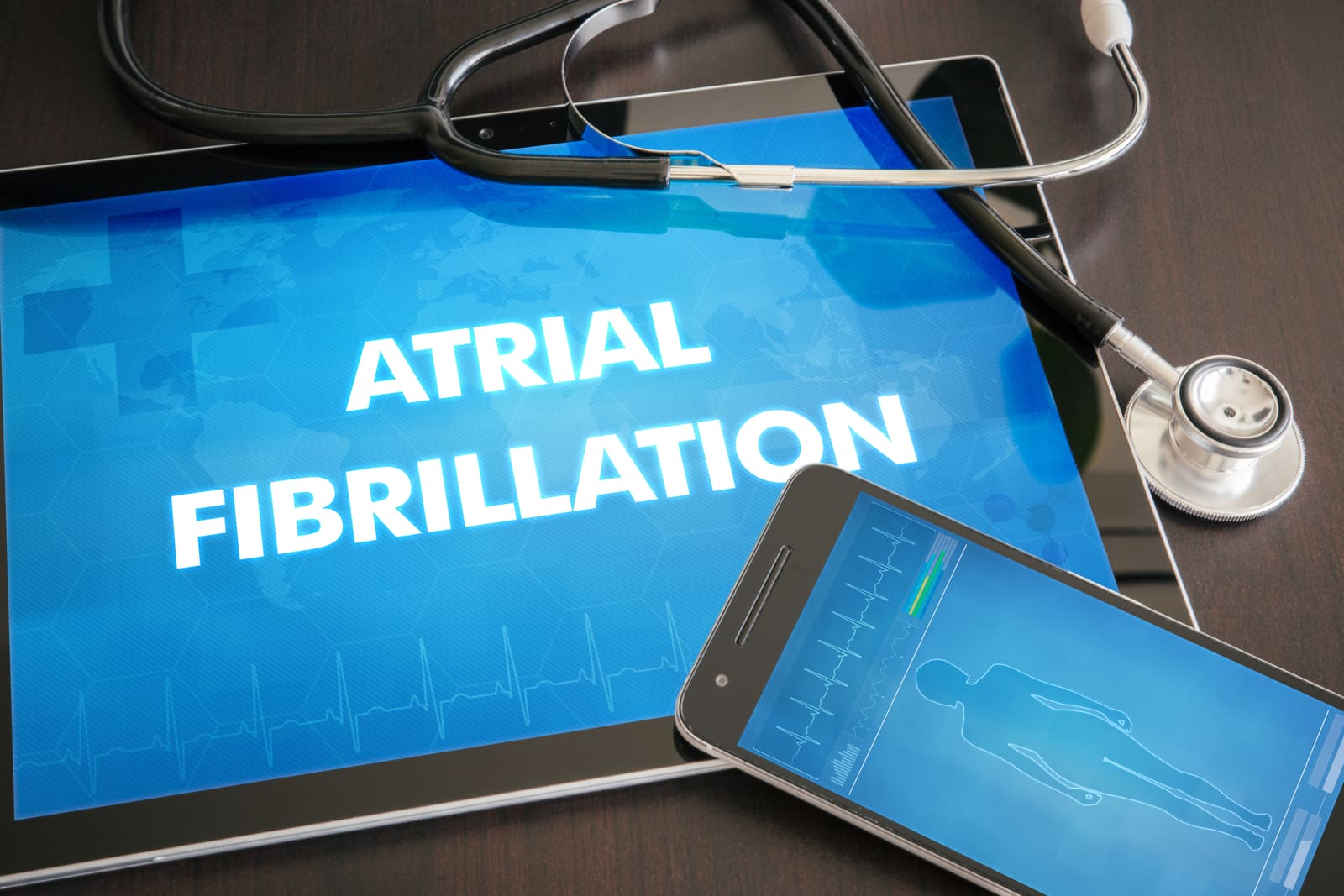
Atrial fibrillation, or Afib, is a type of irregular and often abnormal heart rhythm. Afib is one of the most common types of arrhythmia, appearing as an extremely fast and irregular heartbeat ( more than 400 beats per minute) from the heart's upper chambers.
Afib can lead to abnormal heart conditions and increase the risk of heart failure, stroke, and other heart-related complications.
Atrial fibrillation can happen in brief episodes, or it can be a permanent condition.
The month of September is deemed atrial fibrillation awareness month.
What causes Afib?
While a normal heartbeat involves regular heart contractions, about once per second during rest, people with Afib experience faulty electrical signals that cause irregular, faster-than-normal heartbeat.
The irregular heartbeat pattern can cause the atria, the heart’s upper chambers, to get out of sync with the ventricles, the heart’s lower chambers.
Atrial fibrillation can lead to blood pooling in the atrium, increasing the risk of blood clots and stroke. The ventricles may beat too quickly, causing heart failure in Afib patients.
What are the types of Afib?
Afib can be of three types.
- Persistent Afib: The symptoms of atrial fibrillation are ongoing, lasting seven days or more. Electric shocks are given to the heart to restore the normal heartbeat.
- Paroxysmal Afib: The atrial fibrillation occurs intermittently and stops on its own within seven days.
- Long-standing persistent Afib: Similar to the persistent Afib, the abnormal heartbeat continues for longer than a year.
What are the symptoms of Afib?
In some cases, Afib causes no symptoms. In others, people with Afib can experience the following symptoms.
- Palpitations with a feeling of heart fluttering or racing
- Shortness of breath
- Fainting
- Dizziness
- Fatigue
- Weakness
- Angina or chest pain because of a reduced blood supply to the heart
Atrial fibrillation can also have serious life-threatening complications like:
- Blood clots
- Stroke
- Heart failure
What are the risk factors of Afib?
People with the following characteristics have an increased risk of getting Afib.
- People aged 50 and older
- The male gender
- High stress level
- Taller people
- Increased alcohol use
- Sleep apnea or poor sleep
- High blood pressure
- Thyroid disease
- People with a history of heart failure
A family history of Afib can increase the risk of contracting the disease, especially at a younger age.
How is Afib diagnosed?
Where you experience one or more symptoms of Afib, the medical provider shall perform a physical exam and ask about your family history. They may order an electrocardiogram( EKG or ECG), a definitive test for diagnosing Afib.
The electrocardiogram will provide information about:
- Your heart rate and rhythm
- Which part of the heart is triggering the contractions
- How the heart’s electric signals are traveling
A special ECG monitor may be placed on your chest to record the heart rhythm over a time period to detect any heart abnormalities.
How is Afib treated?
For some people, atrial fibrillation goes away on its own. For others, it might be an ongoing heart condition lasting several years. With time, the episodes of irregular heart rhythm may appear more frequently and for an extended time.
The treatment option will vary depending on the family history, symptoms, and preferences.
- The primary step in treating Afib is assessing the patient’s risks of suffering a stroke. In people 65 years and older with high blood pressure, the risk of stroke can be reduced by prescribing anti-coagulation medicines.
- The second step will be to slow the person's heart rate using medications.
- Thirdly, the medical provider will control the heart rhythm using a medical procedure or anti-arrhythmic medications.
People with persistent Afib may require cardioversion or electric shocks to restore their normal heartbeats. Then, medication can be prescribed to control the heart rhythm.
The medication used to slow the heart rate are:
- Calcium channel blockers
- Beta-blockers
- Digoxin
The medicines used to control the heart rhythm are:
- Dronedarone
- Propafenone
- Flecainide
- Dofetilide
- Amiodarone
The medicines used to prevent blood clots and strokes are:
- Warfarin
- Edoxaban
- Rivaroxaban
- Dabigatran
- Apixaban
Your medical provider may recommend surgical procedures where medication cannot effectively manage the Afib symptoms.
- A maze procedure: The surgeon makes cuts in strategic places to develop scar tissues that prevent the electrical signals from passing through.
- Catheter ablations: The doctor used extreme heat or cold or radiofrequency waves to destroy tissues causing Afib.
Sources:
- 1mayoclinic.org/diseases-conditions/atrial-fibrillation/symptoms-causes/syc-20350624#:~:text=Atrial%20fibrillation%20(AFib)%20is%20an,and%20other%20heart%2Drelated%20complications
- 2heart.org/en/health-topics/atrial-fibrillation/what-is-atrial-fibrillation-afib-or-af
- 3hopkinsmedicine.org/health/conditions-and-diseases/atrial-fibrillation
- 4cdc.gov/heartdisease/atrial_fibrillation.htm
- 5my.clevelandclinic.org/health/diseases/16765-atrial-fibrillation-afib
- 6cedars-sinai.org/health-library/diseases-and-conditions/a/atrial-fibrillation.html
- 7nhlbi.nih.gov/health/atrial-fibrillation
General information, not medical advice
This article can't account for your health history or current treatment. Talk to a qualified clinician before you change anything about your care.
Read our medical disclaimer →
On this page
What causes Afib?
What are the types of Afib?
What are the symptoms of Afib?
What are the risk factors of Afib?
How is Afib diagnosed?
How is Afib treated?
Put what you read to work
Track your medicines, check a symptom and talk with people managing the same condition, all in Healthread.
Get the app
Keep reading
Beauty and Anti-Aging
Gastric Balloon for Weight Loss
The gastric balloon weight loss procedure is a new FDA-approved minimally invasive bariatric procedure for treating obesity. It is a temporary procedure that involves placing a saline-filled silicone balloon in the…
June 19, 2025 · 3 min read
Beauty and Anti-Aging
Vitamin D Deficiency
Also known as the sunshine vitamin, vitamin D is an essential nutrient that is naturally absorbed by the skin through exposure to sunlight. It can also be obtained from dietary sources and supplements.
December 30, 2024 · 3 min read

Beauty and Anti-Aging
Cellulite
Cellulite appears with an orange peel or cottage cheese-like texture with a dimpled or lumpy skin surface. Mild cellulite is visible when you pinch the area with cellulite, like the thighs. Severe cellulite can make the…
August 13, 2024 · 3 min read


© 2026 Healthread
English · Español
Healthread does not provide medical advice, diagnosis or treatment. Always speak to a qualified clinician about your care.