

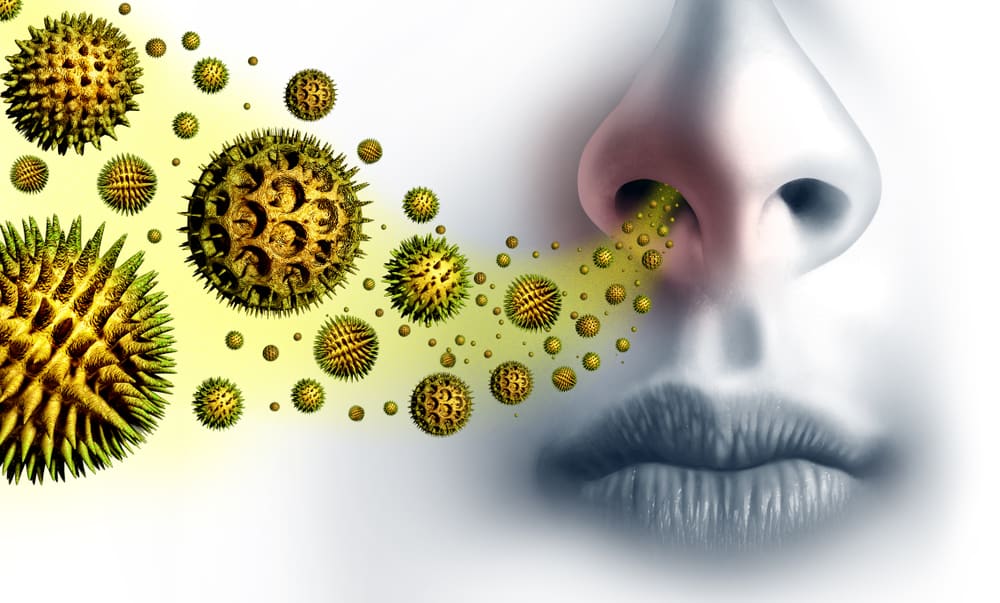
The human immune system encounters millions of foreign substances each day. It learns to distinguish harmless ones from potentially harmful ones, such as bacteria and viruses. An allergy occurs when a person’s immune system reacts to a foreign substance that does not bother most other people. When a person is allergic to something, their body makes antibodies that recognize the substance (called an ‘allergen’). Those antibodies remain on alert, and they trigger an immune response if the allergen is detected again. The allergic response triggers a cascade of chemical messengers, including histamine, to be released. These chemicals are responsible for the symptoms of allergies.
Most allergies result in mild discomfort, but they can be severe or life-threatening. Although most allergies can’t be cured, treatments and behavioral changes can alleviate symptoms.
Common allergies and examples include:
- Respiratory (pollen, dust mites, mold spores, pet dander)
- Food (eggs, fish milk, peanuts, soy, tree nuts, shellfish, wheat)
- Skin (cosmetics, dyes, latex, perfumes, poison ivy, nickel)
- Drug (penicillin)
- Insect (bees, wasps, horseflies, mosquitos)
According to the Centers for Disease Control and Prevention (CDC), allergies are very common. Over the past 12 months, approximately 7% of adults and children experienced respiratory allergies. Among children, food allergies (6.5%) and skin allergies (12.6%) are also relatively common.
Symptoms
Allergy symptoms vary from person to person, and they can change over time. The type of substance involved influences the symptoms.
Hay fever (also known as allergic rhinitis) is caused by breathing allergens, such as pollen, dust mites, pet dander (dead skin particles), or mold spores. The symptoms occur when the substance is present in the environment:
- Watery, red eyes
- Sneezing
- Runny or stuffy nose
- Itching of mucous membranes (eyes, nose, mouth)
Food allergy symptoms occur when a person ingests the offending food:
- Mouth tingling
- Face, throat, or mouth swelling
- Hives
Skin allergies occur when a person touches an allergen:
- Itchy, burning, and/or red skin
- Peeling or scaling skin
Drug allergies can develop after a person has been treated with a medication. The first exposure may not produce any symptoms, but the second exposure and reaction can be severe. Symptoms include:
- Rash
- Itchy skin
- Hives
- Facial swelling
- Wheezing
Insect stings or bites can cause:
- Itching or hives on the body
- Swelling at the sting or bite site
- Chest tightness, shortness of breath, wheezing, cough
Anaphylaxis
Some allergies, including food an insect stings, can cause a life-threatening reaction called anaphylaxis. Symptoms occur rapidly after exposure:
- Light headedness
- Drop in blood pressure
- Rapid, weak pulse
- Severe shortness of breath
- Nausea, vomiting
- Loss of consciousness
If anaphylaxis is suspected, immediate medical treatment is needed. If a person has ever had a severe allergic reaction, doctors recommend wearing a medic alert bracelet or necklace to alert others to the allergy in case the person is unable to communicate. These individuals carry an injectable medication called epinephrine (e.g., EpiPen, Auvi-Q) to save their life while they await emergency treatment.
Diagnosis
If a doctor suspects that a person has an allergy, they will ask detailed questions about signs and symptoms and complete a physical exam. A diary of symptoms and possible triggers may be used to help identify the allergen.
Clinical testing may also be done.
- Skin test: Small amounts of the potential allergens are placed on a pricked area of skin. If a person is allergic, they will develop a hive at the site.
- Blood test: A blood sample is drawn and sent to a laboratory to look for the presence of allergy-causing antibodies (known as IgE).
While these tests can be helpful in identifying allergens, they may also produce results that are falsely positive or negative. Patients may be asked to avoid the suspected allergen to see if symptoms improve or stop.
Treatment
Reducing and removing known triggers from the environment can provide relief in many cases. Examples include avoiding the outdoors when pollen counts are high (pollen allergy), cleaning linens and vacuuming more often (dust mite allergy), removing moisture from the environment (mold allergy), avoiding cats and dogs (pet dander allergy), and avoiding a certain food. Nasal irrigation (e.g., Netipot) can also be used to flush mucus and allergens, such as pollen, out of nasal passages.
Medications may help ease symptoms. Many can be obtained over the counter. Commonly used medications include:
- Antihistamines (e.g., Benadryl)
- Corticosteroids
- Certirizine (Zyretec) or loratine (Claritin)
- Nasal decongestants (Afrin, Suphedrine PE, Sudafed)
- Cromolyn sodium (Gastrocrom)
- Leukotriene modifiers (Singulair, Zyflo)
Immunotherapy may be an option for individuals with severe allergies or those that cannot be managed with other treatments. This therapy involves injecting purified allergen extracts at regular intervals. Treatment usually lasts a few years. Essentially, immunotherapy exposes the body to allergens at increasing doses over time, which trains the body to stop reacting to the allergen as a threat.
Sources
General information, not medical advice
This article can't account for your health history or current treatment. Talk to a qualified clinician before you change anything about your care.
Read our medical disclaimer →
Put what you read to work
Track your medicines, check a symptom and talk with people managing the same condition, all in Healthread.
Get the app
Keep reading

Beauty and Anti-Aging
Gastric Balloon for Weight Loss
The gastric balloon weight loss procedure is a new FDA-approved minimally invasive bariatric procedure for treating obesity. It is a temporary procedure that involves placing a saline-filled silicone balloon in the…
June 19, 2025 · 3 min read

Beauty and Anti-Aging
Vitamin D Deficiency
Also known as the sunshine vitamin, vitamin D is an essential nutrient that is naturally absorbed by the skin through exposure to sunlight. It can also be obtained from dietary sources and supplements.
December 30, 2024 · 3 min read
Beauty and Anti-Aging
Cellulite
Cellulite appears with an orange peel or cottage cheese-like texture with a dimpled or lumpy skin surface. Mild cellulite is visible when you pinch the area with cellulite, like the thighs. Severe cellulite can make the…
August 13, 2024 · 3 min read


© 2026 Healthread
English · Español
Healthread does not provide medical advice, diagnosis or treatment. Always speak to a qualified clinician about your care.