

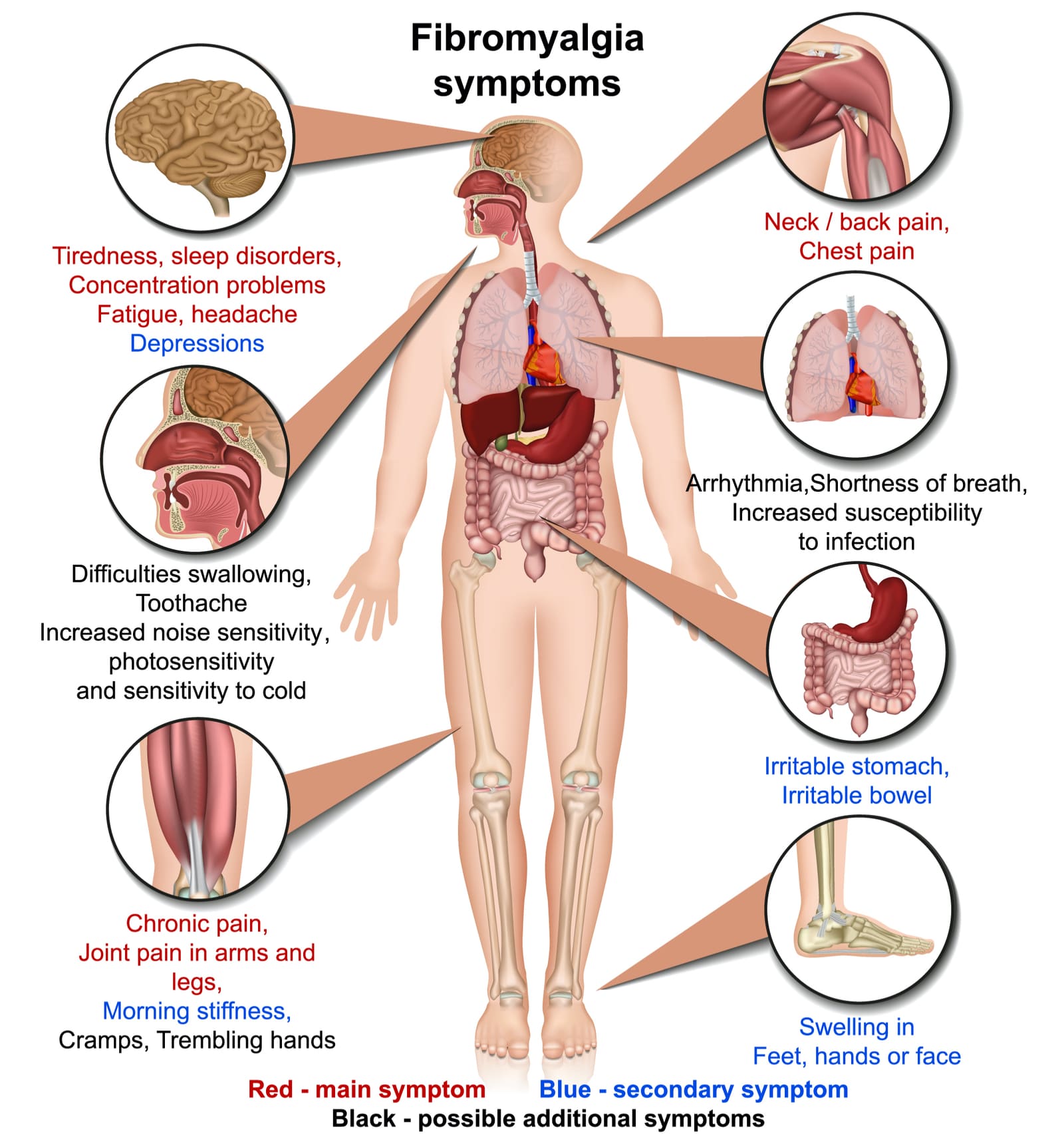
Do you experience daily pain on a chronic basis? Do your legs and arms frequently feel heavy and achy, or do you struggle with your memory and concentration? These issues are among the most common signs and symptoms of fibromyalgia—one of the leading causes of chronic pain that currently affects about 10 million Americans.
What is Fibromyalgia?
Generally speaking, fibromyalgia is considered a neurological condition involving disordered sensory processing. It's not entirely clear what causes it or why it occurs.
One current theory is that fibromyalgia occurs due to the dysfunction of pain pathways in the nervous system, which develops because of impaired blood flow and inflammation in certain areas of the brain. By disrupting the way pain pathways function, the brain perceives pain at an amplified, over-the-top level. Research also suggests that structures found in muscle tissue, including Golgi tendon organs (which help control muscle tension), may contribute to this heightened experience of, and sensitivity to, pain.
To use an analogy, you can think of your brain as a television and pain sensation as the sound coming from the television. In a person with fibromyalgia, the volume on the television is turned way up. This helps to explain why even sensations and stimuli that aren't normally painful—such as the feeling of your clothes against your skin—can be extremely uncomfortable and distressing in a person with fibromyalgia.
Research has also found that people with fibromyalgia have increased levels of inflammatory chemicals in their body, including cytokines and Tumor necrosis factor (TNF). These high levels of inflammatory molecules are thought to drive the underlying inflammatory mechanism of fibromyalgia and may even stimulate pain receptors in the brain.
You may be more likely to develop fibromyalgia if you are female (women are twice as likely as men to be diagnosed with it), have a history of physical and/or emotional trauma, or are diagnosed with other autoimmune disorders like rheumatoid arthritis or lupus. People of all ages can be diagnosed with fibromyalgia, but it usually shows up for the first time between the ages of 25 and 50.
Fibromyalgia Signs and Symptoms
Fibromyalgia can present very similarly to arthritis. But unlike arthritis, fibromyalgia tends to affect a person's soft tissues (like the muscles and fascia) rather than their joints.
Telltale signs and symptoms of fibromyalgia—which can vary greatly between people—include:
- Diffuse pain throughout the body, especially in muscles and tissues (pain is often worse in specific areas called "tender points")
- Chronic fatigue
- Stiff or achy joints, especially in the morning
- Headaches
- Very painful menstrual periods (in women)
- Increased sensitivity to heat, cold, or even light touch
- Paresthesias (numbness and tingling) in the hands and feet
- Difficulty sleeping
- Restless leg syndrome (RLS)
- Gastrointestinal problems, including irritable bowel syndrome (IBS) and nausea
- Urinary problems
- Trouble with memory and attention (sometimes referred to as brain fog or "fibro-fog")
- Vision changes
- Weight gain
- Skin irritation and other issues
- Frequent dizziness
- Mood dysfunction including anxiety and depression
- Breathing problems
Living With Fibromyalgia: Treatment and Management
We don't yet know if there's a cure for fibromyalgia. But it is possible to manage the condition so that you or your loved one can still live an active and fulfilling life. According to the National Fibromyalgia Association, the optimal treatment for fibromyalgia should include an individualized approach that includes lifestyle modifications, comprehensive pain management, sleep management, psychological support, and more.
Here are a few of the most common treatment options for fibromyalgia:
- Regular exercise (although it's important to consult with your healthcare provider before changing your activity level if you have fibromyalgia or any other chronic health condition)
- Medications, including over-the-counter pain-relievers (although the European League Against Rheumatism now advises against the use of non-steroidal anti-inflammatory medications), non-narcotic prescription pain-relievers like tramadol and gabapentin, or low dose antidepressants (not as a first line of treatment, however)
- Acupuncture, which has been shown in some research to reduce pain and stiffness and promote a better quality of life in people with fibromyalgia, especially when initiated within two years following a diagnosis
- Psychotherapy, including cognitive behavioral therapy that can help a person relieve stress and learn coping strategies to manage their mental health
- Massage
- Physical therapy
Additional treatments that have been studied less but appear to offer some benefit to at least some people with fibromyalgia include relaxation exercises, mindfulness training, biofeedback, yoga, breathing exercises, chiropractic care, and nutritional supplements and dietary modifications.
Conclusion
Fibromyalgia affects an estimated 3 to 6 percent of the world's population. Men, women, and children may be diagnosed with it, and so far there isn't any known cure. Through individualized care and close communication with medical providers, it's possible to maintain a productive and active lifestyle even with a fibromyalgia diagnosis.
Source
- 1mayoclinic.org/diseases-conditions/fibromyalgia/symptoms-causes/syc-20354780
- 2fmaware.org/about-fibromyalgia/prevalence/
- 3journals.sagepub.com/home/aim
- 4cdc.gov/arthritis/basics/fibromyalgia.htm
- 5jwatch.org/na48369/2019/01/24/evidence-neuroinflammation-fibromyalgia
- 6frontiersin.org/articles/10.3389/fncel.2019.00353/full
- 7ncbi.nlm.nih.gov/pmc/articles/PMC5344444/
- 8spineuniverse.com/conditions/fibromyalgia/fibromyalgia-study-its-real-disease
- 9medicalnewstoday.com/articles/147083.php
General information, not medical advice
This article can't account for your health history or current treatment. Talk to a qualified clinician before you change anything about your care.
Read our medical disclaimer →
On this page
What is Fibromyalgia?
Fibromyalgia Signs and Symptoms
Living With Fibromyalgia: Treatment and Management
Conclusion
Source
Put what you read to work
Track your medicines, check a symptom and talk with people managing the same condition, all in Healthread.
Get the app
Keep reading

Beauty and Anti-Aging
Gastric Balloon for Weight Loss
The gastric balloon weight loss procedure is a new FDA-approved minimally invasive bariatric procedure for treating obesity. It is a temporary procedure that involves placing a saline-filled silicone balloon in the…
June 19, 2025 · 3 min read
Beauty and Anti-Aging
Vitamin D Deficiency
Also known as the sunshine vitamin, vitamin D is an essential nutrient that is naturally absorbed by the skin through exposure to sunlight. It can also be obtained from dietary sources and supplements.
December 30, 2024 · 3 min read

Beauty and Anti-Aging
Cellulite
Cellulite appears with an orange peel or cottage cheese-like texture with a dimpled or lumpy skin surface. Mild cellulite is visible when you pinch the area with cellulite, like the thighs. Severe cellulite can make the…
August 13, 2024 · 3 min read


© 2026 Healthread
English · Español
Healthread does not provide medical advice, diagnosis or treatment. Always speak to a qualified clinician about your care.