

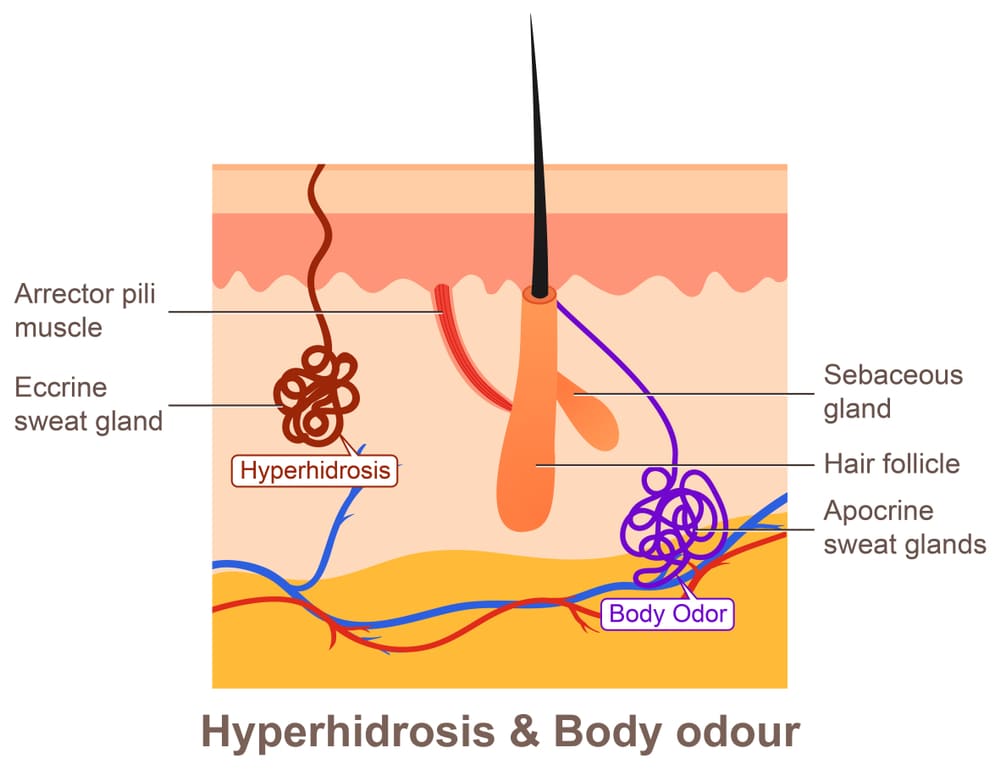
Are you frustrated by excessive sweating? You may have hyperhidrosis, which affects nearly 3 percent of the population. Keep reading to learn more about hyperhidrosis and how you or a loved one can manage life with this chronic condition.
What is Hyperhidrosis?
Sweating is a normal and important bodily function that is regulated by the nervous system. Sweating helps the body maintain a normal temperature and is also a part of the stress response, which is why people often have sweaty palms when they're nervous or excited.
Hyperhidrosis (from the Greek "hyper" for over and "hidrṓs" for sweat) means excessive sweating. It's sometimes called polyhidrosis or sudorrhea. People with hyperhidrosis tend to notice that they sweat a lot and often for no obvious reason. Their excessive sweating usually occurs in specific areas, such as the underarms (most common), palms, bottom of the feet, groin, and face. These areas of the body have higher concentrations of sweat glands. However, the condition can affect the entire body, too (generalized hyperhidrosis).
Who Gets Hyperhidrosis?
Hyperhidrosis can present at any age, although most people are diagnosed with it during their adolescence or teen years. Research indicates that hyperhidrosis is most common in people between the ages of 24 and 65.
If you or a loved one develops hyperhidrosis, it may not always be clear why. Many people with this condition are diagnosed with "primary idiopathic hyperhidrosis." This means their excessive sweating has an unknown cause ("idiopathic") and is not related to another underlying health condition. Research suggests that genes could play a role, since most people with hyperhidrosis have a family member, such as a parent or sibling, who also has it.
Other people can be diagnosed with "secondary hyperhidrosis." For these individuals, their excessive sweating is related to some other underlying condition, such as gout, menopause, diabetes, obesity, substance abuse, anxiety disorder, spinal cord injury, pregnancy, or thyroid dysfunction.
Signs, Symptoms, and Complications of Hyperhidrosis
Hyperhidrosis is not life-threatening, but it can affect your life in a significant way and cause physical and psychological issues. Common symptoms of hyperhidrosis include:
- Excessive sweating episodes that occur at least once a week, and often daily (for people with primary hyperhidrosis, excessive sweating tends NOT to occur during sleep)
- Frequently sweaty, wet, or clammy hands, feet, and other body parts (usully on both sides of the body)
- Sweating that is so profuse it soaks through or stains a person's clothing
As you may imagine, sweating a lot and for no apparent reason can be very distressing! People with hyperhidrosis often feel very self-conscious about their bodies and are worried about things like body odor and wet or stained clothes. Many people try to cover up their sweating by wearing dark or bulky clothing, changing their clothes often, using baby wipes, or putting napkins or pads in sweatier areas—all of which can take a lot of time and energy.
In severe cases, a person with hyperhidrosis can experience skin irritation and damage, including fungal or bacterial infections. A person may also start to withdraw socially from other people and avoid close contact. This type of self-isolation can be stressful or even lead to feelings of depression.
Hyperhidrosis Treatment: What to Expect
A lot of people with hyperhidrosis don't seek treatment because they're embarassed about their condition. But the condition can be managed through a variety of treatments.
The first step in getting treatment for hyperhidrosis is getting appropriate diagnosis. Usually, this means a doctor—and sometimes a specialist like a dermatologist or neurologist—will ask a person a series of questions about their medical and family history. Providers will likely run certain tests (like blood or urine tests) to rule out other health conditions that could be causing the excessive sweating.
Once a diagnosis is confirmed, a medical provider can recommend a variety of treatments. These may include:
- Botox® injections: in 2004, the Food and Drug Administration (FDA) approved Botox® (botulinum toxin injections) for the treatment of hyperhidrosis. The injections block nerves that trigger sweat glands.
- Iontophoresis: for this treatment. a person places their hands or feet into a tray of water for about 20 to 30 minutes while a painless and mild electric current passes through the water.
- Anticholinergic drugs: these medications inhibit the activity of inhibit of nerves which normally trigger sweating.
- Microwave thermolysis: approved by the FDA in 2011, this non-invasive treatment involves the application of microwave energy to sweat glands in the armpits. The energy destroys the sweat glands and prevents them producing sweat in the future.
- Prescription antiperspirants: unlike deodorants (which just mask armpit odor), antiperspirants contain substances that block sweat glands and can temporarily prevent sweating.
- Endoscopic thoracic sympathectomy (ETS): this is a surgical procedure that cuts the nerves involved in sweating in the face, hands, or armpits. ETS is only recommeded for severe cases of hyperhidrosis that don't improve with other treatments.
If a person has secondary hyperhidrosis, it's important that they work with their medical provider to manage their underlying health conditions.
Hints for Living With Hyperhidrosis
In addition to discussing the above treatment options with your provider, you can also practice helpful self-management and lifestyle strategies to stay in control of your sweating. Try:
- Armpit shields or other absorbent pads to protect garments and absorb excess sweat
- Loose-fitting clothing made with natural materials, like cotton (synthetic materials often make sweating worse)
- Good hygiene, such as being extra sure to dry your skin thoroughly after getting out of the shower or bath
- Good self-care, to help manage any anxiety or distress associated with your condition
Do you know someone living with hyperhidrosis? Be sure to direct them to Healthread.com to connect with other people living with this condition and get some much-deserved support!
Sources
General information, not medical advice
This article can't account for your health history or current treatment. Talk to a qualified clinician before you change anything about your care.
Read our medical disclaimer →
On this page
What is Hyperhidrosis?
Who Gets Hyperhidrosis?
Signs, Symptoms, and Complications of Hyperhidrosis
Hyperhidrosis Treatment: What to Expect
Hints for Living With Hyperhidrosis
Sources
Put what you read to work
Track your medicines, check a symptom and talk with people managing the same condition, all in Healthread.
Get the app
Keep reading

Beauty and Anti-Aging
Gastric Balloon for Weight Loss
The gastric balloon weight loss procedure is a new FDA-approved minimally invasive bariatric procedure for treating obesity. It is a temporary procedure that involves placing a saline-filled silicone balloon in the…
June 19, 2025 · 3 min read
Beauty and Anti-Aging
Vitamin D Deficiency
Also known as the sunshine vitamin, vitamin D is an essential nutrient that is naturally absorbed by the skin through exposure to sunlight. It can also be obtained from dietary sources and supplements.
December 30, 2024 · 3 min read
Beauty and Anti-Aging
Cellulite
Cellulite appears with an orange peel or cottage cheese-like texture with a dimpled or lumpy skin surface. Mild cellulite is visible when you pinch the area with cellulite, like the thighs. Severe cellulite can make the…
August 13, 2024 · 3 min read


© 2026 Healthread
English · Español
Healthread does not provide medical advice, diagnosis or treatment. Always speak to a qualified clinician about your care.