

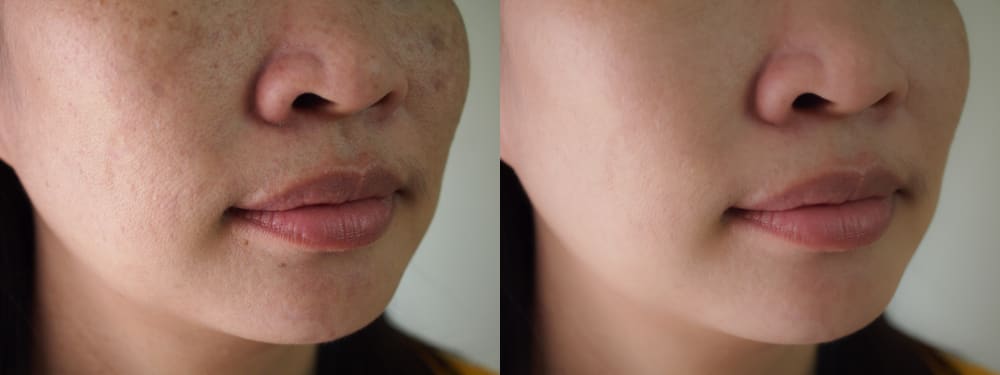
Melasma is a common skin condition that causes patches of discoloration. Because there are several causes of skin hyperpigmentation, it can be challenging to distinguish melasma from other conditions. Visiting a dermatologist is the best way to get an accurate diagnosis and treatment options tailored to you.
What Is Melasma?
Melasma causes a darkening or discoloration of the skin. Women are significantly more likely to develop melasma than men, though people of both sexes and all ages can develop it. Melasma most commonly affects the skin on the face, including the chin, forehead, and upper lip. Some people develop melasma elsewhere on the body, often on areas exposed to the sun such as the neck or lower arms. Melasma tends to look like blotchy, symmetric hyperpigmented patches. It can be difficult to distinguish melasma from other causes of hyperpigmentation, such as acne scars, freckles that expand into sun spots, psoriasis, or eczema.
Causes and Risk Factors for Melasma
The skin contains a class of cells called melanocytes. Melanocytes create the pigment melanin, which they transfer to nearby skin cells. Melanin is responsible for your skin color -- darker-skinned people have more melanin than lighter-skinned individuals. Melanin is the chemical responsible for a suntan, because it is produced more abundantly in response to UV light.
For people with melasma, melanocytes receive a signal to create more pigment. In response, they create a surplus that is transferred into the lower levels of skin cells. This results in the darkened spots that can be challenging to banish. There are several common risk factors for melasma:
- Genetics. There appears to be a genetic component to melasma, although scientists have not yet discovered the particular genes at play. Having a relative with melasma increases your own risk.
- Darker skin. People with darker skin tone have more melanin in their cells to begin with. This makes them more likely to develop all kinds of hyperpigmentation, including melasma.
- Hormonal changes. Hormonal changes are among the most common causes of melasma. Women are more likely to develop melasma than men, in part because the female sex hormones estrogen and progesterone can trigger hyperpigmentation. Many women first notice melasma during pregnancy; this is so common that the condition is sometimes called “the mask of pregnancy.” Other hormonal changes, such as starting hormonal birth control, can also trigger melasma.
- Sun exposure. Exposure to UV light can cause melasma or worsen melasma that is already present. This is because UV light triggers melanocytes to go into overdrive, producing excess pigment that is deposited into melasma blotches. Heat and visible light can also worsen melasma, though they can be more difficult to avoid.
Melasma Prevention and Treatment
Whenever possible, it is important to prevent melasma from occurring in the first place, as once it appears it can be stubborn to get rid of. The best way to prevent melasma is to wear sunscreen every single day. Even if it is cloudy, rainy, or you are staying inside for most of the day, wear sunscreen! UV light penetrates clouds and windows, so you may be getting exposed more than you think. Sunscreens with physical blockers such as zinc or titanium dioxide (as opposed to chemical sunscreens that contain oxybenzone) are the best way to prevent UV light from penetrating the skin. These sunscreens literally deflect the light, preventing it from reaching melanocytes. Wearing a hat also helps to block the sun.
Once you have melasma, it may take some trial and error to find the right treatment for you. Common treatment options include:
- Topical retinols and retinoids. Your skin cells naturally die and turn over every few weeks. Retinols and retinoids stimulate faster turnover, meaning that they increase the speed of skin regeneration. Some formulations of retinoids are available over the counter, but stronger formulas are prescription only. Pregnant and breastfeeding women should not use retinol, as it may not be safe for developing babies. It is also essential that you wear sunscreen daily when using retinoids.
- Hydroquinone. Hydroquinone is a bleaching agent that lightens skin color by blocking melanin production. Although products containing hydroquinone are available over the counter, they can cause white spots or worsening hyperpigmentation, so consult a doctor before using.
- Chemical exfoliants. Products containing azelaic acid and kojic acid chemically exfoliate the skin, removing dead cells and promoting turnover.
- Vitamins C and E. Vitamins C and E are antioxidants that can brighten skin tone and heal UV damage. Use a serum containing these vitamins daily to combat melasma.
- Moisturizer. Daily moisturizer helps to keep skin healthy.
- Chemical peels. Chemical peels may help to promote cell turnover sand reduce the appearance of melasma.
- Laser treatment. Laser treatments are sometimes recommended for melasma, but they do not work for everyone. Other treatments should be attempted first before trying laser treatments.
Sources
General information, not medical advice
This article can't account for your health history or current treatment. Talk to a qualified clinician before you change anything about your care.
Read our medical disclaimer →
Put what you read to work
Track your medicines, check a symptom and talk with people managing the same condition, all in Healthread.
Get the app
Keep reading

Beauty and Anti-Aging
Gastric Balloon for Weight Loss
The gastric balloon weight loss procedure is a new FDA-approved minimally invasive bariatric procedure for treating obesity. It is a temporary procedure that involves placing a saline-filled silicone balloon in the…
June 19, 2025 · 3 min read

Beauty and Anti-Aging
Vitamin D Deficiency
Also known as the sunshine vitamin, vitamin D is an essential nutrient that is naturally absorbed by the skin through exposure to sunlight. It can also be obtained from dietary sources and supplements.
December 30, 2024 · 3 min read

Beauty and Anti-Aging
Cellulite
Cellulite appears with an orange peel or cottage cheese-like texture with a dimpled or lumpy skin surface. Mild cellulite is visible when you pinch the area with cellulite, like the thighs. Severe cellulite can make the…
August 13, 2024 · 3 min read


© 2026 Healthread
English · Español
Healthread does not provide medical advice, diagnosis or treatment. Always speak to a qualified clinician about your care.