

Most people have heard about multiple sclerosis before, even if they're not exactly sure what it is or how it affects the human body. Keep reading to learn about this condition, including how to recognize its signs and symptoms and what it's like to live with it.
Understanding Multiple Sclerosis (Including Causes and Risk Factors)
Multiple sclerosis, or simply MS, is a chronic disease that affects a person's central nervous system (CNS), including the brain, spinal cord, and nerves. With MS, a person's immune system mistakenly attacks its own CNS tissues, which can lead to irreversible (and sometimes reversible) nervous tissue damage.
To be more specific, the immune system of people with MS starts to attack and damage a type of fatty tissue in the nervous system called myelin. Myelin is like protective insulation that wraps around nerve cells and helps them transmit signals throughout the body. When myelin becomes damaged, nerves aren't able to communicate as well. Immune dysfunction and inflammation caused by MS can also damage the cells that make myelin (oligodendrocytes) and the underlying nerves themselves.
About 2.3 million people around the world are living with MS. Most people who get MS are first diagnosed sometime between the ages of 20 and 50. Women are affected by MS two to three times more often than men. Evidence doesn't yet show whether MS is directly inherited, but certain genes may increase the chances of developing condition, especially if a person has known risk factors such as low vitamin D levels or a smoking habit.
Did you know? Vitamin D, which the body makes after the skin is exposed to sunlight, is so closely linked to MS that researchers now believe living in a more northern-climate—where access to sunlight is more limited throughout the year—is also considered a risk factor for MS.
Signs and Symptoms of Multiple Sclerosis
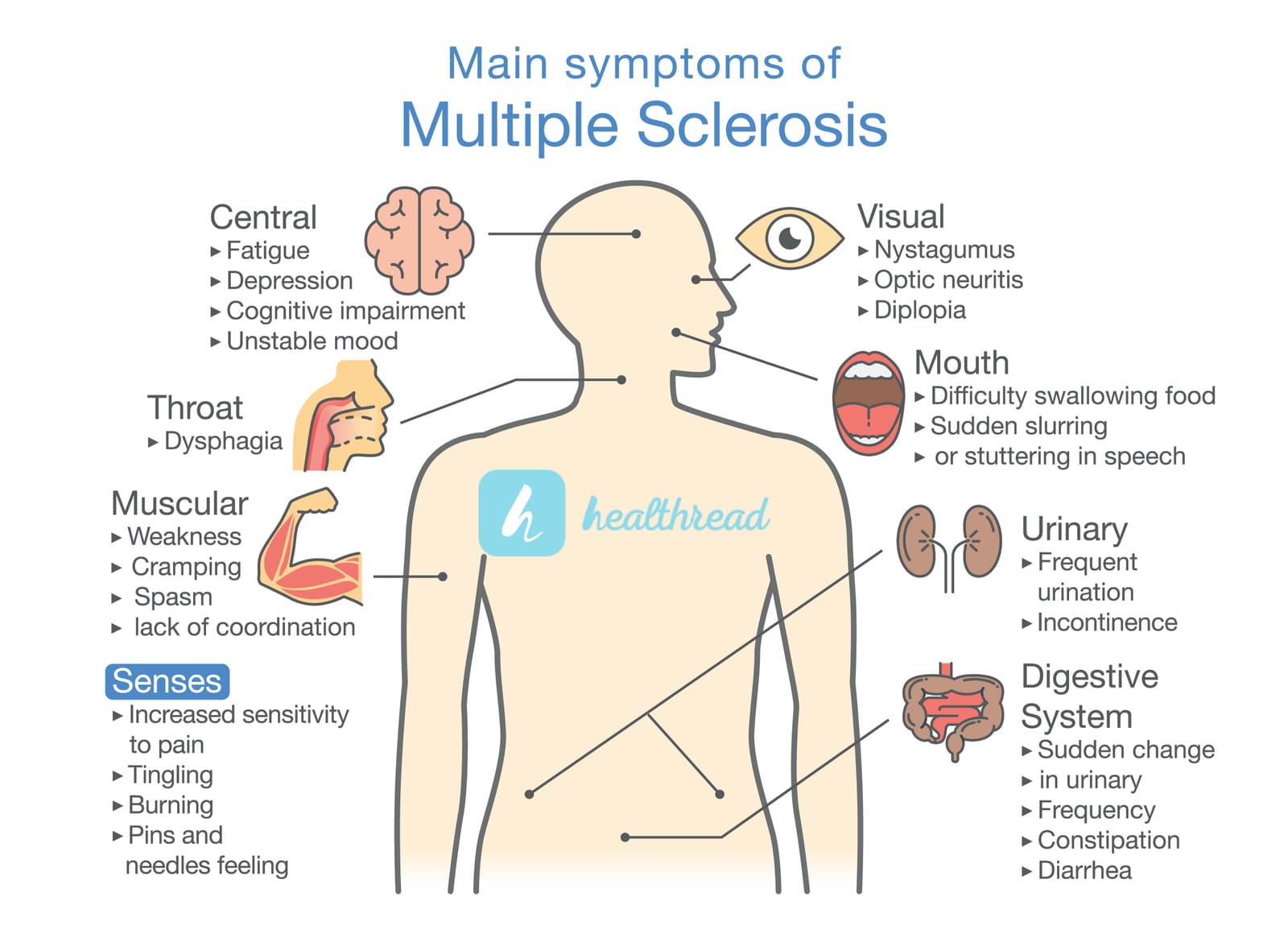
Because the central nervous system controls so many different parts of the body, the signs and symptoms of MS can vary a lot from person to person, and even at different times within a single individual (they can come and go). These symptoms can be very unpredictable, and may include:
- Fatigue
- Abnormal sensations like tingling, numbness, or burning
- Problems with walking, balance, and coordination
- Spasticity
- Weakness
- Problems with vision/Visual loss
- Dizziness
- Bowel and bladder problems
- Sexual dysfunction
- Changes in mood and cognitive function, including depression and impaired attention
Less common symptoms of MS include tremors, hearing loss, difficulty swallowing and speaking, seizures, and respiratory difficulty. If any of these signs or symptoms are not addressed or get worse, additional complications can result, including injuries from falls, pressure sores from decreased mobility, and urinary tract infections.
Diagnosis and Treatment of Multiple Sclerosis
Early diagnosis and treatment is important for people with MS, because research suggests that more damage to the nervous system can happen in the first year of the condition than the next five to ten years. MS predominantly affects women and has its maximum incidence during child-bearing years. Pregnancy appears to have a protective effect against MS relapses, but there is an increased risk of disease exacerbation in the early postpartum period.
Four main types of MS exist, including:
- Relapsing-Remitting MS (RRMS): this is the most common type and accounts for up to 85% of initial diagnoses; RRMS causes alternating periods of flare-ups of symptoms (which can last from days to months) and relapses, where a person experiences partial or full recovery.
- Secondary-Progressive MS (SPMS): past research has found that about half of people with relapsing remitting MS progress to SPMS within 10 years, although recent advancements in treatment may have slowed this progression. SPMS causes gradual and steady increases in symptoms with or without relapses and remissions.
- Primary-Progressive MS (PPMS): only about 10 percent of people with MS have PPMS. This is characterized by symptoms that slowly worsen overtime without relapses and remissions.
- Progressive-Relapsing MS (PRMS): just five percent of people with MS have PRMS. It happens when a person sees steadily worsening symptoms right from the start of their diagnosis. Relapses (acute flare-ups) can occur, but remissions don't.
These phenotypes are further modified by assessments of disease activity and disease progression
•Active and with progression
•Active but without progression
•Not active but with progression
•Not active and without progression (stable disease)
There aren't any single tests that can confirm MS or rule it out. But a doctor can diagnose MS by assessing a person's symptoms and family history and by performing physical exams and tests, such as labwork (including tests of spinal fluid and blood) and magnetic resonance imaging (MRI) studies.
Available treatments for MS include medications that prevent damage to the nervous system, control immune system activity, reduce inflammation, reduce or manage relapses, and slow the progression of the disease. Other issues, such as depression, are very common in people with MS, so these may require professional treatment, too.
● For patients with relapsing-remitting MS (RRMS) who reach the stage of SPMS, particularly those with evidence of active disease by clinical or MRI measures, immune-modulating treatment options include
•Continuing the disease-modifying therapy (DMT) used during the relapsing-remitting phase of MS, or switching to an alternate DMT
Other interventions sometimes used for SPMS lack convincing evidence of effectiveness, including:
•Intravenous glucocorticoid pulses in combination with an established DMT such as interferon beta
•Oral or subcutaneous methotrexate
● For patients with PPMS, particularly younger patients or those with active disease on MRI, we suggest treatment with ocrelizumab
● Although other treatments have been tried for PPMS (eg, glucocorticoid pulses, methotrexate, cladribine, intravenous immune globulin, mitoxantrone), they lack convincing clinical trial evidence of effectiveness; most MS experts do not use these medications for PPMS on a routine basis.
● With few effective treatment options for SPMS and PPMS, multidisciplinary management for the common complications and symptoms of MS is critical. These complications include bladder and bowel dysfunction, cognitive impairment, depression, fatigue, gait impairment, heat intolerance, pain, sexual dysfunction, sleep disorders, spasticity, speech and swallowing dysfunction, tremor, vertigo, and visual disturbances, as reviewed separately.
Living with Multiple Sclerosis
MS may sound scary, and there aren't any known cures. But there has been a lot of research done on this condition, and these days people with MS are living much longer with greater quality of life. Also, most people with MS do not become severely disabled.
One of the most important things people with MS can do is learn how to recognize warning signs of a flare-up and avoid things that may trigger a relapse. Common triggers include excessive heat, stress, infections, fatigue, smoking, or issues with medications (e.g., taking too many, taking certain kinds, or changing dosage).
Practicing basic wellness and self-care techniques, such as exercise, healthy eating, and stress management, are also important for living well with MS. In addition, social support—even when that support is online—has been shown in research studies to improve outcomes.
Did you recently receive a MS diagnosis and are feeling lost and confused? Reach out to our MS community here at Healthread to connect with others and receive (or offer) some helpful guidance and support.
Sources
- 1nationalmssociety.org/What-is-MS/MS-FAQ-s
- 2health.clevelandclinic.org/avoid-8-common-triggers-to-make-your-life-with-ms-easier/
- 3nationalmssociety.org/Symptoms-Diagnosis/MS-Symptoms/Depression
- 4multiplesclerosisnewstoday.com/ms-flares/
- 5multiplesclerosis.com/global/treatment.php
- 6hsci.harvard.edu/age-related-effects-ms-may-prove-reversible
- 7ncbi.nlm.nih.gov/pubmed/25472707
- 8ncbi.nlm.nih.gov/pmc/articles/PMC4925998/
https://www.nationalmssociety.org - National MS Society
https://www.msconnection.org - MS Connection
https://www.msworld.org - MS World
https://www.facebook.com/MSLifeLines/ - MS LifeLines Facebook Group
General information, not medical advice
This article can't account for your health history or current treatment. Talk to a qualified clinician before you change anything about your care.
Read our medical disclaimer →
On this page
Understanding Multiple Sclerosis (Including Causes and Risk Factors)
Signs and Symptoms of Multiple Sclerosis
Diagnosis and Treatment of Multiple Sclerosis
Living with Multiple Sclerosis
Sources
Put what you read to work
Track your medicines, check a symptom and talk with people managing the same condition, all in Healthread.
Get the app
Keep reading

Beauty and Anti-Aging
Gastric Balloon for Weight Loss
The gastric balloon weight loss procedure is a new FDA-approved minimally invasive bariatric procedure for treating obesity. It is a temporary procedure that involves placing a saline-filled silicone balloon in the…
June 19, 2025 · 3 min read

Beauty and Anti-Aging
Vitamin D Deficiency
Also known as the sunshine vitamin, vitamin D is an essential nutrient that is naturally absorbed by the skin through exposure to sunlight. It can also be obtained from dietary sources and supplements.
December 30, 2024 · 3 min read

Beauty and Anti-Aging
Cellulite
Cellulite appears with an orange peel or cottage cheese-like texture with a dimpled or lumpy skin surface. Mild cellulite is visible when you pinch the area with cellulite, like the thighs. Severe cellulite can make the…
August 13, 2024 · 3 min read


© 2026 Healthread
English · Español
Healthread does not provide medical advice, diagnosis or treatment. Always speak to a qualified clinician about your care.