

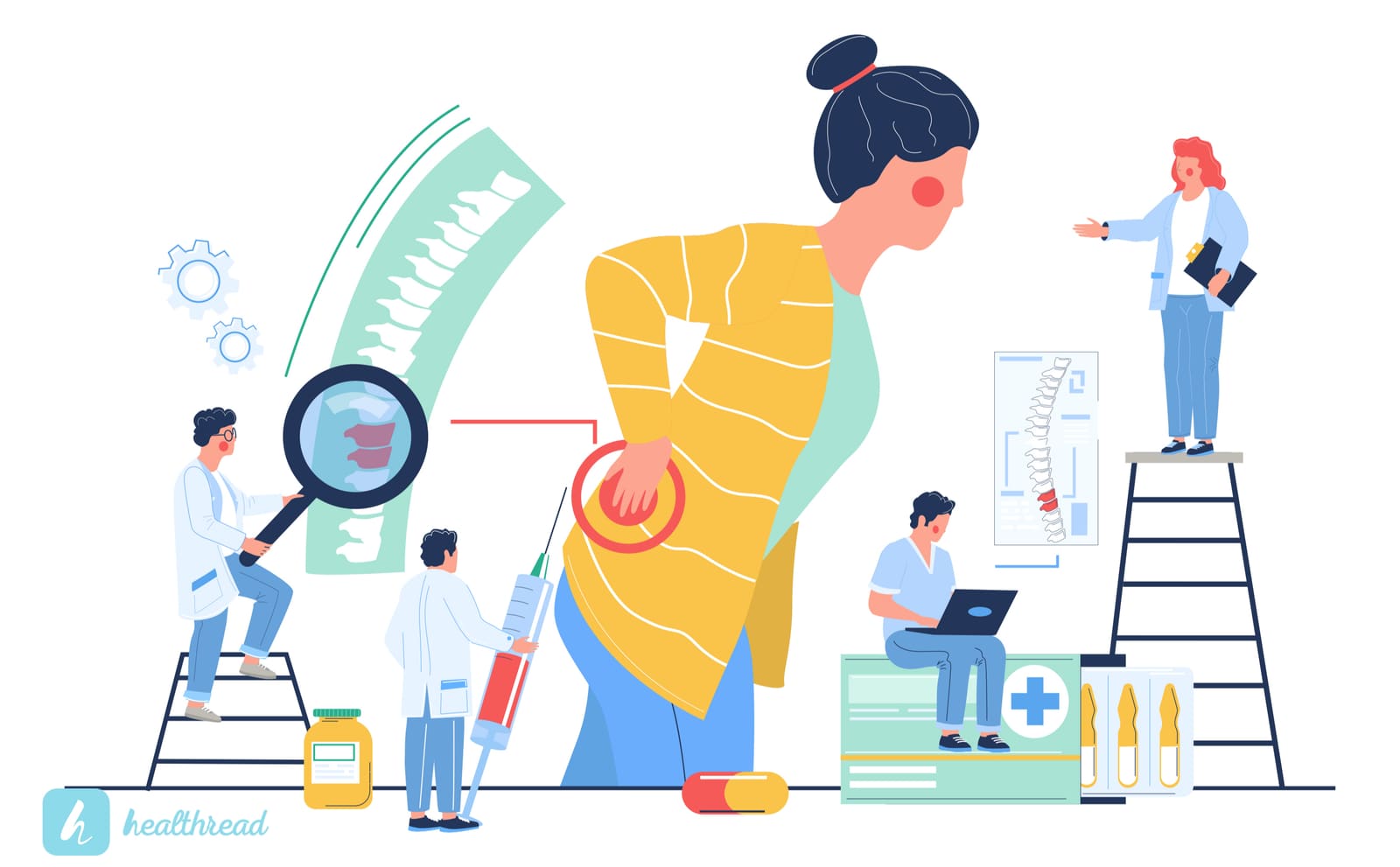
According to the International Osteoporosis Foundation, one out of three women and one out of five men over age 50 will experience bone fractures due to osteoporosis. Johns Hopkins Medicine reports that about 54 million U.S. residents have osteoporosis. Osteoporosis is low bone density that can lead to fractures. Bone is living tissue. Our bodies build bone up throughout our lives. Osteoporosis occurs when the body doesn't make enough new bone to replace bone that's being broken down by natural body functioning. The disease most frequently affects older women of white and Asian races, but anyone, male or female, can be at risk of osteoporosis.
People reach their peak bone mass by age 30. It's important to understand how the body makes bone and how the process slows as we age, because osteoporosis prevention starts when we're young. The more bone you're able to build up at a young age, the less the risk of osteoporosis as you grow older. According to the Mayo Clinic, there are some risk factors for osteoporosis that we can't change, and others that we can. Osteoporosis risks that can't be avoided include:
- Age: Osteoporosis risk increases with age.
- Body frame: People with small frames have higher risk because they have less bone mass.
- Family history: If you have a first-degree relative with osteoporosis, you are more at-risk
- Race/ethnicity: White and Asian women are at greatest risk
- Sex: Women are likelier than men to have osteoporosis.
Women may tend to have a higher osteoporosis risk than men because of the role sex hormones like estrogen and testosterone play in bone development. Lower estrogen levels after menopause slow the rate of bone creation. Cancer treatments for both men and women reduce sex hormones and can also slow bone creation. Problems with thyroid hormones, both too much or too little, can also reduce bone density, along with adrenal and parathyroid gland problems.
Diet plays an important role in bone development and bone loss. Low calcium intake throughout our lifetime contributes to osteoporosis, along with eating disorders. Osteoporosis is also a risk for people who've undergone stomach stapling or lap band surgery to lose weight. Other risk factors include IBD (inflammatory bowel disease), celiac disease, cancer, lupus, and rheumatoid arthritis (RA).
Osteoporosis seldom causes symptoms during the early stages of bone loss. However, over time, people with osteoporosis can experience the following symptoms:
- Back pain from a collapsed or fractured bone
- Stooped posture
- Loss of height
- Easily broken bones
The International Osteoporosis Foundation reports that the most common fractures resulting from osteoporosis are hip, spine, and wrist fractures. A characteristic "humped" back sometimes seen in older adults comes from osteoporosis fractures.
Osteoporosis is treatable and can be prevented. Preventing osteoporosis is a life-long process. The Mayo Clinic advises the following ways to prevent osteoporosis:
- Eating sufficient protein
- Maintaining a healthy body weight
- Getting enough calcium
- Getting enough Vitamin D
- Getting enough weight-bearing exercise
Johns Hopkins Medicine advises that you need an appropriate amount of calcium to maintain strong bones: neither too little nor too much. They recommend 1,000 mg of calcium a day for women under age 50, and 1,200 for women over age 50. They also recommend getting at least 600 IU of Vitamin D under age 70, and 800 IU a day over age 70. Women also need .4 grams of protein per pound of body weight, or 60 grams of protein a day. Weight-bearing and resistance exercises also build strong bones, including walking, dancing, hiking, and aerobics.
Physicians will diagnose osteoporosis based on a bone density test. The test helps them to estimate your risk of breaking a bone over the next ten years. Treatment can include lifestyle and dietary changes to prevent more bone loss, as well as reducing risk of falls and fractures. Prescribed medications include alendronate, risedronate, ibandronate, and zoledronic acid (each sold under differing brand names). Hormone therapy can also help to reduce bone loss, and an injected medication, denosumab, can also benefit osteoporosis. Three newer bone-building medications, including teriparatide, abaloparatide, and romosozumab, are available with limitations in the time period they are able to be taken.
The International Osteoporosis Foundation offers extensive resources for medical providers and for patient education. You can also locate a support group through the National Osteoporosis Foundation.
Sources
International Osteoporosis Foundation - What Is Osteoporosis?
Johns Hopkins Medicine - What You Can Do to Prevent Osteoporosis
Mayo Clinic - Osteoporosis
National Osteoporosis Foundation - NOF Support Groups
General information, not medical advice
This article can't account for your health history or current treatment. Talk to a qualified clinician before you change anything about your care.
Read our medical disclaimer →
Put what you read to work
Track your medicines, check a symptom and talk with people managing the same condition, all in Healthread.
Get the app
Keep reading
Beauty and Anti-Aging
Gastric Balloon for Weight Loss
The gastric balloon weight loss procedure is a new FDA-approved minimally invasive bariatric procedure for treating obesity. It is a temporary procedure that involves placing a saline-filled silicone balloon in the…
June 19, 2025 · 3 min read
Beauty and Anti-Aging
Vitamin D Deficiency
Also known as the sunshine vitamin, vitamin D is an essential nutrient that is naturally absorbed by the skin through exposure to sunlight. It can also be obtained from dietary sources and supplements.
December 30, 2024 · 3 min read
Beauty and Anti-Aging
Cellulite
Cellulite appears with an orange peel or cottage cheese-like texture with a dimpled or lumpy skin surface. Mild cellulite is visible when you pinch the area with cellulite, like the thighs. Severe cellulite can make the…
August 13, 2024 · 3 min read


© 2026 Healthread
English · Español
Healthread does not provide medical advice, diagnosis or treatment. Always speak to a qualified clinician about your care.