

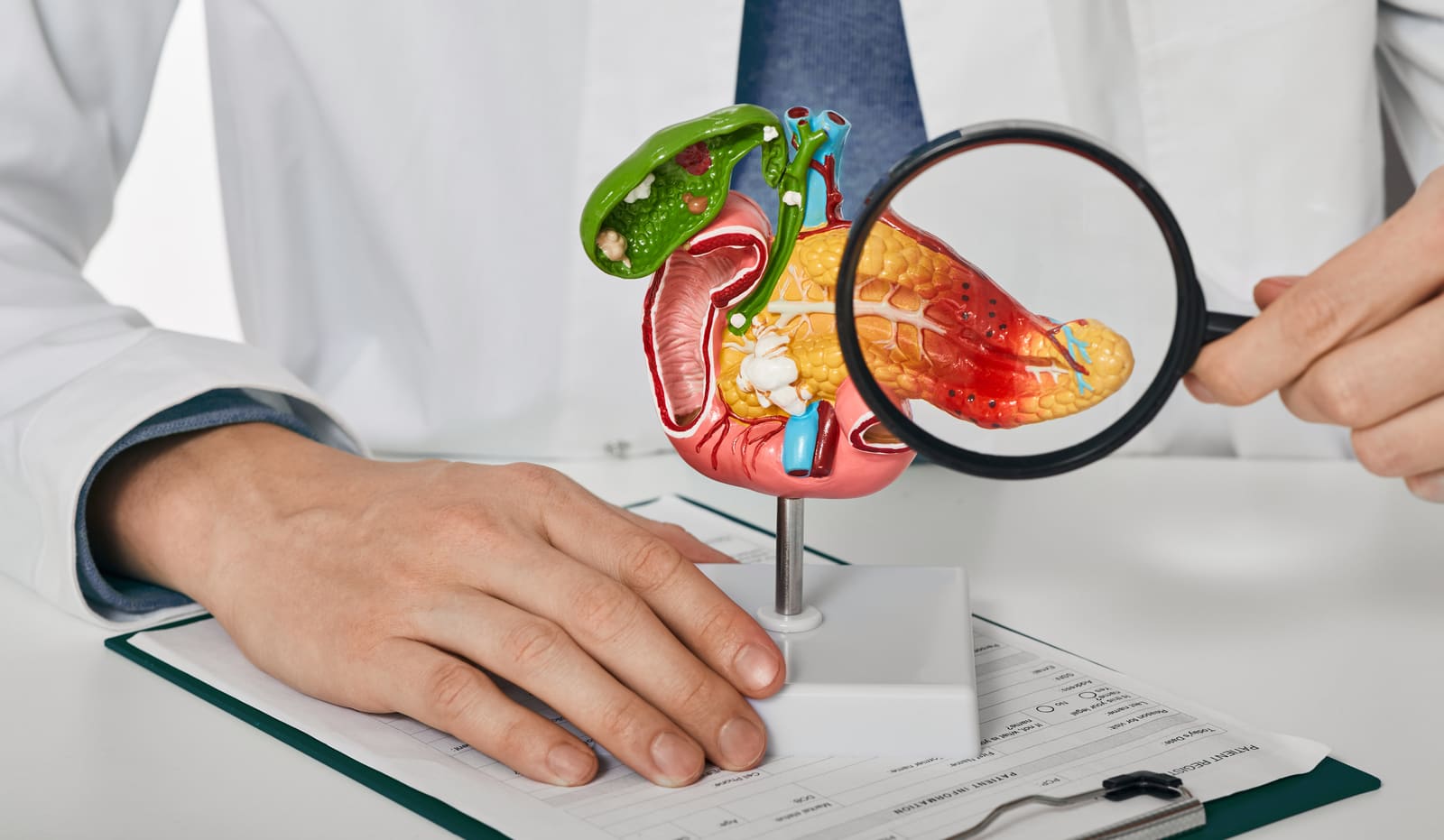
Pancreatitis is the inflammation of the pancreas that occurs when the body’s digestive juices and enzymes attack the pancreas. You can have pancreatitis as a temporary condition, or it can be a chronic disease that can be life-threatening.
What is pancreatitis?
The pancreas is a flat, elongated gland located behind your stomach on the left side of your upper abdomen. The primary function of the pancreas is to release enzymes that help in digestion. It also produces hormones that control your body’s blood sugar levels.
Pancreatitis can occur suddenly as acute pancreatitis that lasts for several days. You can also develop chronic pancreatitis that occurs over several years.
What are the symptoms of pancreatitis?
The most common symptom of pancreatitis is abdominal pain. Some of the other symptoms are:
- Fever
- Nausea and vomiting
- Rapid heart rate
- Shallow, fast breathing
- Tenderness when touching the abdomen
Some additional symptoms common in chronic pancreatitis are:
- Appetite loss with an unexplained weight loss
- Fatty poop that leaves a film of oil in the toilet
- Lightheadedness resulting from low blood pressure
- Upper abdominal pain that worsens after eating
What are the most common causes of pancreatitis?
The causes of pancreatitis vary based on the type of the condition.
Acute pancreatitis
Commonly, acute pancreatitis can occur because of the presence of gallstones. As the gallstones get stuck in the bile or pancreatic duct, they can cause inflammation in the pancreas, a condition known as gallstone pancreatitis.
People with acute pancreatitis may have severe symptoms and need immediate medical care.
Chronic pancreatitis
You can have chronic pancreatitis if:
- You are a heavy alcohol drinker.
- You have a genetic disorder in the pancreas.
Other causes for developing the condition include:
- High levels of lipids or fats in blood
- High calcium levels in the blood
- A blockage in the pancreatic duct
People with chronic pancreatitis may not have symptoms unless there is a complication. In some cases, the doctors cannot find any cause of pancreatitis. They are called idiopathic pancreatitis.
Diagnosis of pancreatitis
Your medical practitioner will perform a physical exam and review your symptoms to diagnose the condition. They will ask you whether you have a family history of gallstones or pancreatitis or a personal history of medical conditions that make you likely to get the disease.
Your doctor can also order lab tests for pancreatitis and similar conditions like peptic ulcers or pancreatic cancers.
To diagnose pancreatitis, your doctor may order:
- Blood tests: They are done to test for high blood glucose, high lipids, and high levels of digestive enzymes in your pancreas. The test can look for inflammation in the pancreas, gallbladder, or liver and rule out pancreatic cancer.
- Imaging tests: Imaging tests like ultrasound, CT scans, and MRI of the abdomen can be done to look for symptoms of pancreatitis.
Treatment of pancreatitis
The treatment of pancreatitis usually requires a hospital stay and may involve:
- Stopping food or fluid in the mouth to limit the functioning of the pancreas
- Fluid given through a vein or IV
- Pain medications
Where the abdominal pain and vomiting do not improve, the stomach contents may be removed by inserting a tube through the mouth or nose. The tube can stay for a few days to 1 or 2 weeks.
Sometimes further treatment is needed to:
- Remove gallstones
- Relieve blockages in the pancreatic duct
- Drain the fluids collected in and around the pancreas
In severe cases, surgery is done to remove infected, dead, or damaged pancreatic tissues.
Possible complications
Complications of acute pancreatitis may include:
- Cysts or abscesses in the pancreas
- Heart failure
- Long-term lung damage
- Fluid buildup in the abdomen
- Acute kidney failure
Source links:
- 1hopkinsmedicine.org/health/conditions-and-diseases/pancreatitis#:~:text=points%20about%20pancreatitis-,Pancreatitis%20is%20the%20redness%20and%20swelling%20(inflammation)%20of%20the%20pancreas,pancreas%20and%20let%20it%20heal
- 2mayoclinic.org/diseases-conditions/pancreatitis/symptoms-causes/syc-20360227
- 3my.clevelandclinic.org/health/diseases/8103-pancreatitis
- 4niddk.nih.gov/health-information/digestive-diseases/pancreatitis/symptoms-causes
- 5medlineplus.gov/pancreatitis.html
- 6pennmedicine.org/for-patients-and-visitors/patient-information/conditions-treated-a-to-z/pancreatitis
General information, not medical advice
This article can't account for your health history or current treatment. Talk to a qualified clinician before you change anything about your care.
Read our medical disclaimer →
On this page
What is pancreatitis?
What are the symptoms of pancreatitis?
What are the most common causes of pancreatitis?
Acute pancreatitis
Chronic pancreatitis
Diagnosis of pancreatitis
Treatment of pancreatitis
Possible complications
Put what you read to work
Track your medicines, check a symptom and talk with people managing the same condition, all in Healthread.
Get the app
Keep reading

Beauty and Anti-Aging
Gastric Balloon for Weight Loss
The gastric balloon weight loss procedure is a new FDA-approved minimally invasive bariatric procedure for treating obesity. It is a temporary procedure that involves placing a saline-filled silicone balloon in the…
June 19, 2025 · 3 min read

Beauty and Anti-Aging
Vitamin D Deficiency
Also known as the sunshine vitamin, vitamin D is an essential nutrient that is naturally absorbed by the skin through exposure to sunlight. It can also be obtained from dietary sources and supplements.
December 30, 2024 · 3 min read
Beauty and Anti-Aging
Cellulite
Cellulite appears with an orange peel or cottage cheese-like texture with a dimpled or lumpy skin surface. Mild cellulite is visible when you pinch the area with cellulite, like the thighs. Severe cellulite can make the…
August 13, 2024 · 3 min read


© 2026 Healthread
English · Español
Healthread does not provide medical advice, diagnosis or treatment. Always speak to a qualified clinician about your care.