

POTS (Postural Orthostatic Tachycardia Syndrome)
February 7, 2022
4 min read
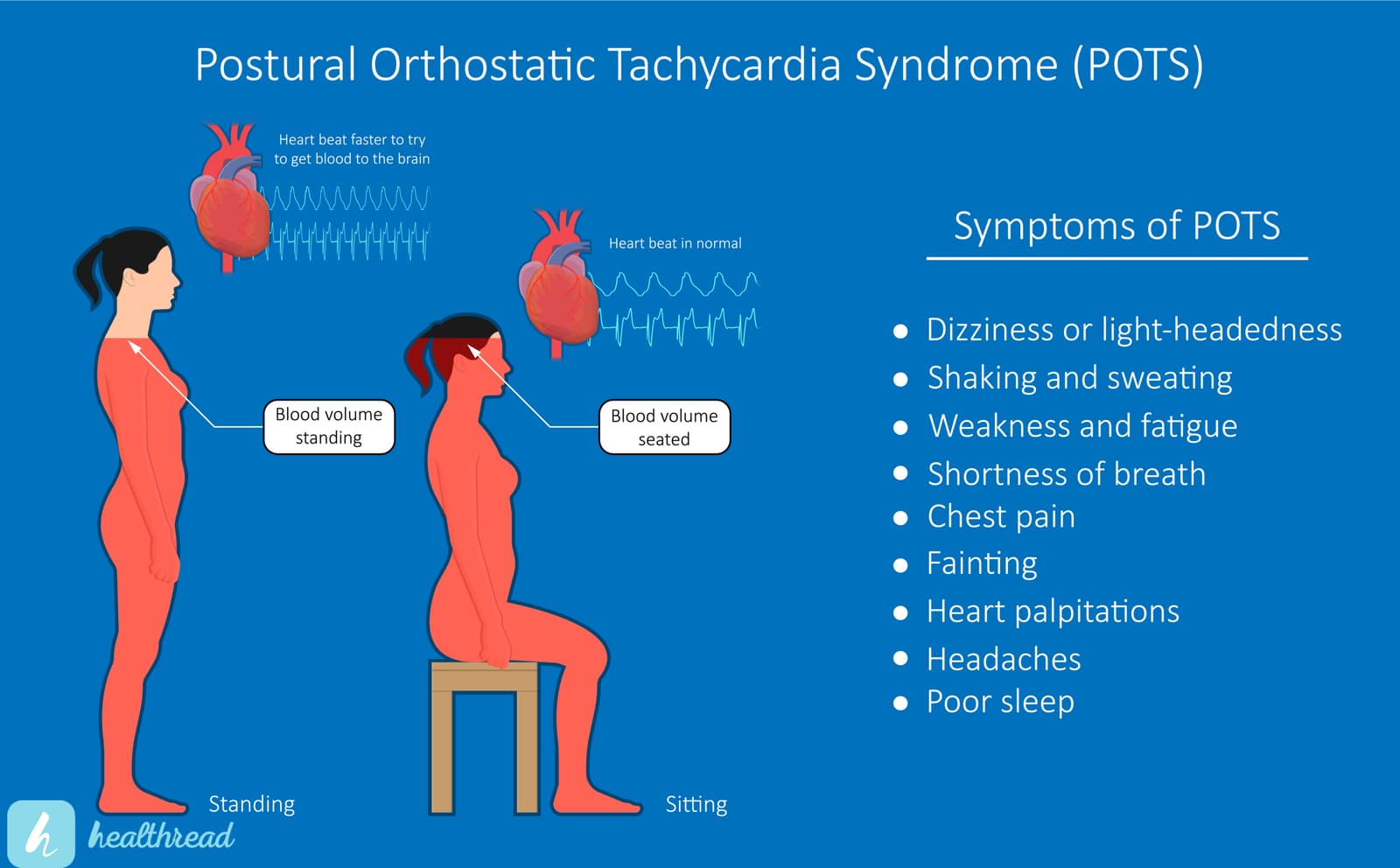
Postural orthostatic tachycardia syndrome, or POTS, is a medical condition that affects between one to three million Americans. While this condition has the potential to affect anyone, it most commonly affects women aged 15 to 50. Below we will dive into the most common forms of POTS and who is at an increased risk of developing this chronic condition.
What does POTS stand for?
- (P) Postural: Postural is related to the posture of your body
- (O) Orthostatic: Related to standing in an upright position
- (T) Tachycardia: Elevated heart rate
- (S) Syndrome: Related to a group of symptoms
What is postural orthostatic tachycardia syndrome?
Postural orthostatic tachycardia syndrome is a common medical condition that affects blood flow. This condition involves both the autonomic nervous system that controls and regulates vital bodily functions and the sympathetic nervous system which activates the fight or flight response.
Common forms of postural orthostatic tachycardia syndrome
While there are several forms of POTS, the Cleveland Clinic reports that below are the most commonly reported forms.
- Neuropathic postural orthostatic tachycardia syndrome: This form of POTS is caused by a loss of nerve supply leading to poor blood vessel muscles, specifically in the legs and core of the body.
- Hyperandrenergic postural orthostatic tachycardia syndrome: Hyperadrenergic POTS is caused by an overactive sympathetic nervous system.
- Hypovolemic postural orthostatic tachycardia syndrome: Hypovolemic POTS is caused by low blood volume. It can cause similar symptoms that may overlap in neuropathic and hyperadrenergic postural orthostatic tachycardia syndrome.
Signs and symptoms associated with POTS
POTS is characterized by a group of symptoms that frequently occur when standing up for more than 10 minutes. For adults, it is associated with a change in heart rate of 30 beats per minute while in adolescents it is associated with a change of 40 beats per minute. In addition to this, the following are commonly reported symptoms according to the U.S. Department of Health and Human Services:
- Hyper/hypotension
- Brady/tachycardia
- Chest pain
- Dizziness or lightheadedness when standing or taking long walks
- Fainting
- Exhaustion
- Fatigue
- Gastrointestinal problems including bloating, nausea, vomiting, or abdominal pain
- Temperature deregulation
- Nervous, jittery feeling
- Forgetfulness or trouble remembering
- Blurred vision
- Headaches, body aches, pains
- Insomnia
- Tremors
- Discoloration of the hands and/or feet
- Exercise intolerance
- Diarrhea and/or constipation
Symptoms of postural orthostatic tachycardia syndrome worsen in warm environments, in situations that require prolonged or excessive amounts of standing, and after a missed meal due to inadequate fluid and salt intake. It is important to recognize these triggers in an attempt to avoid situations that may exacerbate or worsen your symptoms.
How is postural orthostatic tachycardia syndrome diagnosed?
Postural orthostatic tachycardia syndrome requires a medical diagnosis from a licensed professional. Your primary care physician will often perform:
- Blood and urine testing
- QSART
- Autonomic breathing test
- Tuberculin skin test
- Skin nerve biopsy
- Echocardiogram
- Blood volume with hemodynamic status
Most importantly, your physician will perform what is called the tilt table test. This measures your heart rate and blood pressure as you change your posture and position. This is the most reliable form of testing doctors perform and trust.
Who is at risk for developing POTS?
Patients who have recently suffered from a viral illness, serious infection, pregnancy, or some type of trauma are at an increased risk of developing postural orthostatic tachycardia syndrome. In addition, those suffering from certain autoimmune diseases, such as celiac disease or Sjogren’s syndrome are at risk, as well as those with a recent bout of infectious mononucleosis or Epstein Barr Virus.
Dysautonomia International has reported that a Mayo Clinic survey conducted on pediatric patients treated between 2003 to 2010 for POTS with a reported 18.2% of patients seeing a complete symptom resolve and 52.8% of patients reported persistent but improved symptoms associated with postural orthostatic tachycardia syndrome. Of these patients, it was noted that male patients were two times as likely to see a full recovery of symptoms than female patients that were treated.
Managing POTS
Postural orthostatic tachycardia syndrome can be treated with a mix of diet, exercise, and occasionally requires medications to treat the underlying cause or symptoms associated with this disorder.
The POTS diet is designed for patients to achieve a fluid intake goal of 64-48 ounces of water each day, as well as add an adequate amount of salt into their diet. These changes being added into your diet allow for more blood to flow through your body reaching both the heart and the brain.
Medications prescribed for POTS are typically designed to focus on an increase of blood flow when diet and exercise alone are not enough, aid in the kidney’s ability to retain salt and reduce your heart rate when your body is no longer able to regulate it on its own.
It is important that you make an appointment with your primary care physician immediately if you experience any of these mild to moderate symptoms mentioned above or if you have any questions or concerns regarding your health.
Foundations and Societies
Get Support for POTS
Support groups can play an important role in living with postural orthostatic tachycardia syndrome (POTS). Reach out to other Healthread users to talk about your POTS symptoms and what you're doing that is helping you manage them.
Sources
- 1hopkinsmedicine.org/health/conditions-and-diseases/postural-orthostatic-tachycardia-syndrome-pots
- 2cedars-sinai.org/health-library/diseases-and-conditions/p/postural-orthostatic-tachycardia-syndrome-pots.html#:~:text=POTS%20can%20affect%20patients%20of,trauma%20or%20a%20viral%20illness
- 3dysautonomiainternational.org/page.php?ID=30
- 4my.clevelandclinic.org/health/diseases/16560-postural-orthostatic-tachycardia-syndrome-pots
General information, not medical advice
This article can't account for your health history or current treatment. Talk to a qualified clinician before you change anything about your care.
Read our medical disclaimer →
On this page
What does POTS stand for?
What is postural orthostatic tachycardia syndrome?
Common forms of postural orthostatic tachycardia syndrome
Signs and symptoms associated with POTS
How is postural orthostatic tachycardia syndrome diagnosed?
Who is at risk for developing POTS?
Managing POTS
Foundations and Societies
Get Support for POTS
Sources
Put what you read to work
Track your medicines, check a symptom and talk with people managing the same condition, all in Healthread.
Get the app
Keep reading

Beauty and Anti-Aging
Gastric Balloon for Weight Loss
The gastric balloon weight loss procedure is a new FDA-approved minimally invasive bariatric procedure for treating obesity. It is a temporary procedure that involves placing a saline-filled silicone balloon in the…
June 19, 2025 · 3 min read

Beauty and Anti-Aging
Vitamin D Deficiency
Also known as the sunshine vitamin, vitamin D is an essential nutrient that is naturally absorbed by the skin through exposure to sunlight. It can also be obtained from dietary sources and supplements.
December 30, 2024 · 3 min read
Beauty and Anti-Aging
Cellulite
Cellulite appears with an orange peel or cottage cheese-like texture with a dimpled or lumpy skin surface. Mild cellulite is visible when you pinch the area with cellulite, like the thighs. Severe cellulite can make the…
August 13, 2024 · 3 min read


© 2026 Healthread
English · Español
Healthread does not provide medical advice, diagnosis or treatment. Always speak to a qualified clinician about your care.