

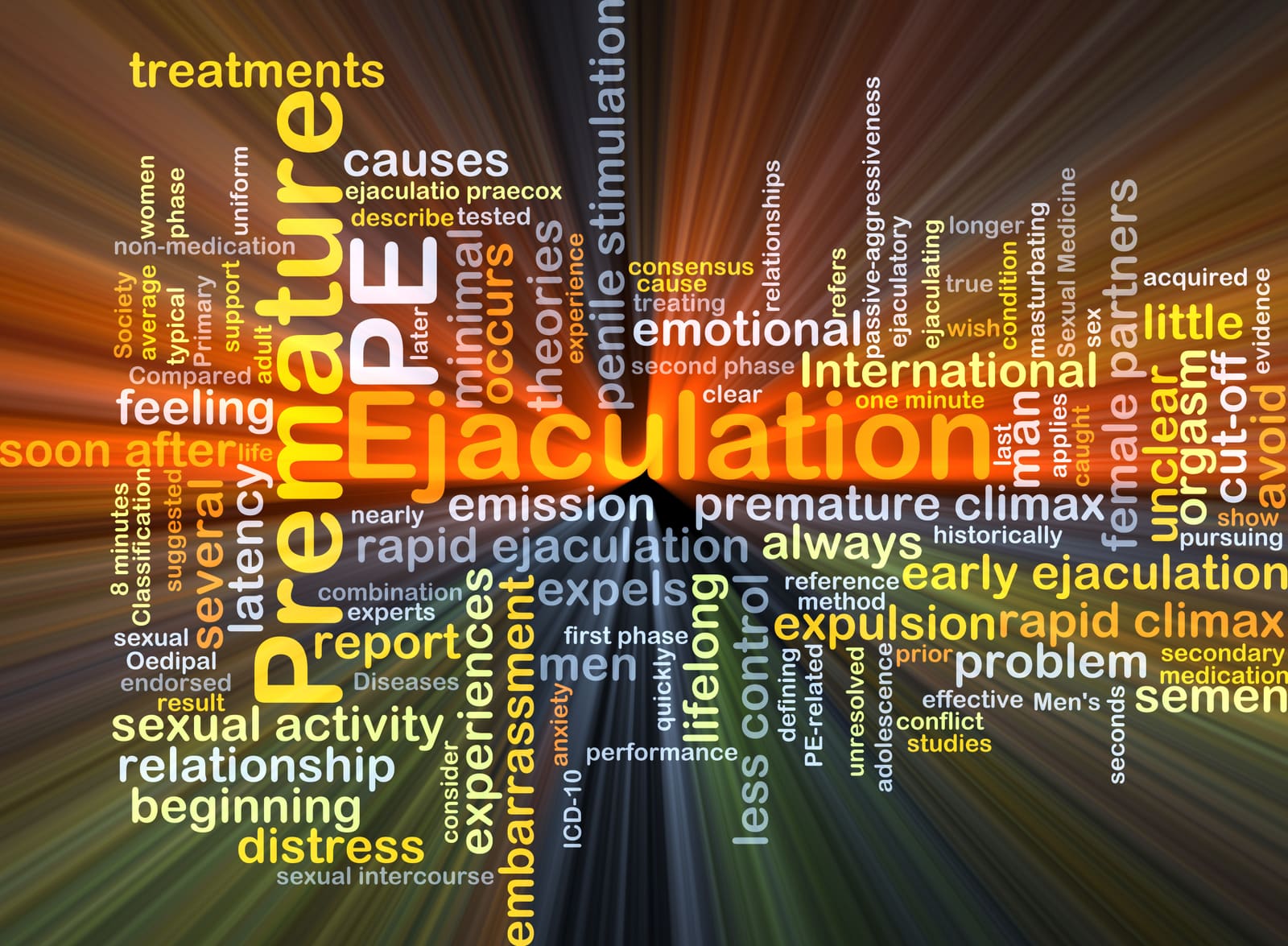
Ejaculation is the expulsion of semen from the male reproductive tract as a result of an orgasm. While some men may suffer from premature ejaculation, the inability to ejaculate, almost all men who have had sexual intercourse experience an orgasm.
What is it?
When a male frequently experiences an orgasm sooner than he or his partner would like this can cause physical, emotional, and sexual frustrations. Premature ejaculation, commonly referred to as rapid ejaculation, is a condition in which a male ejaculates sooner than he or his significant other would like.
Who is affected?
Approximately 1 in 3 men will experience premature ejaculation throughout their lifetime. Premature ejaculation often makes sexual intercourse an unenjoyable experience rather than a pleasurable one.
Symptoms
According to the Manhattan Medical Research, the predominant premature ejaculation symptom is not being able to delay ejaculation for more than one minute after penetration. Premature ejaculation is classified into two categories: primary and secondary.
Types of Premature Ejaculation
- Primary: Primary, or lifelong, premature ejaculation is determined when all, or almost all, of your sexual encounters, have resulted in the inability to delay ejaculation to ejaculate before you are ready.
- Secondary: Secondary, or acquired, premature ejaculation occurs after you have had normal sexual encounters but now find yourself unable to delay ejaculation after penetration.
Causes of premature ejaculation
The precise cause of premature ejaculation is currently unknown, however, there are theories. Premature ejaculation involves a highly complex interaction of both psychological and biological factors.
Psychological risk factors
The following psychological factors have been thought to contribute to premature ejaculation.
- Early sexual experiences
- Poor body image
- Sexual abuse
- Depression
- Worry
- Guilt
Biological risk factors
One's biology is a complex thing to understand. Several biological factors may contribute to premature ejaculation, such as:
- Abnormal hormone levels
- Abnormal neurotransmitters in the brain
- Inherited traits
- Inflammation and/or infection of the prostate or urethra
Other risk factors
While psychological and biological risk factors are thought to be the main source of premature ejaculation, various other factors can increase your risk including:
- Erectile dysfunction. Because premature ejaculation affects a male psychologically, it induces a fear of being unable to maintain an erection resulting in ED.
- Stress. Stress limits your body’s ability to relax and focus during sexual encounters, increasing the risk of premature ejaculation.
- Anxiety. Several men suffering from premature ejaculation also suffer from anxiety, which in turn makes the problem worse.
- Relationship issues. If you have maintained healthy sexual encounters with previous partners with no problems, there is likely a larger problem between you and your current partner affecting your ability to maintain an erection and delay ejaculation.
How is premature ejaculation diagnosed?
If you find yourself experiencing trouble ejaculating before you or your partner desire more often than not, it may be time to seek out professional care from a urologist.
The urologist will begin the exam with questions regarding your recent and past sexual encounters. You may be asked things such as:
- 1.When did the problem begin?
- 2.Under what circumstances do you notice the problem most?
- 3.How often is this happening?
- 4.Does the problem occur with every sexual encounter?
- 5.Has it happened with all partners?
- 6.Does premature ejaculation occur with masturbation?
- 7.Have you noticed difficulty getting or keeping an erection?
These questions are very personal, and for some may be uncomfortable, but you must be honest with every answer for a proper diagnosis and treatment. The urologist may also inquire about any current prescription medications or over-the-counter medications you are taking, supplements, herbal products, alcohol, or drug use.
According to the Cleveland Clinic, there are many different treatment plans for premature ejaculation depending on the main cause of the problem. These include things such as behavioral therapy, counseling, and prescription medications.
A behavioral therapist may recommend things such as start and stop, squeeze therapy, or distracted thinking.
- Start and stop: This technique requires you to become aroused, close to the point of ejaculation, then stop for approximately 30 seconds until you can regain control of your body’s response.
- Squeeze therapy: Your partner (or you) stimulates your penis until your near the point of ejaculation, then gently squeezes the head of your penis for 30 seconds until you lose your erection.
- Distracted thinking: With distracted thinking, you are tasked with focusing on things not related to the current sexual encounter. This is thought to occupy your mind, preventing premature ejaculation.
Each of these techniques is designed to put you back in control of your sexual encounter and alleviate the amount of pressure you put upon yourself. Doctors may also recommend things such as counseling or prescription medications depending on the severity and cause of your problem.
New Advancements in Treating Premature Ejaculation
A major development in the area of premature ejaculation includes medications, such as dapoxetine, which is an ejacutlaion-specific selecdtive serotonin reuptake inhibitor.
Foundations and Societies
Premature ejaculation is a stressful medical condition to endure, but treatment and relief are possible. And, if you are experiencing it, and want to talk about it, reach out to Healthread members who might be going through the same thing as you.
Sources
- 1manhattanmedicalresearch.com/current-studies/premature-ejaculation/#:~:text=The%20primary%20symptom%20of%20premature,at%20University%20Urology%20%E2%80%93%20click%20here
- 2my.clevelandclinic.org/health/diseases/15627-premature-ejaculation
- 3urologyhealth.org/urology-a-z/p/premature-ejaculation
- 4ncbi.nlm.nih.gov/pmc/articles/PMC2671940/#:~:text=Ejaculation%2Dspecific%20selective%20serotonin%20reuptake,satisfaction%20with%20minimal%20adverse%20effects
General information, not medical advice
This article can't account for your health history or current treatment. Talk to a qualified clinician before you change anything about your care.
Read our medical disclaimer →
On this page
What is it?
Who is affected?
Symptoms
Types of Premature Ejaculation
Causes of premature ejaculation
Psychological risk factors
Biological risk factors
Other risk factors
How is premature ejaculation diagnosed?
New Advancements in Treating Premature Ejaculation
Foundations and Societies
Sources
Put what you read to work
Track your medicines, check a symptom and talk with people managing the same condition, all in Healthread.
Get the app
Keep reading
Beauty and Anti-Aging
Gastric Balloon for Weight Loss
The gastric balloon weight loss procedure is a new FDA-approved minimally invasive bariatric procedure for treating obesity. It is a temporary procedure that involves placing a saline-filled silicone balloon in the…
June 19, 2025 · 3 min read
Beauty and Anti-Aging
Vitamin D Deficiency
Also known as the sunshine vitamin, vitamin D is an essential nutrient that is naturally absorbed by the skin through exposure to sunlight. It can also be obtained from dietary sources and supplements.
December 30, 2024 · 3 min read

Beauty and Anti-Aging
Cellulite
Cellulite appears with an orange peel or cottage cheese-like texture with a dimpled or lumpy skin surface. Mild cellulite is visible when you pinch the area with cellulite, like the thighs. Severe cellulite can make the…
August 13, 2024 · 3 min read


© 2026 Healthread
English · Español
Healthread does not provide medical advice, diagnosis or treatment. Always speak to a qualified clinician about your care.