

PRP (Platelet Rich Plasma) for Hair Loss and Skin Rejuvenation
February 10, 2021
4 min read
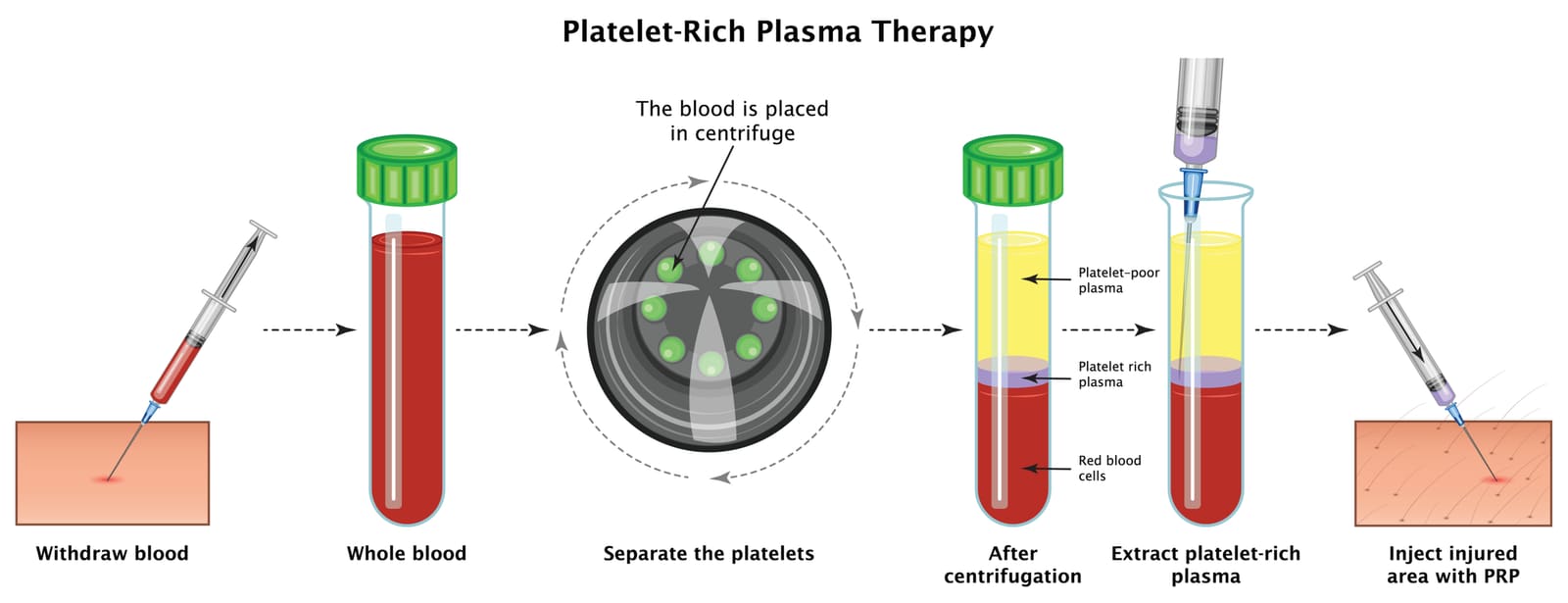
Plasma is the liquid part of the blood, in which red blood cells, white blood cells, and platelets are suspended. It consists primarily of water, proteins, and electrolytes (salts). Platelet rich plasma (PRP) is a medical treatment made by removing blood from the body and separating the plasma along with platelets. The red and white blood cells are removed. PRP contains a variety of compounds, including growth hormones. Platelets are important for wound healing, so this treatment has been widely used for accelerating would healing and joint injuries. In addition, PRP has been used to treat thinning hair and rejuvenate the skin. However, not all people benefit, and the treatments can be expensive and time consuming. The cosmetic results are not permanent, so the procedure may need to be repeated indefinitely to maintain results.
PRP Treatment for Hair Loss
Hair loss is a common cosmetic issue affecting men and women. Thinning hair or bald spots can dramatically lower self-confidence. PRP is a relatively natural way to reverse hair loss. Patients have PRP prepared from their own blood, and then it is injected into affected areas of the scalp. Early research has shown that PRP can reactivate hair growth and prevent further loss of hair. However, it doesn’t work for everyone; and researchers are not sure how to predict who it will work for. This is an active area of research.
PRP is thought to combat hair loss by supplying hair follicles with dense nutrients and growth factors. These molecules can decrease inflammation that is damaging to hair follicles, and they can also stimulate the follicles to grow new hair. Because it is very safe and non-invasive, many people like to try PRP in addition to other treatment options, such as hair plugs (surgically placing new follicles into the skin). Using multiple treatments together can increase the results dramatically. It may take multiple treatments every 1 to 2 months to begin to see increased hair growth results. However, in as little as 1 month, patients may notice fewer hairs being lost on their brush or in the shower drain.
PRP Treatment for Skin Rejuvenation
The signs of aging skin are well-known: wrinkles, thinning, discoloration, and sagging. PRP is a commonly offered service in plastic surgery and dermatology offices that may help alleviate the visible signs of aging. PRP is thought to work on skin by promoting natural collagen growth and tissue regeneration. This results in skin plumping, smoothing, and tightening. It can also improve the look of scarring. Using PRP on the skin is sometimes referred to as a “vampire facial.”
After the PRP solution is prepared from your blood, it is injected in small quantities over the affected area of the skin. Then, a microneedle pen (roller with numerous tiny, sterile needle tips) is rolled over the areas that were injected. This effectively injuries the tissue and provides a signal to the skin that it needs to repair itself, using the nutrients and growth factors from the PRP as an accelerant. While this may sound painful, the discomfort can be minimized by using a numbing agent before the injections. Following the procedure, the skin may be irritated and swollen for a few days; but this is usually managed with acetaminophen (Tylenol).
Results typically take 3 to 4 weeks to begin to show. The American Academy of the Association of Dermatology recommends patients have 3 or 4 treatments spaced 1 to 2 months apart. Then, maintenance treatments are recommended 2 or 3 times a year. Without the maintenance treatments, the results will fade.
Effectiveness of PRP
Large, controlled studies have not been done for PRP skin and scalp treatments, so there are still many aspects of the procedure that doctors do not understand. For example, why does PRP only work on some patients? What is the optimal number and spacing of initial and follow up treatments? Are there any long-term side effects? What is the optimal dose of PRP to inject?
Given the lack of uncertainty in effectiveness, patients should have realistic expectations that the procedure may not work for them. PRP is often used in conjunction with other, well-studied and effective treatments. However, some patients may prefer to use a relatively natural treatment like PRP before trying other interventions. The limited downtime and minor discomfort are major selling points of this procedure over other more invasive cosmetic procedures.
Financial Cost of PRP
PRP costs can vary widely, depending on the office doing the procedure and number of treatments needed. As it is a cosmetic procedure, health insurance will not cover the cost. Thus, PRP can be a very expensive treatment option. Estimates range from $250 to $1,500 per treatment.
Safety of PRP treatments
Because a patient’s own bodily fluids are reinjected into their body, the safety of PRP is thought to be good; although large, detailed studies have not been done. The main risk with PRP appears to be ensuring the PRP harvest procedure from a patient’s blood is sterile. PRP preparations should be made using the same rigorous standards that blood transfusions require. As long as the medical office is adhering to these standards, the risk of PRP treatment appears to be low.
Sources
General information, not medical advice
This article can't account for your health history or current treatment. Talk to a qualified clinician before you change anything about your care.
Read our medical disclaimer →
On this page
PRP Treatment for Hair Loss
PRP Treatment for Skin Rejuvenation
Effectiveness of PRP
Financial Cost of PRP
Safety of PRP treatments
Sources
Put what you read to work
Track your medicines, check a symptom and talk with people managing the same condition, all in Healthread.
Get the app
Keep reading

Beauty and Anti-Aging
Gastric Balloon for Weight Loss
The gastric balloon weight loss procedure is a new FDA-approved minimally invasive bariatric procedure for treating obesity. It is a temporary procedure that involves placing a saline-filled silicone balloon in the…
June 19, 2025 · 3 min read
Beauty and Anti-Aging
Vitamin D Deficiency
Also known as the sunshine vitamin, vitamin D is an essential nutrient that is naturally absorbed by the skin through exposure to sunlight. It can also be obtained from dietary sources and supplements.
December 30, 2024 · 3 min read
Beauty and Anti-Aging
Cellulite
Cellulite appears with an orange peel or cottage cheese-like texture with a dimpled or lumpy skin surface. Mild cellulite is visible when you pinch the area with cellulite, like the thighs. Severe cellulite can make the…
August 13, 2024 · 3 min read


© 2026 Healthread
English · Español
Healthread does not provide medical advice, diagnosis or treatment. Always speak to a qualified clinician about your care.