

Role of Sunscreen in Preventing Premature Aging and Cancer
July 13, 2021
4 min read
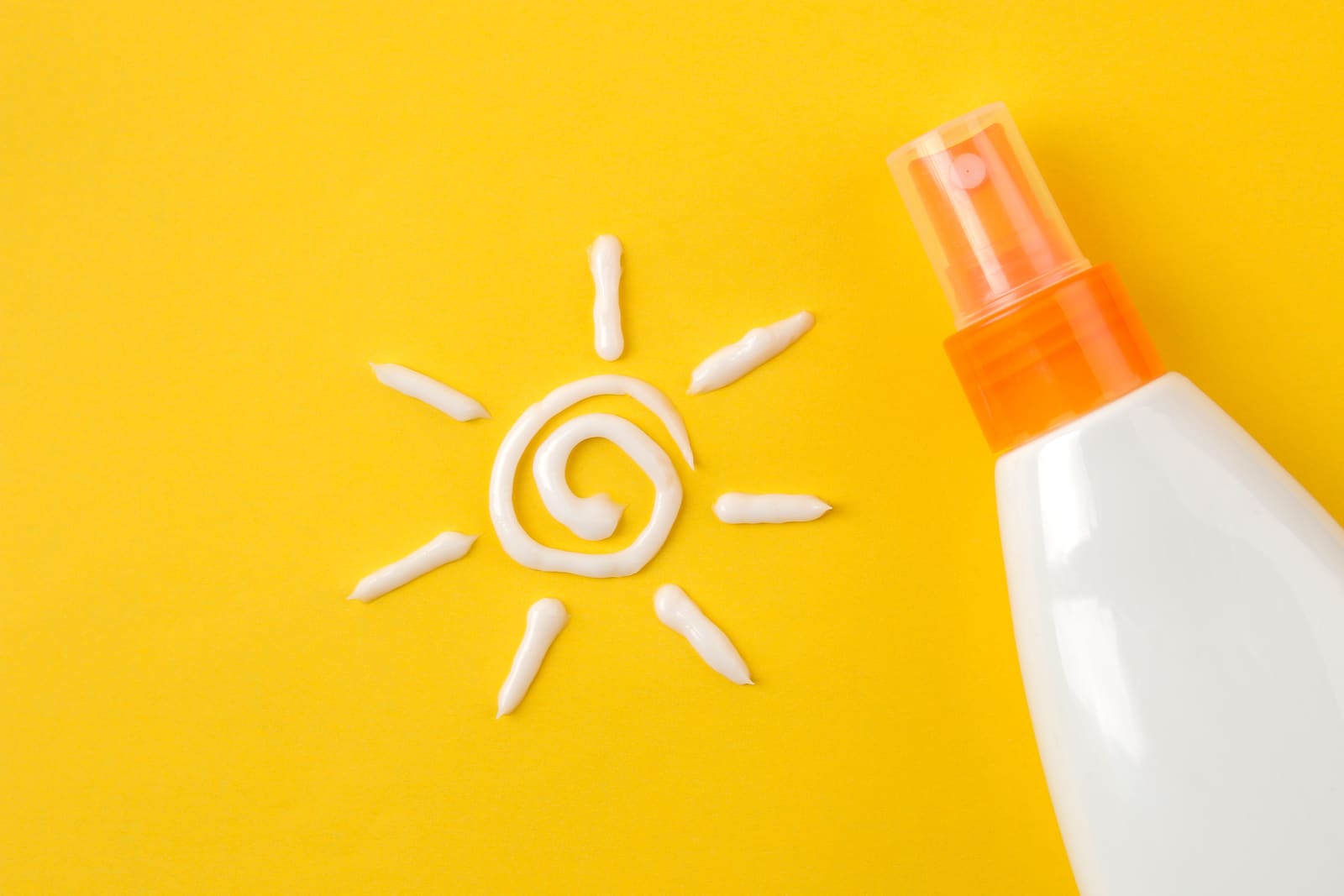
Don’t leave home without it — at least if you are going out during the day. That’s a reference to sunscreen, which can play a major role in preventing premature aging and skin cancer. Not only does wearing sunscreen lower your risk of developing skin cancer, but it helps maintain a youthful complexion.
Two types of the sun’s ultraviolet rays harm the skin. UV-A rays are the ones leading to skin cancer and premature aging. UV-B rays cause sunburns.
SPF Numbers
You’ll see a Sun Protection Factor (SPF) number on every sunscreen product. Those numbers indicate the ability of the product to reduce the amount of UV-B radiation penetrating the skin. That is the amount of time it would take for the sun to redden skin if sunscreen were not used.
For instance, an SPF 15 sunscreen offers protection from burning 15 times longer than if no sunscreen is applied. Considered another way, an SPF 20 sunscreen reduces 95 percent of UV-B radiation, while an SPF 30 sunscreen reduces it by 97 percent.
Skin Cancer and the Sun
Skin cancer is the most common type of cancer. Most skin cancers are attributable to excess sun exposure. Tanning beds and sunlamps can contribute to skin cancer development.
Less serious types of skin cancer, such as basal cell and squamous cell carcinomas, are curable when caught early. The most serious type of skin cancer, melanoma, may prove fatal. Without early detection and treatment, melanoma spreads to other organs.
Approximately 75,000 people will receive a melanoma diagnosis this year. About 10,000 people will die from the disease. When caught early, it is treatable. Once it spreads, or metastasizes, the prognosis is not that good.
Preventing Aging
No one wants to look old before their time, and nothing speeds up the skin’s aging process like excessive sun exposure. Sun damage increases the number of lines and wrinkles. Too much exposure lowers collagen levels. This protein helps keep skin firm.
Sun exposure also contributes to the development of age or liver spots. These unsightly brown spots are a telltale sign of aging. Hyperpigmentation, freckles, discoloration, and dilation of small blood vessels may all result after spending too much time in the sun.
Since moisturizing is another critical component in the battle against aging, consider using a sunscreen/moisturizer combination. Good hydration keeps skin plumped up, so drink plenty of water. Sunscreen/moisturizer plumps up skin externally.
Not Just for Summer
Sunscreen is not just for warm weather. It is really necessary year-round. In winter, you may not need a sunscreen with a high SPF, but don’t skip the protection. An SPF 15 will probably work in winter climates, as it filters out over 90 percent of the sun’s rays.
That is not sufficient for warm weather. When it is hot, choose sunscreen with a minimum SPF of 30, although 45 or higher is preferable.
Types of Sunscreen
Sunscreens are available in two basic types, chemical and physical. Commercial brands usually contain both types.
Chemical sunscreens generally consist of para-aminobenzoic acid, or PABA. Physical sunscreens, also known as mineral sunscreens, include zinc oxide. Products containing zinc oxide are often a better choice for the sensitive-skinned.
PABA and other chemical sunscreens work by absorbing the sun’s rays. The chemicals change radiation into heat energy. Physical sunscreens, on the other hand, work by deflecting UV rays before they can penetrate the skin.
Always look for a broad-spectrum, or full-spectrum, sunscreen. These indicate protection against UV-A and UV-B rays, and thus against skin cancer, premature aging, and sunburn. Some sunscreens are water-resistant, but none are waterproof.
Skin Types
Beyond SPF numbers, the type of sunscreen you need depends on your skin type. Physical sunscreens are best for children, people with sensitive skin or those battling acne. Because physical sunscreens can give dark-skinned individuals a chalky appearance, chemical sunscreens are the preferred choice.
Those most vulnerable to skin cancer are the very fair-skinned. They should choose the strongest sunscreen available. Others at higher risk include people with outdoor jobs, a family history of skin cancer, and living in a hot climate.
Slather It On
Sunscreen is not a cream to simply daub on your face, as if it were makeup. Put plenty of it — dollops –on all exposed skin areas. Give the cream several minutes for skin absorption.
Reapply sunscreen every two hours, or right after a swim. If you’ve been sweating a lot, reapply sunscreen. Use about one ounce of sunscreen per application. Just slather it on.
Additional Skin Protection
Along with sunscreen, protect yourself by always wearing sunglasses with UV protection and hats with a brim in hot weather. Wear long-sleeved shirts and pants rather than skin-exposing garments. When shopping for warm weather outfits, purchase clothing offering sun protection.
Perform self-exams monthly and visit a dermatologist if you notice any changes in a mole or other suspicious lesions.
Sources
General information, not medical advice
This article can't account for your health history or current treatment. Talk to a qualified clinician before you change anything about your care.
Read our medical disclaimer →
On this page
SPF Numbers
Skin Cancer and the Sun
Preventing Aging
Not Just for Summer
Types of Sunscreen
Skin Types
Slather It On
Additional Skin Protection
Sources
Put what you read to work
Track your medicines, check a symptom and talk with people managing the same condition, all in Healthread.
Get the app
Keep reading

Beauty and Anti-Aging
Gastric Balloon for Weight Loss
The gastric balloon weight loss procedure is a new FDA-approved minimally invasive bariatric procedure for treating obesity. It is a temporary procedure that involves placing a saline-filled silicone balloon in the…
June 19, 2025 · 3 min read
Beauty and Anti-Aging
Vitamin D Deficiency
Also known as the sunshine vitamin, vitamin D is an essential nutrient that is naturally absorbed by the skin through exposure to sunlight. It can also be obtained from dietary sources and supplements.
December 30, 2024 · 3 min read

Beauty and Anti-Aging
Cellulite
Cellulite appears with an orange peel or cottage cheese-like texture with a dimpled or lumpy skin surface. Mild cellulite is visible when you pinch the area with cellulite, like the thighs. Severe cellulite can make the…
August 13, 2024 · 3 min read


© 2026 Healthread
English · Español
Healthread does not provide medical advice, diagnosis or treatment. Always speak to a qualified clinician about your care.