

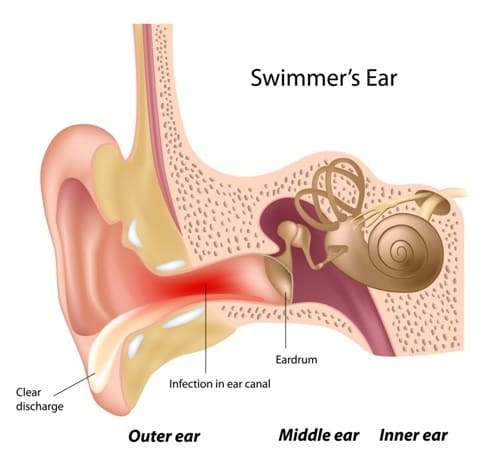
If you’re a swimmer, you’ve probably heard of swimmer’s ear before. It’s an irritating condition that is most common in children but can affect swimmers of any age. Also, in some cases, swimmer’s ear may be caused by something other than swimming entirely. While swimmer’s ear is generally harmless when treated quickly, it can result in serious complications if left untreated.
Therefore, it’s important to know what swimmer’s ear is and how to diagnose it so you can receive treatment as soon as possible.
What is Swimmer’s Ear?
Swimmer’s ear, also known as otitis externa, is an infection of the area called the outer ear canal which runs from your eardrum to the outside of your head.
Although not always the case, swimmer’s ear is most common in people who swim and bathe often, exposing their outer ear canal to moisture. A moist outer ear canal is the perfect environment for bacteria growth, in this case, swimmer’s ear.
Swimmer’s ear is usually not dangerous, but it can cause irritation and pain. But it is not contagious like other infections.
What are the Causes of Swimmer’s Ear?
Swimming in water, specifically, unclean water is the main cause of swimmer’s ear. This gives the infection its name because people who swim frequently may be at a higher risk of contracting swimmer’s ear, especially if they’re swimming in dirty water.
However, other causes of swimmer’s ear include:
- Scratching or cleaning the ears with fingers, cotton swabs, or other objects.
- Exposure to warm, humid air.
- Dry skin on the ear canal.
- Experiencing injuries to the ear canal.
- Having an object in the ear canal.
- Excessive ear wax.
Other risk factors for swimmer’s ear include:
- Direct contact with bacteria in unclean pools, baths, or hot tubs.
- Damage to the ear canal via objects. For example, hurting your ear with fingers or cotton swabs.
- Cuts on the skin of the ear canal.
- Certain skin conditions like eczema.
- Using swimming caps, hearing aids, or headphones.
Symptoms of Swimmer’s Ear
While symptoms may vary on a case-by-case basis, common symptoms of swimmer’s ear include:
- Itchy ears
- Redness on the outer part of the ear
- Pain, especially when touching or moving the ear
- Swelling in the glands in your neck
- Swelling in the ear canal
- Pus draining from the ear
- A feeling that your ear is plugged up or full
- Poor hearing or hearing loss
- Fever
If you are worried you may have swimmer’s ear because you’re experiencing some of these symptoms, it’s important that you visit a doctor. Even if you don’t have swimmer’s ear, these symptoms could be indicative of a more serious health problem.
Furthermore, leaving swimmer’s ear untreated can lead to worse symptoms and other complications including hearing loss, chronic ear infections, damage to bone and cartilage, and the infection spreading to the brain, skull, nearby tissues, or cranial nerves.
How to Avoid Getting Swimmer’s Ear
If you love to swim but want to avoid swimmer’s ear, there are some steps you can take besides stopping swimming altogether.
The first step is to avoid dirty water. If you have a pool at home, make sure to keep it clean and properly treated to avoid the buildup of bacteria. If you swim in the ocean or a lake, check your local water quality report to ensure it’s safe to swim.
Second, use diluted acetic acid or alcohol solutions in the ear after swimming to prevent infection.
Third, avoid scratching your ear or putting foreign objects like cotton swabs into the ear.
Treating Swimmer’s Ear
While swimmer’s ear can be bothersome and sometimes lead to serious symptoms and health impacts, if you seek treatment quickly, it should clear up within seven to ten days.
Treatment generally involves taking ear drops to kill the bacterial infection and ear drops to reduce swelling in the ear. Pain medicine may also be prescribed if swimmer’s ear is causing pain and discomfort. Your healthcare professional may also advise you to keep your ear clean and dry.
Takeaway
Swimmer’s ear is a relatively common infection. If you’re someone who likes to swim a lot or you have children who like to swim, you should be on the lookout for the signs and symptoms so if there is an infection, you can get it treated as quickly as possible.
Sources
- 1mayoclinic.org/diseases-conditions/swimmers-ear/symptoms-causes/syc-20351682
- 2hopkinsmedicine.org/health/conditions-and-diseases/swimmers-ear
- 3kidshealth.org/en/parents/swimmer-ear.html
- 4cdc.gov/healthywater/swimming/swimmers/rwi/ear-infections.html
- 5my.clevelandclinic.org/health/diseases/8381-swimmers-ear-otitis-externa
- 6mountsinai.org/health-library/diseases-conditions/swimmers-ear
- 7health.state.mn.us/diseases/swimear/index.html
- 8uihc.org/health-topics/otitis-externa-get-rid-swimmers-ear
- 9merckmanuals.com/home/ear,-nose,-and-throat-disorders/outer-ear-disorders/ear-canal-infection-swimmers-ear
- 10familydoctor.org/condition/otitis-externa-swimmers-ear/
- 11stanfordhealthcare.org/medical-conditions/ear-nose-and-throat/otitis-externa/treatments.html
- 12asha.org/public/hearing/swimmers-ear/
General information, not medical advice
This article can't account for your health history or current treatment. Talk to a qualified clinician before you change anything about your care.
Read our medical disclaimer →
On this page
What is Swimmer’s Ear?
What are the Causes of Swimmer’s Ear?
Symptoms of Swimmer’s Ear
How to Avoid Getting Swimmer’s Ear
Treating Swimmer’s Ear
Takeaway
Sources
Put what you read to work
Track your medicines, check a symptom and talk with people managing the same condition, all in Healthread.
Get the app
Keep reading

Beauty and Anti-Aging
Gastric Balloon for Weight Loss
The gastric balloon weight loss procedure is a new FDA-approved minimally invasive bariatric procedure for treating obesity. It is a temporary procedure that involves placing a saline-filled silicone balloon in the…
June 19, 2025 · 3 min read

Beauty and Anti-Aging
Vitamin D Deficiency
Also known as the sunshine vitamin, vitamin D is an essential nutrient that is naturally absorbed by the skin through exposure to sunlight. It can also be obtained from dietary sources and supplements.
December 30, 2024 · 3 min read

Beauty and Anti-Aging
Cellulite
Cellulite appears with an orange peel or cottage cheese-like texture with a dimpled or lumpy skin surface. Mild cellulite is visible when you pinch the area with cellulite, like the thighs. Severe cellulite can make the…
August 13, 2024 · 3 min read


© 2026 Healthread
English · Español
Healthread does not provide medical advice, diagnosis or treatment. Always speak to a qualified clinician about your care.