

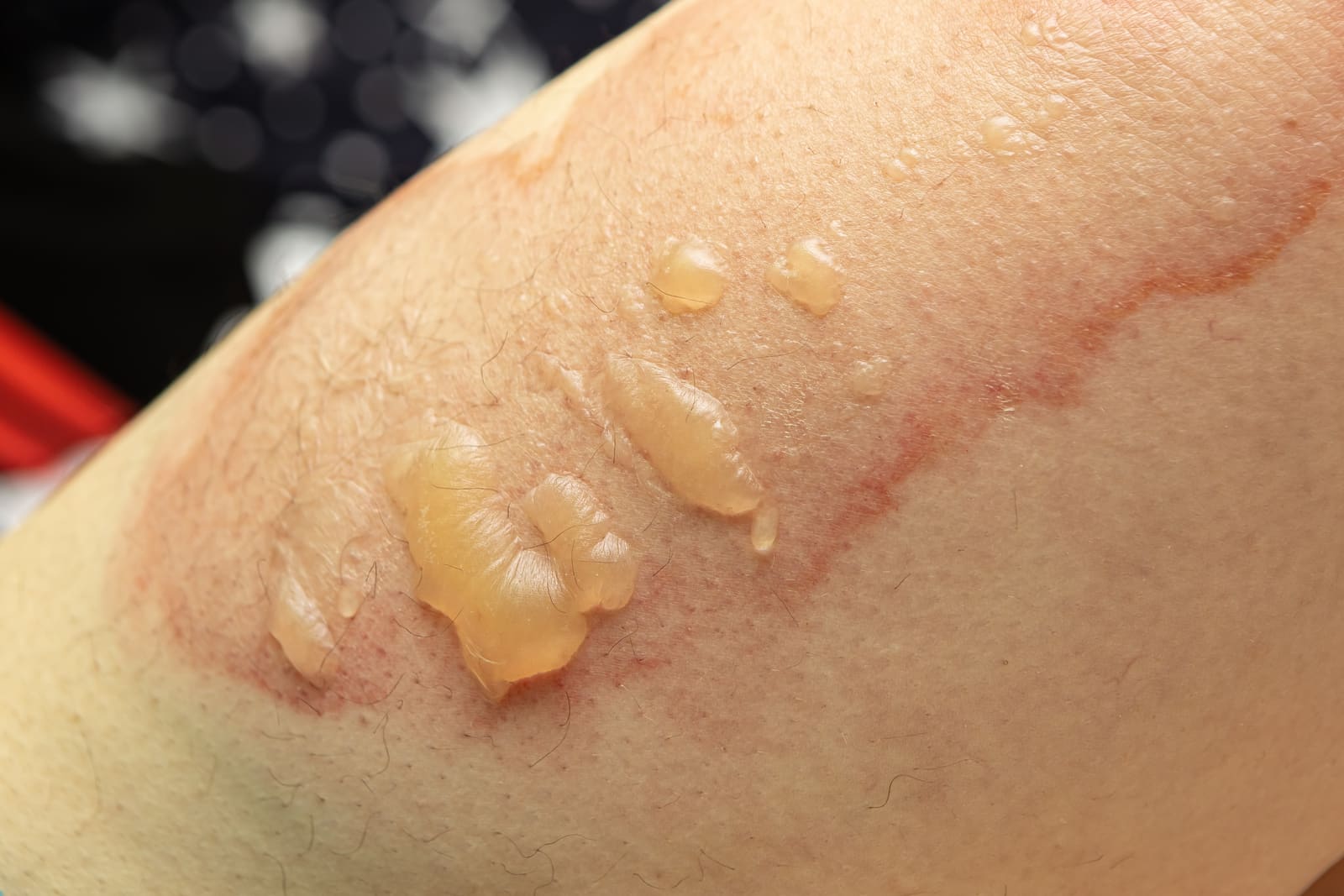
Most people have had a burn at some point or another, in fact, almost half a million people in the U.S. get medical care for burns every year. Whether it’s a mild one from touching a hot pan for an instant or even getting a sunburn or a more serious burn, we’ve all been there at some point.
Most instances of burns (other than radiation burns, i.e., sunburns) involve a moment of pain due to contact with the scalding substance. However, the degrees and types of burns vary greatly depending on the severity of the burn and what caused it.
Degrees of Burns
The degree of a burn defines how severe and deep it penetrates the skin. The degree of a burn may not be determined right away, because it can progress over a day or two. The degrees of burns range from 1 (least severe and penetrating to 4 (most severe and penetrating);
- 1.First-degree burns: First-degree burns only damage the outermost layer of the skin – the epidermis. These burns generally heal within a week and on their own. First-degree burns cause the skin to turn red around the burned area. Sunburn is a common example of a first-degree burn.
- 2.Second-degree burns: Second-degree burns burn the epidermis and the layer of skin beneath it, called the dermis. The skin will look red, and may also be swollen and blistered. These burns may leave a scar and could require a skin graft to protect the skin while it heals.
- 3.Third-degree burns: These burns penetrate the deep layers of skin – the subcutaneous tissue– causing widespread thickness and white or black skin. These types of burns require skin grafts and they destroy hair follicles and sweat glands.
- 4.Fourth-degree burns: Fourth-degree burns penetrate all of the skin and underlying tissue along with deeper tissue, possibly reaching the bone or muscle underneath.
Types of Burns
Burns are caused by contact with radioactive, thermal, electrical, or chemical elements, so the types of burns are categorized into these four groups.
- Thermal burns: Thermal burns occur when the temperature of the skin is raised due to heat sources. When the temperature of the skin is raised to a certain point, burning of the skin and tissues may result, causing charring or death of the affected area. Examples of common causes of thermal burns include contact with scalding liquids, hot metals, flames, and hot steam.
- Radiation burns: Radiation burns happen when the skin is exposed to radiation (usually over time). Common sources of radiation burns include ultraviolet light (from sunlight or tanning beds) and X-rays.
- Chemical burns: These burns occur when the skin or eyes are exposed to strong chemicals like acids, detergents, solvents, or alkalis. Chemical burns commonly occur when people touch disinfectants, battery acids, or bleach.
- Electrical burns: Electrical burns happen when people come into contact with strong electrical currents. So leave the electrical work to the professionals and call the electrician!
When to Seek Treatment
When a first-degree burn (or worse) happens on the hands, feet, butt, groin, major joint, or a large part of the body, it’s always a good idea to contact your doctor. While first-degree burns should heal on their own, if it’s on a place of your body that sees a lot of contact with the external world or movement, the burned area could be very painful or get infected.
With that in mind, always seek medical attention if the burned area looks infected. Also, look out for burns that look leathery, swollen, blistered, or discolored (black, brown, or white). If you’re unsure how serious your burn is, you’re better off getting it checked out.
Lastly, if your burn is electrical or chemical, regardless of how mild you think it is, see a doctor!
Sources:
- 1hopkinsmedicine.org/health/conditions-and-diseases/burns
- 2my.clevelandclinic.org/health/diseases/12063-burns
- 3stanfordhealthcare.org/medical-conditions/skin-hair-and-nails/burns/types.html
- 4urmc.rochester.edu/encyclopedia/content.aspx?ContentTypeID=90&ContentID=P09575
- 5nigms.nih.gov/education/fact-sheets/Pages/burns.aspx
- 6healthline.com/health/burns
- 7medlineplus.gov/ency/article/000030.htm
- 8mayoclinic.org/diseases-conditions/burns/symptoms-causes/syc-20370539
- 9my.clevelandclinic.org/health/diseases/22350-chemical-burns
General information, not medical advice
This article can't account for your health history or current treatment. Talk to a qualified clinician before you change anything about your care.
Read our medical disclaimer →
Put what you read to work
Track your medicines, check a symptom and talk with people managing the same condition, all in Healthread.
Get the app
Keep reading

Beauty and Anti-Aging
Gastric Balloon for Weight Loss
The gastric balloon weight loss procedure is a new FDA-approved minimally invasive bariatric procedure for treating obesity. It is a temporary procedure that involves placing a saline-filled silicone balloon in the…
June 19, 2025 · 3 min read
Beauty and Anti-Aging
Vitamin D Deficiency
Also known as the sunshine vitamin, vitamin D is an essential nutrient that is naturally absorbed by the skin through exposure to sunlight. It can also be obtained from dietary sources and supplements.
December 30, 2024 · 3 min read
Beauty and Anti-Aging
Cellulite
Cellulite appears with an orange peel or cottage cheese-like texture with a dimpled or lumpy skin surface. Mild cellulite is visible when you pinch the area with cellulite, like the thighs. Severe cellulite can make the…
August 13, 2024 · 3 min read


© 2026 Healthread
English · Español
Healthread does not provide medical advice, diagnosis or treatment. Always speak to a qualified clinician about your care.