

Sleep apnea is a breathing disorder where people experience interrupted breathing during sleep. Frequent sleep disruption can cause daytime drowsiness, poor concentration, and irritability in people.
PAP, or positive airway pressure, is one of the initial treatments used for sleep apnea.
What is a PAP machine?
Obstructive sleep apnea (OSA) occurs when a person's airways get blocked by relaxed throat muscles while sleeping. A PAP machine delivers pressurized air that opens the upper airways, reducing breathing difficulties.
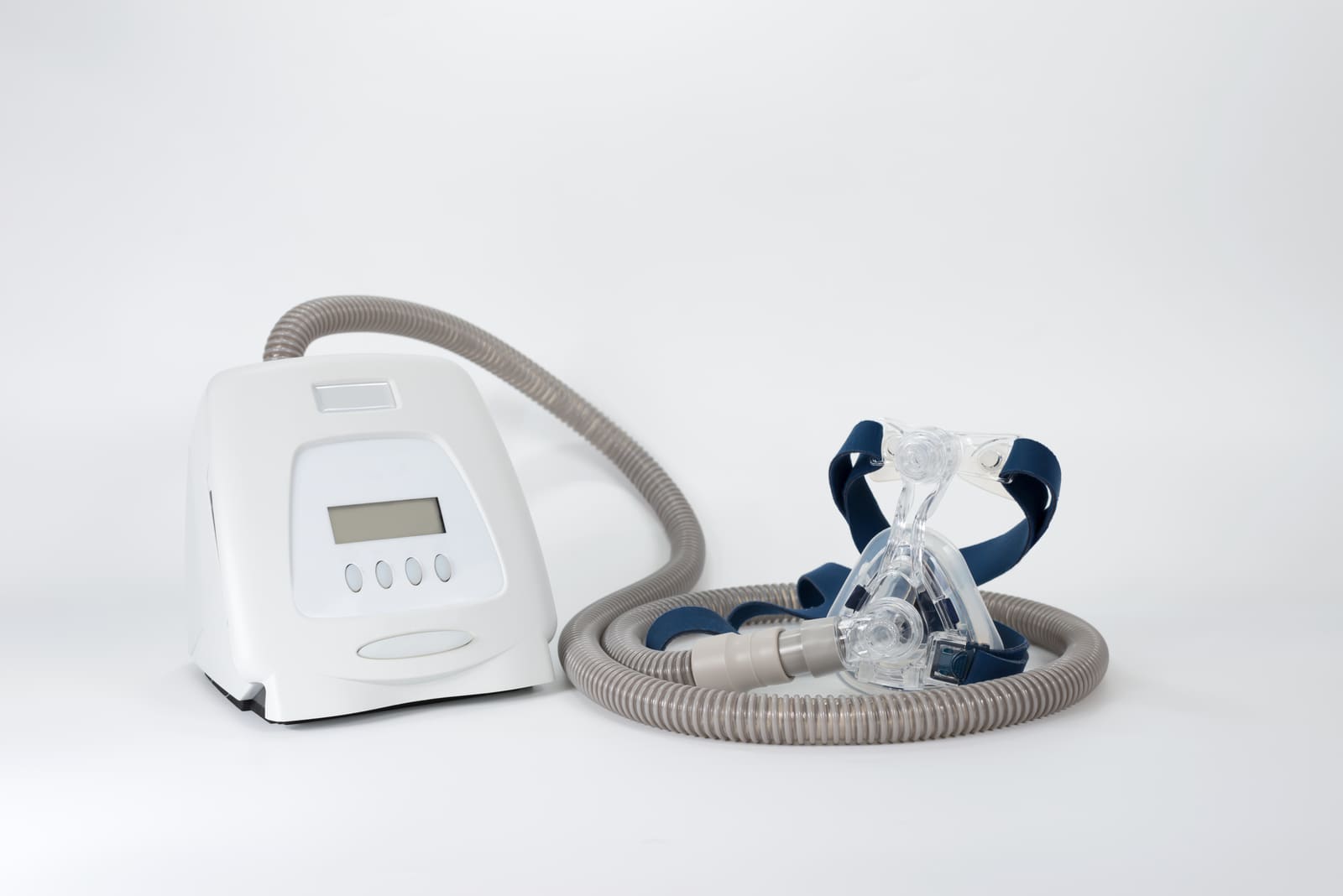
A PAP device typically comprises a mask, a hose, and a small machine plugged into a wall outlet. The mask, worn over the nose or mouth, is connected with a small device via a hose.
The machine delivers pressured air through the hose and mask to your upper airways, helping you breathe better while sleeping.
PAP machines are available in different types with varying pressure levels, adjustments, and sizes. The pressure settings are measured in centimeters of water (cmH20), with most machines set between 4 and 20 cmH20.
What are the types of sleep apnea machines?
There are several main types of sleep apnea machines.
CPAP Machine
CPAP, or continuous positive airway pressure machines, is the most popular treatment for moderate to severe sleep apnea.
The machines deliver a continuous, steady stream of oxygen, unblocking the upper airways to help patients breathe better while sleeping.
CPAP delivers a constant pressure that can make it difficult to exhale, causing choking symptoms. The problem can be resolved by turning down the pressure rate. In other cases, your doctor might recommend a BiPAP or APAP machine.
CPAP machine can be used with:
- A nasal CPAP mask that goes over the nose
- A mask that covers the mouth and nose
- Prongs placed in the nose
BiPAP Machine
BiPAP or bilevel positive airway pressure machines are similar to CPAP, except they deliver two levels of air pressure, one for inhaling and another for exhaling.
BiPAP machines are helpful to people with severe OSA or who suffer from cardiovascular diseases, lung disorders, or congestive heart failures and require higher pressured air.
The machines also record the amount of breath a person takes in a minute.
BiPAP machines can come in the following modes:
- Spontaneous mode: The user must initiate each breath before the machine delivers air pressure.
- Spontaneous timed mode: The machine has a timer. If the user fails to initiate breath within a specified time, the machine starts pumping air into the airway. Otherwise, air is pumped when the user initiates.
- Timed mode: The machine does not wait for the user to initiate. It pumps air at timed intervals.
CPAP with C-Flex
CPAP with C-Flex delivers lower air pressure than the standard CPAP and BiPAP machines. They are suitable for people with mild obstructive sleep apnea.
APAP Machine
APAP or auto-adjusting positive airway pressure machines, can raise or lower the air pressure delivered based on breathing.
The machines are preset within a pressure range. They can automatically adjust that air pressure based on breath-by-breath needs.
APAP can be an excellent treatment option for people who cannot tolerate CPAP machines or need changed air pressure between sleep positions.
EPAP Machine
EPAP, or expiratory positive airway pressure, machines are small, single-use valve-like devices used to treat mild apnea and snoring problems.
When placed over nostrils before sleep, the devices help cut back snoring, preventing daytime sleepiness. They are also great for people who are intolerant of other sleep apnea devices.
Inspire sleep apnea treatment
Inspire treatment requires surgically implanted devices in the neck and chest that stimulate the upper airway nerves to keep your tongue from blocking the airways.
Which sleep apnea machine is suitable for you?
Sleep apnea devices are recommended based on the sleep apnea type and other underlying conditions.
- People who have OSA with no underlying condition usually get CPAP machines.
- A BiPAP machine is recommended where CPAP therapy is not effective, and the patient has other breathing issues.
- An APAP machine is used in moderate to severe OSA where the patient has varying breathing patterns, and CPAP is not helpful.
Are PAP machines covered by insurance?
PAP devices are FDA-approved and can be obtained only on a prescription. Hence, most PAP machines are covered by insurance as medical equipment.
General information, not medical advice
This article can't account for your health history or current treatment. Talk to a qualified clinician before you change anything about your care.
Read our medical disclaimer →
On this page
What is a PAP machine?
What are the types of sleep apnea machines?
CPAP Machine
BiPAP Machine
CPAP with C-Flex
APAP Machine
EPAP Machine
Inspire sleep apnea treatment
Which sleep apnea machine is suitable for you?
Are PAP machines covered by insurance?
Put what you read to work
Track your medicines, check a symptom and talk with people managing the same condition, all in Healthread.
Get the app
Keep reading
Beauty and Anti-Aging
Gastric Balloon for Weight Loss
The gastric balloon weight loss procedure is a new FDA-approved minimally invasive bariatric procedure for treating obesity. It is a temporary procedure that involves placing a saline-filled silicone balloon in the…
June 19, 2025 · 3 min read
Beauty and Anti-Aging
Vitamin D Deficiency
Also known as the sunshine vitamin, vitamin D is an essential nutrient that is naturally absorbed by the skin through exposure to sunlight. It can also be obtained from dietary sources and supplements.
December 30, 2024 · 3 min read
Beauty and Anti-Aging
Cellulite
Cellulite appears with an orange peel or cottage cheese-like texture with a dimpled or lumpy skin surface. Mild cellulite is visible when you pinch the area with cellulite, like the thighs. Severe cellulite can make the…
August 13, 2024 · 3 min read


© 2026 Healthread
English · Español
Healthread does not provide medical advice, diagnosis or treatment. Always speak to a qualified clinician about your care.